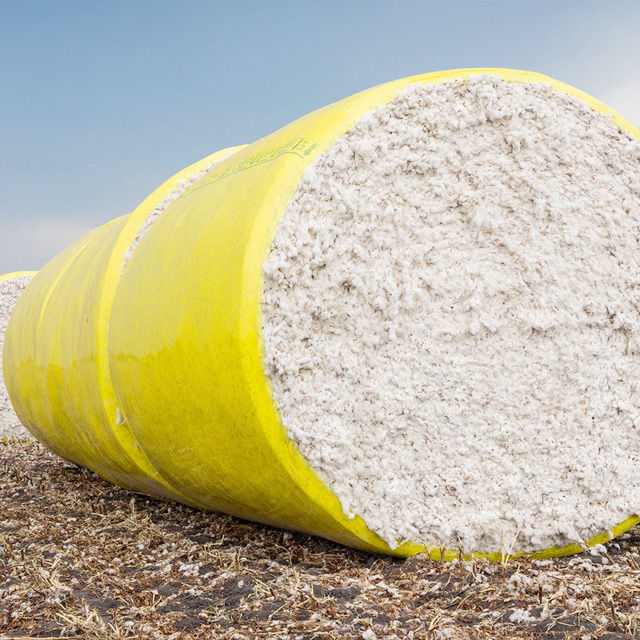
Module wrap failure directly threatens ginning profitability. When plastic fragments enter the gin stand, lint quality downgrades immediately follow. Gin downtime increases. The primary friction point between field harvesting and ginning operations lies in the wrap's dual mandate. The film must possess enough structural integrity to survive months of field storage and high-speed flatbed transport. Simultaneously, it must release cleanly at the gin feeder without leaving microscopic plastic shards behind. This guide provides a technical procurement framework for evaluating cotton wrap film for ginning plants. We focus on material science, equipment compatibility, and manufacturer reliability. By understanding the mechanical properties of modern co-extruded films, gin operators and procurement managers can effectively protect yield, maintain throughput, and eliminate the risks associated with module degradation.
Material Engineering Dictates Performance: Five-layer co-extruded films offer the optimal balance of puncture resistance, UV protection, and controlled adhesion compared to legacy three-layer alternatives.
Ginning Efficiency Relies on Clean Removal: Non-tack inner layers and high-visibility colors are critical for preventing plastic contamination during the unwrapping phase at the gin.
Equipment Compatibility is Non-Negotiable: Wrap must meet strict dimensional, weight, and tension specifications for standard round module builders (e.g., John Deere systems) to prevent field-level wrapping failures and maximize modules per roll.
Vendor Vetting Mitigates Supply Chain Risk: Selecting a manufacturer requires evaluating their batch-testing protocols, raw material sourcing (virgin PE vs. recycled), and warranty terms for field degradation.
The Role of Wrap Film in Ginning Operations and Lint Quality
Define success criteria based on field conditions and ginning mechanics. cotton bale wrap film for cotton processing must maintain optimal moisture levels within the module. It prevents wind and weather loss during staging. It ensures absolute zero plastic contamination in the final baled lint. When these criteria are met, the gin operates at maximum efficiency. The grower receives the highest possible grade for their crop.
The cost of contamination is severe. Plastic fragments entering the gin stand create financial losses. Textile mills routinely reject entire shipments if polyethylene traces are detected in the lint. Plastic melts during the dyeing process and ruins the finished fabric. At the gin level, sticky or fragmented wrap causes equipment jams. Operators must halt the machinery. The manual labor costs for clearing these jams and the lost throughput during downtime rapidly erode operational margins. When a module is loaded onto the feeder bed, the disperser cylinders tear into the cotton. If plastic is present, these cylinders shred it into thousands of pieces, making it impossible to remove manually.
Mapping the lifecycle of the wrap highlights the extreme physical stress it endures from the field to the feeder.
Picker Compression: The onboard module builder exerts immense outward radial force. The film must stretch and hold this compacted cotton without snapping.
Field Staging: Modules drop directly onto harvested fields. The film must resist punctures from sharp cotton stalks and withstand immediate exposure to solar radiation.
Truck Loading: Telehandlers and module trucks apply localized pressure and shear stress when lifting and moving the heavy rounds.
Yard Storage: Modules often sit in the gin yard for months. The wrap must block moisture ingress from rain while resisting continuous UV degradation.
Unwrapping: Whether utilizing automated unwrapping machines or manual labor, the film must cut cleanly and peel away without adhering to the cotton fibers.
Core Evaluation Criteria for Cotton Packaging Film for Ginning Plants
Evaluating cotton packaging film for ginning plants requires looking past basic dimensions. You must examine the specific mechanical properties engineered into the polymer matrix. Performance in the field and at the gin depends on tensile strength, barrier properties, and surface adhesion control.
Tensile Strength, Weight, and Puncture Resistance
Tensile strength is measured in two directions. Machine direction (MD) dictates how well the film handles the pulling tension applied by the harvester's wrapping mechanism. Transverse direction (TD) prevents the module from bursting open under the outward pressure of the compacted cotton. Both metrics must meet high thresholds to ensure the module retains its shape. The specific gauge thickness interacts directly with the tensioner arms on the module builder. If the gauge is inconsistent, the tensioner arms will pull unevenly, causing the film to track poorly and eventually tear.
Film weight directly correlates to transport durability. Extra film weight adds necessary strength for long-distance transport without introducing unwanted stiffness. Stiff films fail to conform tightly to the module. This creates air pockets that invite moisture. Heavier, flexible films resist wind whip on flatbed trailers moving at highway speeds. This prevents blowouts.
Puncture resistance matters during field staging. When modules eject onto the field, sharp cotton stalks press directly against the bottom layer. High puncture resistance prevents these stalks from penetrating the film. Even a microscopic poke-through compromises the weather seal. Ground moisture wicks into the seed cotton, leading to rot and elevated internal temperatures.
UV and Moisture Barrier Performance
Direct sun exposure degrades unprotected polyethylene rapidly. It becomes brittle and shatters into unmanageable flakes. Manufacturers incorporate UV stabilizers, specifically Hindered Amine Light Stabilizers (HALS). These chemical additives act as radical scavengers. They neutralize the degrading effects of ultraviolet radiation. High-quality films require sufficient HALS loading to guarantee structural integrity for six months or more of continuous field exposure.
Moisture vapor transmission rates (MVTR) determine the film's barrier effectiveness. The wrap must completely block external precipitation while managing the internal microclimate. If the MVTR is incorrect, condensation builds up inside the module. This trapped moisture degrades the seed and lowers the lint grade. It causes severe feeding issues at the gin. Wet cotton clumps and clogs the pneumatic transport lines.
Adhesion Control and Non-Tack Layers
The functionality of round module wrap relies on a precise balance of tackifier additives. The outer layers of the film must possess enough tack to adhere firmly to themselves during the final wrapping rotations. This seals the module against wind and rain. The innermost layer—the surface directly touching the cotton—must remain strictly non-tack.
Improper tack levels on the inner layer lead to disastrous consequences at the gin. If the inner surface is sticky, cotton fibers bond to the plastic. When the module is unwrapped, the pulling force tears the film. Micro-plastics embed in the lint. A zero-tack formulation ensures the film releases cleanly. This preserves fiber length and eliminates contamination risks.
Material Specifications: Analyzing Five-Layer Cotton Bale Wrap Film
The transition from traditional three-layer films to modern co-extruded architectures represents a major leap in agricultural packaging. five-layer cotton bale wrap film allows chemical engineers to isolate specific performance additives into distinct microscopic layers. This optimizes the film for every stage of the module's lifecycle.
Comparison of Film Architecture
Feature
Three-Layer Film
Five-Layer Film
Additive Distribution
Blended across thick layers, leading to compromises in surface performance.
Precisely isolated in micro-layers for targeted performance (e.g., tack vs. slip).
Puncture Resistance
Moderate; relies on overall thickness rather than specialized core resins.
Prone to wind-whip damage and elongation under high shear stress.
Sub-outer layers provide structural rigidity to maintain module shape during transit.
Breaking down the five-layer construction reveals the specific engineering behind its performance.
Outer Layer: Formulated for weather resistance, maximum UV protection, and high-visibility color. It contains the precise amount of tackifier needed to seal the tail end of the wrap.
Sub-Outer Layer: Provides structural integrity and load-bearing capacity. This layer resists the shear forces applied by module trucks and telehandlers.
Core Layer: Engineered with advanced metallocene resins for maximum puncture resistance. It stops tear propagation if the outer layer is nicked by debris.
Sub-Inner Layer: Maintains flexibility and tension. It acts as a buffer, preventing the tackifiers in the outer layers from migrating inward.
Inner Layer: A strict zero-tack formulation utilizing slip additives. It ensures the film glides over the cotton during wrapping and releases cleanly at the gin feeder.
This specific five-layer architecture maps directly to operational outcomes. By preventing tackifier migration, gins experience zero plastic contamination. By utilizing a high-strength core, modules survive long-distance transport without bursting. This reduces the manual labor required to clean up spilled cotton in the gin yard.
Harvester Compatibility: Cotton Bale Wrap for Cotton Pickers
Procuring wrap film is not a generic purchasing decision. The physical dimensions and mechanical stretch profiles must integrate flawlessly with the specific onboard module builders operating in the field. cotton bale wrap for cotton pickers must match exact specifications for width, length, core diameter, and roll weight. Larger roll sizes can fit more cotton comfortably. This reduces the frequency of roll changes in the field and improves overall harvesting efficiency.
John Deere Cotton Bale Wrap for Ginning Compatibility
The majority of modern round modules are built using John Deere equipment, specifically the CP690 and CP770 harvesters. John Deere cotton bale wrap for ginning must meet the strict tension and feed-rate requirements calibrated into these machines. The harvester's wrapping mechanism applies a specific pre-stretch to the film before it contacts the cotton.
Using off-spec or generic wrap in high-speed pickers introduces mechanical risks. If the film lacks the correct elongation properties, it will snap under the tension rollers. This causes immediate harvester downtime. If the film is too elastic, it fails to compress the cotton adequately. You get loose, oversized modules that fall apart during transport. Off-spec core diameters can cause sensor errors within the harvester's loading bay. Using unapproved materials often voids expensive equipment warranties.
Sourcing and Supply Chain: Evaluating a Cotton Bale Wrap Manufacturer
Selecting a reliable manufacturer requires evaluating their technical capabilities and supply chain robustness. The overall value of the film is determined by gin-tailored engineering rather than just the lowest unit cost per roll.
Quality assurance protocols separate premium manufacturers from generic plastic extruders. A reputable supplier maintains an in-house testing laboratory to verify every batch. Key tests include dart drop impact testing to measure puncture resistance. Accelerated weathering chambers simulate months of UV exposure in a matter of days. Precise elongation testing guarantees harvester compatibility.
Material sourcing is a differentiator. Premium wraps are manufactured using 100% virgin Linear Low-Density Polyethylene (LLDPE). Virgin resin possesses consistent, unbroken molecular chains. This ensures predictable mechanical properties and a reliable weight-to-strength ratio. Blends containing recycled plastics introduce impurities and degraded polymer chains. These weak spots cause the film to fail unpredictably under the high tension of the module builder or the sheer weight of the cotton. Furthermore, cast extrusion methods offer better gauge control than blown extrusion, which is critical for high-speed wrapping applications.
Supply chain stability is equally important. The cotton harvest window is narrow and highly weather-dependent. Manufacturers must demonstrate reliable lead times, robust regional distribution capabilities, and the ability to provide immediate technical support during the peak ginning season. A stockout of wrap film halts field operations entirely. Supplier reliability is a core operational requirement.
Implementation Risks and Mitigation in Cotton Processing
Even with premium cotton picker film for ginning operations, improper handling and implementation introduce risks. Managing these variables ensures the film performs as engineered.
Color selection directly impacts visibility and tracking. Bright, high-contrast colors like yellow or pink are heavily preferred over white or clear films. High contrast allows gin operators and automated optical sensors to easily detect and remove stray film pieces before they enter the gin stand. White film blends in with the lint, making visual detection nearly impossible. Distinct colors are utilized for field-to-gin tracking. Operators visually separate different growers, seed varieties, or field locations in the staging yard.
Improper storage of unused rolls degrades the plastic before it ever reaches the harvester. Rolls must be stored in their original UV-blocking packaging until deployment. Exposure to extreme heat or direct sunlight accelerates chemical degradation. Rolls must be stored horizontally. Vertical stacking damages the edges of the roll, causing the film to tear unevenly when fed through the harvester's tensioners.
Unwrapping protocols at the gin dictate the final success of the wrap. Automated module feeders require consistent film tension to slice and peel the plastic away cleanly. If the module has deformed due to poor TD strength, the automated cutters may slice into the lint or miss the plastic entirely. For manual unwrapping, operators must use specialized safety knives that cut outward. They pull the film away from the cotton rather than slicing down into the compacted fibers.
Common Field Risks and Mitigation Strategies
Risk Factor
Operational Consequence
Mitigation Strategy
Vertical Roll Storage
Edge damage leading to film snapping in the harvester.
Store all rolls horizontally in climate-controlled facilities.
White/Clear Film Usage
Inability to detect plastic fragments in the gin feeder.
Standardize on high-visibility yellow or pink wrap.
Dull Unwrapping Knives
Slicing plastic shards directly into the seed cotton.
Implement outward-cutting safety knives and replace blades daily.
Extended Field Staging
UV degradation causing the film to shatter upon lifting.
Verify HALS loading with the manufacturer for 6+ month exposure.
Conclusion
Request sample rolls from shortlisted manufacturers to conduct field tension tests on actual module builders before committing to bulk orders.
Review the manufacturer's warranty terms specifically regarding UV degradation timelines and field failure compensation.
Consult with your grower network to confirm the exact models of onboard module builders in use to ensure perfect dimensional compatibility.
Establish strict yard storage protocols for unused rolls, mandating horizontal storage and protection from direct sunlight.
FAQ
Q: What is the difference between three-layer and five-layer cotton bale wrap film?
A: Three-layer films blend additives across thick sections, often causing tackifiers to migrate and stick to the cotton. Five-layer films isolate additives into microscopic layers. This allows for a dedicated high-strength core, a weather-resistant outer layer, and a strictly zero-tack inner layer, preventing plastic contamination at the gin.
Q: How does film weight and thickness impact long-distance module transport?
A: Heavier film provides superior structural rigidity and tear resistance. It prevents the wrap from stretching and ballooning under the outward pressure of the compacted cotton. This extra weight resists wind whip on flatbed trailers, preventing the module from bursting during highway transit.
Q: How long does cotton wrap film protect modules from UV degradation in the field?
A: Premium wraps engineered with high concentrations of Hindered Amine Light Stabilizers (HALS) typically protect modules for six months or more of direct sunlight. Inferior films without adequate UV protection will become brittle, crack, and flake apart within a few weeks of field exposure.
Q: Why is the color of cotton packaging film important for ginning plants and field tracking?
A: Bright colors like yellow or pink provide high contrast against white cotton. This allows optical sensors and gin operators to easily spot and remove plastic fragments, preventing lint contamination. Colors are also used to visually track different growers or seed varieties in the gin yard.
Q: What causes cotton to stick to the wrap, and how can it be prevented?
A: Cotton sticks when tackifier additives from the outer layers migrate to the inner surface of the film. This is prevented by using five-layer co-extruded films that feature dedicated barrier layers and a specialized zero-tack inner layer formulated with slip additives.
Q: How should unused cotton picker film be stored to maintain its integrity?
A: Unused rolls must be kept in their original, UV-resistant packaging and stored indoors away from direct sunlight and extreme heat. They should always be stored horizontally. Standing rolls vertically damages the edges, which causes tearing during the harvester's high-speed wrapping process.