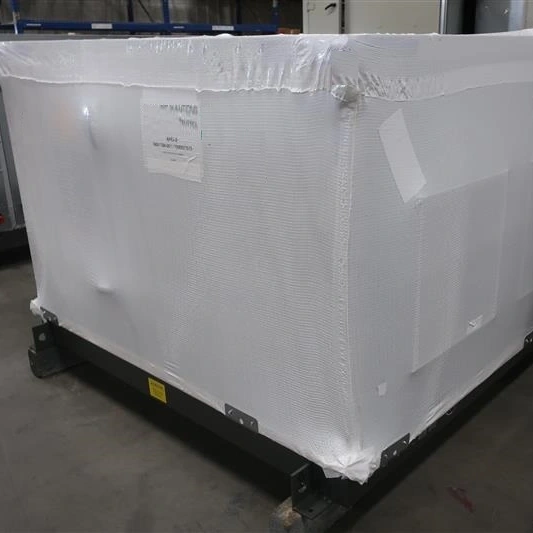
Metal parts can leave the factory clean and still arrive with rust after weeks in storage or transit. The packaging choice often comes down to VCI shrink wrap and VCI stretch wrap, two films that use corrosion-inhibiting chemistry but create very different protective packages. Shrink film forms a heat-fitted enclosure, while stretch film relies on tension to secure pallets and bundles.
Choosing well means balancing exposure, load shape, storage time, packing speed, and available equipment. The comparison below helps determine when a tighter enclosure is worth the extra setup and when stretch wrapping offers sufficient protection with greater efficiency.
The Practical Difference Between Shrink and Stretch Application
Heat Creates a Fitted Enclosure
VCI shrink wrap is placed over or around the asset, joined at the seams, and heated until the film tightens against the load. This process reduces loose surfaces that can flap, snag, or leave large pathways for humid air. Within the enclosed space, VCI molecules disperse and form an invisible corrosion-inhibiting layer on compatible metal surfaces. VCI shrink film therefore combines a heat-formed enclosure with active corrosion protection for metal during storage and transit.
The shrinking action is also used in standard heat shrink wrap, but the two materials should not be treated as identical. General industrial shrink film provides a tight physical cover for machinery, boats, vehicles, pallets, and other large cargo. VCI shrink film adds corrosion-inhibiting chemistry, making it more appropriate when rust prevention is part of the packaging specification rather than a secondary benefit. The distinction should be confirmed through the material specifications instead of inferred from appearance alone.
Tension Holds a Load Together
VCI stretch wrap behaves differently. The operator stretches the film around a pallet or bundle, and elastic recovery creates holding force as the layers cling to one another. That method is efficient for unitizing parts, reducing movement, and keeping a load manageable during forklift handling or short distribution cycles.
However, tension wrapping does not naturally produce the same fitted enclosure as heat shrinking. More layers can improve load containment and surface coverage, but they do not automatically seal the pallet base, top, corners, or irregular gaps. The practical difference is therefore not whether both films contain VCI chemistry; it is how reliably each application keeps the protected airspace around the metal. A fast wrapping process is useful only when its enclosure level matches the actual exposure.
Decision point
VCI shrink wrap
VCI stretch wrap
Application
Heated until it conforms to the item
Applied under tension
Primary role
Corrosion protection and fitted enclosure
Corrosion protection and load containment
Typical load
Machinery, irregular equipment, oversized assets
Pallets, bundles, uniform components
Best setting
Export, outdoor, humid, or extended storage
Indoor, controlled, shorter handling cycles
Equipment
Heat gun and sealing tools
Manual dispenser or wrapping machine
Where VCI Shrink Wrap Earns the Extra Setup
Outdoor Storage, Export Shipping, and Humid Conditions
VCI shrink wrap is usually the stronger choice when metal may face rain, salt air, condensation, temperature swings, or prolonged humidity. The film can be sealed around the load and tightened into a stable cover, helping retain the corrosion-inhibiting atmosphere while limiting direct exposure to dust and moisture. It is commonly selected for metal goods placed in storage, transported through changing climates, exposed to marine air, or kept in humid industrial environments.
A shrink enclosure should not be described as automatically airtight or waterproof. Performance still depends on seam design, base sealing, anchoring, drainage, and the care taken during installation. Water trapped inside the package can remain a corrosion risk, while an unsealed opening can allow the protective atmosphere to dissipate. The film works best as part of a deliberate packaging system rather than as a quick outer cover.
Large, Irregular, or High-Value Metal Assets
Heat shrinking becomes especially useful when the object is too large or uneven to secure efficiently with repeated turns of stretch film. Industrial machinery, fabricated assemblies, motors, pumps, automotive components, marine equipment, and exposed steel structures often include recesses, lifting points, projections, or changing widths. A fitted VCI shrink wrap enclosure can follow those contours more closely and reduce loose areas around the load. It can also create a cleaner package for transport routes where snagging and surface movement are concerns.
Asset value changes the calculation as well. When corrosion could lead to cleaning, rework, rejected delivery, delayed installation, or downtime, the extra setup may be easier to justify. VCI shrink film can be used for machinery, automotive parts, steel equipment, and other metal components. Formulation compatibility should still be checked when mixed metals or unusual alloys share the same enclosure.
When a Tighter Enclosure Matters More Than Speed
Shrink packaging asks more from the operation. Installers need suitable heat equipment, enough working space, proper seam preparation, and a controlled heating technique. The film must tighten evenly without creating overheated thin spots, open edges, or stress around sharp projections. Application time therefore needs to be evaluated against the value of a more controlled package.
Those steps make sense only when exposure severity or business risk calls for them. Consider a high-value machine prepared for overseas storage: it may encounter a long transit cycle, humid air, condensation, and limited inspection access. Components traveling between nearby factories may need only fast stabilization and basic corrosion protection. In the first case, VCI shrink wrap supports a more controlled enclosure; in the second, the added heat process may provide little operational benefit.
Where VCI Stretch Wrap Is the More Efficient Choice
Palletized Loads and Repetitive Warehouse Operations
VCI stretch wrap is better suited to stable pallets, manageable bundles, and repetitive packaging lines. Indoor warehousing, domestic distribution, short storage periods, frequent loading, and high daily throughput all favor a film that can be applied without heat. Manual dispensers suit lower-volume work, while wrapping equipment can improve consistency when many similar loads move through the same operation. The absence of a heating stage can also simplify workflow planning in crowded packing areas.
The method works well for boxed fasteners, bundled profiles, production-stage components, and palletized automotive parts. These loads already have a defined footprint, so the film can concentrate on holding units together and limiting routine dust or handling exposure. Easy removal is another advantage when employees need frequent access for counting, inspection, or production use. For controlled movements, that convenience may matter more than creating a fitted outer skin.
Know When More Layers Will Not Solve the Problem
A common mistake is adding layer after layer in an attempt to make stretch film behave like VCI shrink wrap. Extra material can raise holding force, but it cannot guarantee that the top, base, corners, and recessed spaces are enclosed. Punctures at pallet edges and loose overlaps may still allow humid air to circulate around bare metal. Excess film may also increase cost and removal time without addressing the real weakness.
The decision should change when a pallet will remain outdoors, travel through marine conditions, enter extended storage, or carry high-value uncoated parts. A specified requirement for a fitted outer cover is another clear signal to move toward shrink film. In some operations, the two materials can work together: stretch wrap stabilizes the pallet, while a separate VCI shrink wrap layer provides the environmental enclosure. Each layer should have a defined job rather than compensate for poor application of the other.
How to Specify the Film and Avoid Packaging Failures
Match the VCI Formulation to the Metal and Environment
Start with the metal, not the roll size. Ferrous, non-ferrous, and mixed-metal assemblies may require different inhibitor compatibility, so the supplier needs an accurate material list. Storage duration, transport route, humidity, temperature cycling, and indoor or outdoor exposure also shape the recommendation.
Protection life is not one universal number. Seal quality, environmental conditions, film formulation, and package damage can all change how long the protective atmosphere remains effective. Humidity, temperature fluctuations, enclosure integrity, and metal compatibility should be assessed together. Oversized equipment may also need wide film or custom sizing to reduce unnecessary seams.
Choose Thickness and Added Features for Real Handling Risks
Thickness should reflect weight, edges, protrusions, handling frequency, and exposure rather than a simple “thicker is better” rule. A smooth indoor machine presents different risks from a fabricated assembly with burrs and lifting lugs. UV stabilization may suit prolonged sunlight, while flame-retardant formulations may be needed where site rules require modified burn behavior. Custom widths, thicknesses, colors, and optional performance features can be specified to suit different equipment and storage conditions.
VCI shrink film and reinforced shrink wrap also solve different problems. The first adds corrosion-inhibiting chemistry; the second adds structures or layers intended to improve tear and puncture resistance around heavy or sharp-edged cargo. Reinforcement does not automatically confirm VCI content. Buyers needing both properties should verify corrosion compatibility and mechanical performance separately.
Prepare and Seal the Package Correctly
Even the right film can fail over wet, dirty, or contaminated metal. Surfaces should be clean and dry, while standing water, process residue, salt, and damaged cushioning must be removed. Sharp corners, bolt heads, lifting points, and burrs need padding before either material is tightened.
For VCI shrink wrap, close seams and the base before final heating where the package design allows. Apply heat evenly so the film tightens without burning through or leaving loose pockets. Stretch film requires consistent tension and adequate overlap, but excessive force can crush cartons or distort sensitive parts. The completed load should remain stable without leaving vulnerable bare metal exposed.
Inspect the Package Before Storage or Shipment
Inspect seams, overlaps, corners, puncture points, exposed surfaces, and the pallet base before release. Visible moisture inside an enclosure should be investigated rather than sealed in. Any repair should restore both physical coverage and the intended protected airspace.
Outdoor or long-term packages also need periodic checks. Wind, handling, abrasion, and accidental contact can damage film after installation. High humidity, prolonged weather exposure, and repeated temperature changes may reduce effective service life, making inspection more important in demanding applications.
Use this pre-order checklist:
●What metal or combination of metals needs protection?
●Is the main goal corrosion control, load stabilization, or both?
●Will the package remain indoors, outdoors, or in marine transit?
●How long must protection remain effective?
●Does the asset have sharp edges or an irregular shape?
●Are heat tools and trained installers available?
●Are UV resistance, flame retardancy, or reinforcement required?
Conclusion
Choosing between VCI shrink wrap and VCI stretch wrap comes down to the protection task, not simply the film type. Stretch wrap suits fast pallet containment in controlled, shorter-cycle operations, while shrink film is better aligned with irregular equipment, export transport, outdoor exposure, and longer storage. Suzhou Ecopack Co.,Ltd. supplies VCI shrink film in customizable dimensions and specifications, helping users match corrosion protection, mechanical strength, and application requirements more closely. A well-prepared package, properly sealed and inspected, ultimately determines whether either material performs as intended.
FAQ
Q: What is the main difference between VCI shrink wrap and VCI stretch wrap?
A: VCI shrink wrap uses heat to form a fitted enclosure, while VCI stretch wrap relies on tension and self-cling to stabilize pallets or bundled metal parts.
Q: When should VCI shrink wrap be used?
A: It is generally suited to large or irregular metal equipment, export shipping, outdoor storage, humid environments, and applications requiring a tighter corrosion-protective enclosure.
Q: Does VCI stretch wrap prevent rust?
A: Yes. It releases corrosion-inhibiting molecules around enclosed metal, but its effectiveness depends on metal compatibility, coverage, package integrity, storage conditions, and correct application.
Q: Can adding more stretch-film layers replace shrink film?
A: Additional layers improve holding force and coverage, but they may not create the sealed enclosure needed for prolonged outdoor exposure, marine transport, or long-term storage.
Q: Must metal parts be dry before VCI packaging?
A: Yes. Parts should be clean, cool, and visibly dry because trapped water, coolant, salts, or corrosive residue can undermine protection and encourage corrosion.