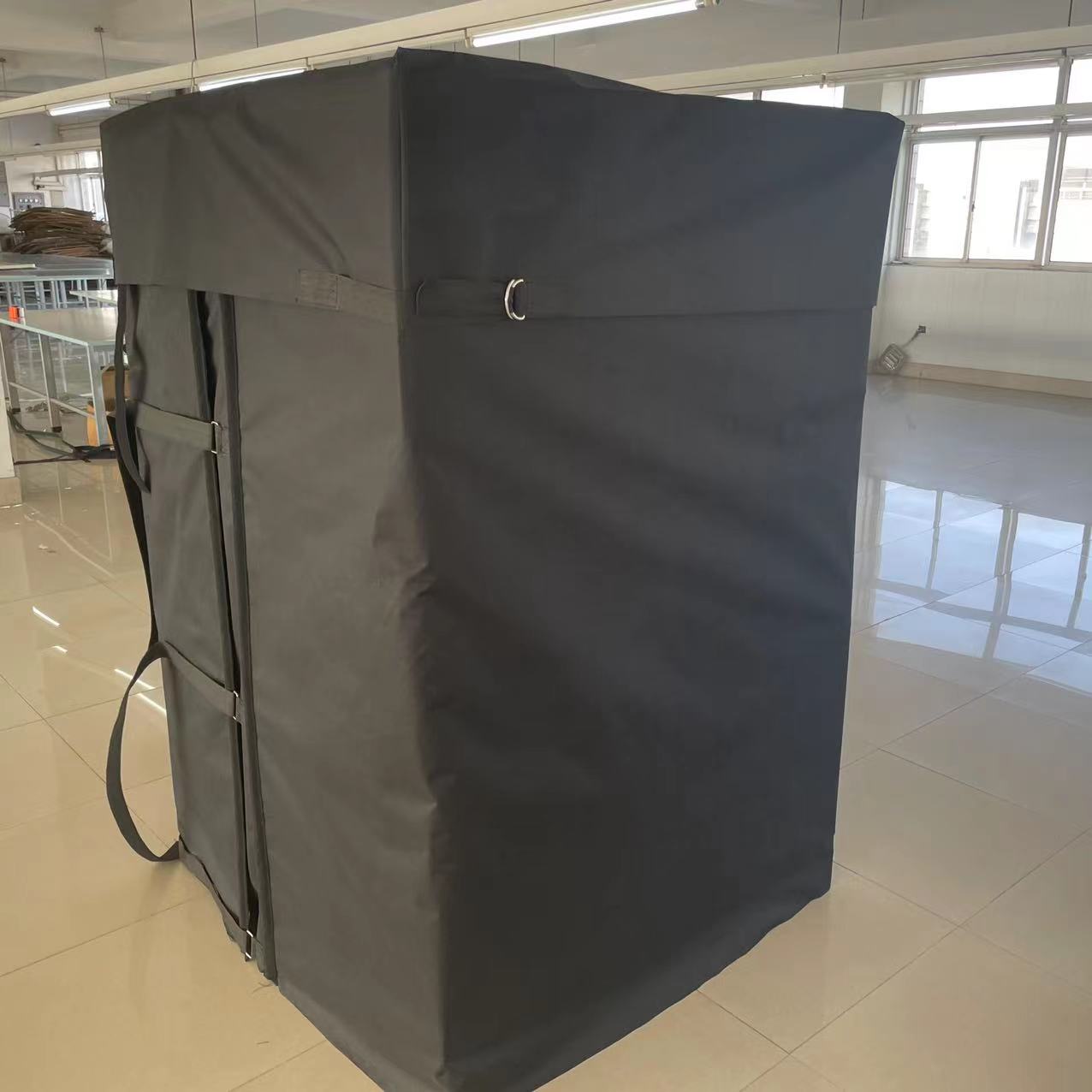
Before server racks, UPS units, cooling systems, and electrical cabinets are installed, they may spend days in transit, warehouses, ports, or unfinished data halls. During that time, construction dust can enter vents and seams, while rain, leaks, humidity, and temperature changes can leave moisture on or inside sensitive equipment. Dust that absorbs moisture can also increase corrosion risk.
Choosing data center covers therefore involves more than finding a waterproof sheet. Readers need to understand where exposure occurs, how fit and material affect protection, and how installation, condensation control, and inspection help equipment reach commissioning clean and dry.
Why Dust and Moisture Become Costly Before Startup
Dust Does More Than Make Equipment Look Dirty
Fine particles enter through ventilation openings, cabinet gaps, cable-entry points, door seams, and poorly secured cover edges. Construction environments can introduce concrete powder, drywall residue, metal filings, road debris, salt-bearing particles, and packaging fibers. These materials settle in recesses where a quick exterior wipe will not reach them.
The immediate result is often rework rather than equipment failure. Teams may need to clean vents, inspect connectors, document surface conditions, or delay installation while contamination is assessed. Abrasive particles can also scratch finishes during handling or cleaning.
When dust absorbs moisture, deposits may hold water and contaminants against metal surfaces. Particulate contamination, humidity, and corrosion are closely connected, especially when chemically active particles remain on unprotected surfaces for extended periods.
Moisture Can Be Visible—or Trapped Out of Sight
Water exposure is not limited to equipment left in the rain. Road spray, roof leaks, wet floors, pallet bases, and humid warehouse air can all introduce moisture. A less visible problem appears when cold equipment enters a warmer, humid space. If its surface remains below the surrounding dew point, condensation can form outside and inside the cabinet.
A waterproof cover is therefore not a complete moisture-control plan. It may block incoming water while enclosing humid air or damp packaging. Vapor barriers do not eliminate the need for equipment to acclimate before power is applied. Forced air can also increase moisture accumulation and make dust adhere to wet surfaces.
Hazard
Common entry route
Likely consequence
Early warning sign
Construction dust
Vents, seams, loose edges
Surface contamination
Residue in recesses
Rain or road spray
Open seams or punctures
Wet panels and corrosion risk
Water marks
Temperature change
Condensation beneath the cover
Hidden moisture
Fogging or droplets
Sharp edges
Tears during handling
Local loss of protection
Pinholes
Where Equipment Is Most Exposed
Loading, Transport, and Port Handling
Risk changes at every transfer point. Equipment may leave a factory, move by truck, pass through container handling, wait during customs clearance, and then travel to a jobsite. Wind and vibration can make loose sheeting rub against painted panels. Tie-down pressure and lifting operations can create punctures near corners or frames.
Planning only for the scheduled journey misses the most damaging scenario: delay. A load expected to remain outdoors for two hours may be exposed for two days because of weather, customs issues, or restricted site access. The cover specification should reflect the longest realistic dwell period and the harshest stage of the route.
Common exposure points include manufacturing facilities, export warehouses, ports, construction areas, and final installation locations. A cover that performs adequately inside a warehouse may not remain secure during open-truck transport or extended outdoor staging.
Warehouses and Active Construction Sites
Indoor storage can create false confidence. Drilling, sanding, concrete cutting, ceiling work, and cable installation generate particles that settle on nearby equipment. An unfinished roof may admit wind-driven rain, while overhead plumbing and sprinkler work create additional water sources. Without operating HVAC, temperature and humidity may fluctuate significantly.
Frequent relocation adds mechanical risk. Forklifts can snag a cover, scrape it against nearby materials, or push it into sharp equipment edges. Repeated movement may also loosen closures that appeared secure when the cover was first installed.
A practical response is to divide staging areas by exposure level. Sensitive electrical cabinets should not automatically share the same protection plan as robust mechanical assemblies stored away from active work. Equipment placed beneath unfinished ceilings or near cutting operations may require stronger sealing, more frequent checks, or relocation to a lower-risk zone.
Temperature Changes Between Environments
A cabinet stored outside overnight can remain cold long after entering a warm building. Similar transitions occur after winter transport, high-altitude routes, refrigerated shipping, or rapid weather changes. Moisture forms when a cold surface meets air with a higher dew point.
Controlled acclimation is safer than immediate unpacking or energizing. Shipped systems should be allowed to reach thermal equilibrium, and visible condensation should clear before power is connected. Opening the cover too early may expose cold surfaces to additional humid air.
Data center covers should therefore be selected with the full route, storage duration, handling frequency, and temperature range in mind. Preventing rain entry does not automatically control moisture already trapped inside the enclosed space.
Choosing the Right Cover for the Job
Start with Equipment Shape and Handling Conditions
Cover selection begins with the load. Record its length, width, and height, then note handles, frames, vents, cable points, access doors, lifting features, and sharp corners. Also determine whether the unit will remain indoors, move between environments, or require periodic access.
Loose tarpaulins and manually cut film can bunch around irregular profiles, leave gaps near protrusions, and require repeated trimming. A closer-fitting design reduces excess material and improves stability. ECOPACK offers custom configurations developed from dimensions, drawings, 3D models, sketches, or physical samples.
Handling frequency also matters. A cover suitable for stationary storage may not withstand repeated forklift moves or open-truck transport. Padding or local reinforcement may be more useful than increasing thickness across the entire cover.
Match Material Strength to the Exposure
Material should address the most likely failure mode. Indoor storage may prioritize dust resistance and easy removal. Outdoor staging requires UV stability, water resistance, and secure seams. Long-distance transport may demand stronger tear and puncture resistance around corners, lifting points, and protruding components.
Thickness alone is not enough. Heavy film can still fail if it is badly fitted, overstretched, or left open at the base. ECOPACK provides PE and reinforced heat-shrink configurations in different thicknesses, along with optional UV protection, reinforcement, VCI treatment, and flame-retardant treatment. Each option should correspond to a defined route, duration, and exposure rather than a generic maximum-protection specification.
VCI may be relevant for exposed metal in humid or salt-air conditions. Flame-retardant material may be required by project or site rules, while UV-resistant film is better suited to outdoor staging. These treatments do not replace correct sealing, inspection, or equipment-manufacturer requirements.
Use Each Cover Type for a Specific Reason
Data center equipment covers protect racks, control cabinets, UPS systems, cooling units, and modular assemblies awaiting installation. Their dimensions and construction should reflect how long the equipment will remain covered, how frequently it will be moved, and whether it will face indoor or outdoor exposure.
General protective covers suit routine exposure to dust, moisture, abrasion, and weather where the equipment shape is relatively regular. They may also be appropriate where the cover needs to be removed and reapplied during inspection or short-term storage.
Custom-fit shrink covers are more suitable for oversized or irregular loads. Pre-sized material can follow corners, recesses, and protruding components more closely, reducing loose folds and on-site trimming. Standard and reinforced versions may also include UV, VCI, or flame-retardant properties.
A heat insulation cover has a narrower role. Its layered construction slows temperature transfer, which may buffer equipment or packaged components during short exposure to hot or cold surroundings. It does not eliminate condensation because humidity, dew point, starting temperature, and exposure duration still affect moisture formation. Thermal insulation should be treated as a temperature buffer rather than a standalone climate-control system.
Industrial equipment & machinery covers may protect pumps, motors, ventilation assemblies, skids, and supporting infrastructure around a data center project. Their shapes, weights, sharp points, and handling stresses may require specifications different from those used for server cabinets or electronic enclosures.
A Quick Selection Matrix
Exposure scenario
Practical cover approach
Main priority
Mistake to avoid
Short indoor storage
Standard fitted cover
Dust control
Overspecifying material
Irregular rack or cabinet
Custom-fit shrink cover
Coverage around protrusions
Leaving recessed gaps
Outdoor staging
Reinforced, UV-resistant cover
Water and puncture resistance
Ignoring possible delays
Humid or salt-air transport
Cover with corrosion-control option
Protecting exposed metal
Sealing damp equipment
Temperature-sensitive handling
Insulated cover where justified
Slower temperature exchange
Assuming no condensation
Getting Installation and Inspection Right
Prepare the Equipment Before Covering
Never seal visible water, condensation, wet packaging, or cleaning residue inside data center covers. Check the top, base, vents, door seams, cable openings, and recessed areas. Remove debris that could scratch the finish, and allow cold or damp equipment to stabilize before closing the cover.
Pad sharp corners, protruding fasteners, and lifting points. Photograph the equipment so later damage can be distinguished from existing marks. Where desiccant, humidity indicators, or corrosion-control materials are specified, follow the approved packaging plan rather than estimating quantities.
Heat-shrink application should be limited to non-operational equipment and completed with controlled heat and suitable tools. The normal sequence is to position the cover, complete the required seals, and then apply heat evenly until the material fits securely around the load.
Seal the Cover Without Creating New Weak Points
Good material can be undermined by poor installation. Reinforce contact points before applying tension, keep seams away from areas where water may collect, and close the base according to the selected cover system. Excessive heat can thin film across edges, so installers should work evenly and inspect the surface as it contracts.
After installation, check for pinholes, loose edges, incomplete seals, and overstressed areas. Record any repair with its date and location so later inspections can confirm that the patch remains secure.
If damage exposes the equipment or allows water entry, inspect the protected surface before resealing rather than covering the defect blindly. Avoid cutting informal access openings unless they can be properly resealed. A planned access panel or document pocket is preferable to repeated cutting.
Temporary protective covers do not replace controlled storage, environmental monitoring, leak prevention, manufacturer instructions, or site fire-safety requirements. Their role is to reduce exposure during clearly defined non-operational stages.
Inspect During Storage and Before Commissioning
Inspection frequency should reflect exposure. Review the cover after storms, leaks, equipment relocation, forklift contact, nearby construction work, or major temperature changes. Look for tears, lifted edges, pooled water, fogging, damaged labels, and moisture around the pallet or skid. Compare findings with the pre-cover photographs and log recurring damage points, as repeated tears may indicate that the fit, reinforcement, or handling method needs correction.
Before removal:
●Move the equipment into a clean, controlled area where practical.
●Allow cold equipment to acclimate before opening or energizing it.
●Remove dust or standing water from the cover exterior.
●Pull material away from vents, connectors, and painted panels.
●Inspect for residue, staining, corrosion, coating damage, and moisture.
An intact exterior does not prove that the equipment is dry. High humidity and moisture-retaining dust can increase corrosion risk, while premature energization can create problems when condensation remains on or inside the equipment.
All temporary covering materials must be removed before airflow begins or equipment is energized.
Conclusion
Dust and moisture risks are best managed before equipment reaches the data hall. The right data center covers should match the load’s shape, transport route, storage period, and exposure conditions, while careful sealing, acclimation, and inspection prevent hidden condensation or contamination from becoming costly rework.
Suzhou Ecopack Co.,Ltd. offers configurable protective and custom-fit cover options for equipment in transit or temporary storage, helping project teams reduce dust entry, water exposure, and packaging inefficiency without treating the cover as a substitute for controlled storage or proper commissioning procedures.
FAQ
Q: What do data center covers protect against?
A: Data center covers shield non-operational racks, cabinets, and supporting equipment from dust, moisture, UV exposure, abrasion, and handling damage during transport, staging, and temporary storage.
Q: Can a waterproof equipment cover prevent condensation?
A: No. A waterproof cover blocks external water but cannot prevent condensation caused by humid air and temperature changes. Equipment should acclimate fully before unpacking or energizing.
Q: Should data center equipment remain covered while operating?
A: Temporary covers are generally intended for non-operational equipment. They should be removed before energizing systems so vents, fans, access points, and cooling airflow remain unobstructed.
Q: How should a cover be selected for data center equipment?
A: Consider equipment dimensions, protrusions, sharp edges, transport conditions, storage duration, outdoor exposure, handling frequency, and required properties such as UV, puncture, or corrosion resistance.
Q: How often should covered equipment be inspected?
A: Base inspections on exposure and handling. Check covers after storms, leaks, relocation, nearby construction, forklift contact, or major temperature changes, looking for tears, pooling, and condensation.
Q: Do protective covers replace climate-controlled storage?
A: No. Covers reduce external contamination, but controlled storage, humidity management, acclimation, leak prevention, and equipment-specific commissioning procedures remain necessary for reliable protection.