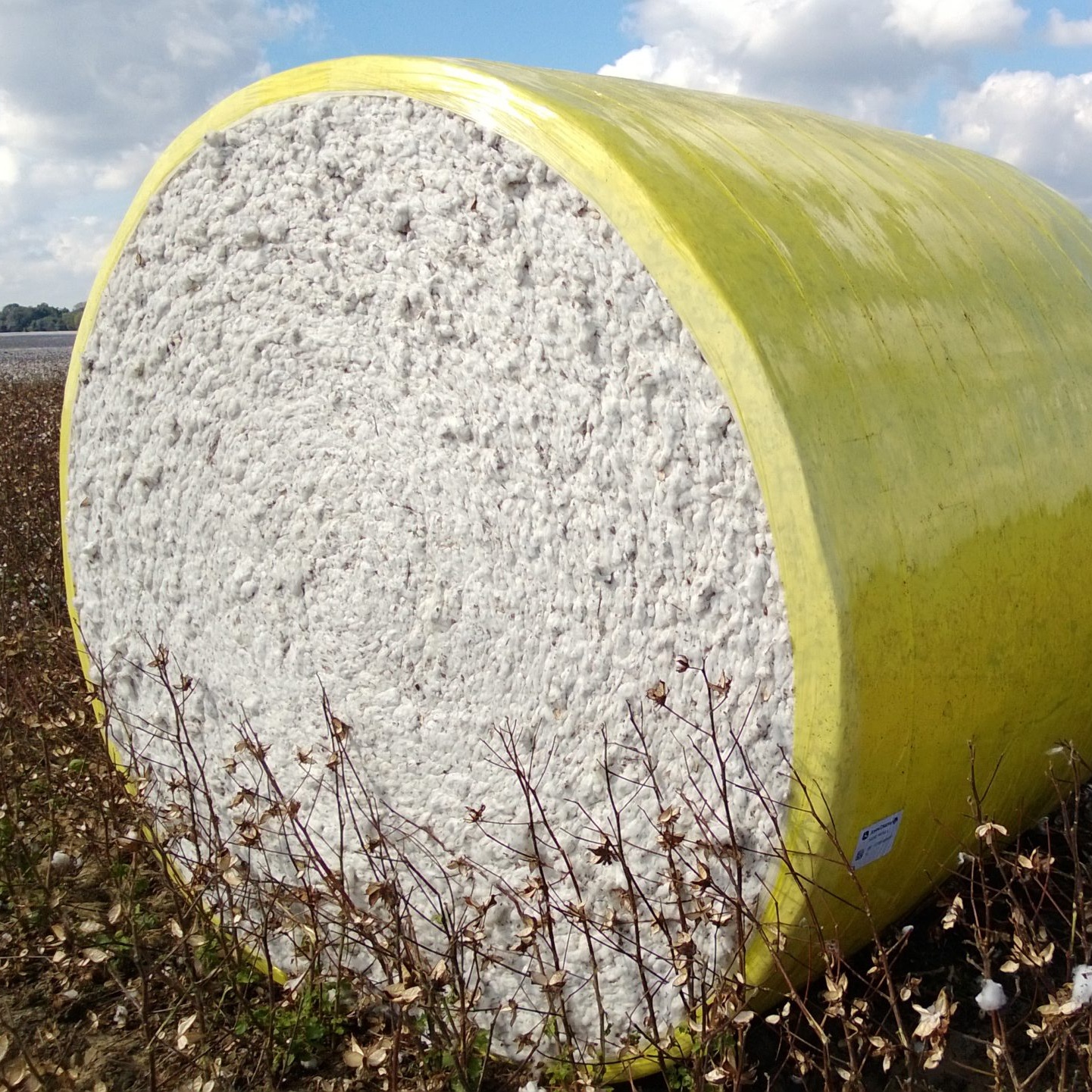
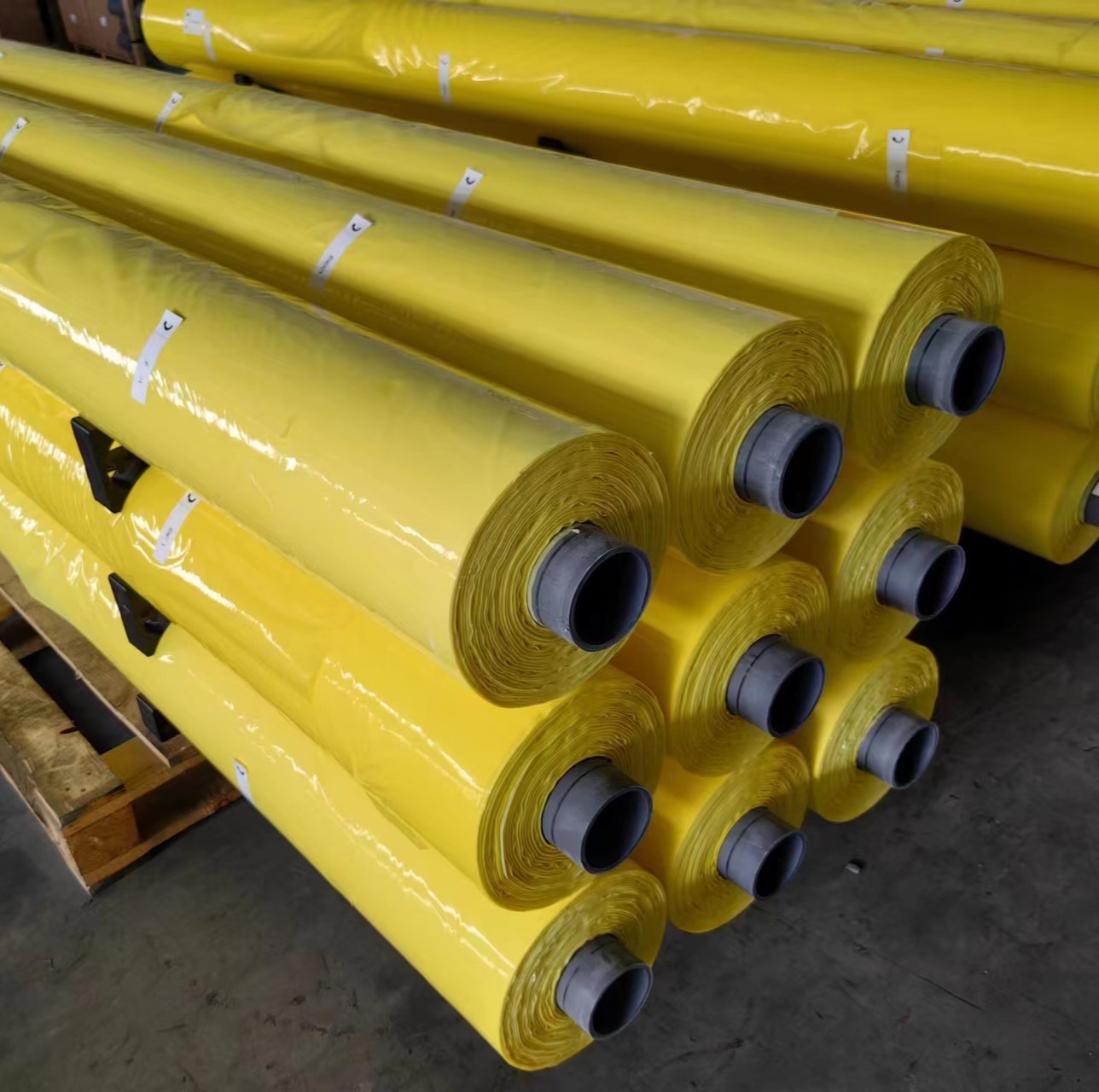
Bright green, yellow, pink, and two-tone wraps are easy to notice across a harvested cotton field, but their colors do not follow one universal code. On many farms, color helps crews spot damaged coverage, separate module groups, and recognize wrap products at a distance, while labels and RFID records provide precise identification.
Understanding cotton wrap colors therefore requires looking beyond appearance. The sections ahead explain what color can realistically communicate, where common assumptions go wrong, and why moisture resistance, strength, equipment compatibility, and clean removal matter more when choosing cotton bale wrap.
Color Makes Field Work Faster and More Visible
Spotting Incomplete or Damaged Wraps
Colored film contrasts with exposed white cotton, helping operators notice gaps, uneven overlap, loose tails, punctures, and uncovered shoulders. That early warning matters because a round-module wrap must form a tight shoulder and survive normal field, transport, and gin handling. Tears or adhesive failures can admit water and increase the risk of plastic entering the ginning process. A green color cotton bale wrap film provides a clear contrast that can make wrapping defects easier to detect. Cotton wrap colors do not repair damage, but they can help crews identify it while correction is still practical.
Identifying Modules at a Distance
Different cotton wrap colors become especially useful when modules are dropped across large fields, moved to turn rows, and assembled later in roadside or gin-yard staging areas. A distinctive surface helps crews locate modules, estimate how many are waiting, and guide handling equipment without approaching every unit. Recognizable colors also reduce visual confusion where cotton, dust, vegetation, and machinery compete for attention. Round-module wraps generally use colors that can be detected reliably under field conditions, showing that visibility is a functional requirement rather than a decorative feature.
Keeping Harvest Groups Visually Separate
A farm may assign colors to fields, harvest dates, crews, contractors, film specifications, or handling priorities. The same green film could identify one production block on one farm and a particular film configuration on another, so the meaning must be written down and shared with operators, drivers, and gin staff. Simple systems work best: give each shade one purpose and connect it to module numbers or electronic records. Used this way, cotton wrap colors shorten recognition time while formal records preserve traceability.
A Wrap Color Does Not Have One Fixed Meaning
Meanings Are Usually Local or Product-Specific
Green does not always signal sustainable cotton, and yellow does not automatically identify premium fiber. Such associations may exist within a supplier’s product range, a farm procedure, or a temporary campaign, but they do not form a dependable industry-wide language. Wraps are identified more accurately through product specifications, printed identifiers, and RFID data rather than a universal chart of cotton wrap colors. A yellow and green color cotton bale wrap film may help with orientation, inspection, or product identification, but it does not certify the cotton inside. Two-tone designs can also help operators recognize the outward-facing surface or check whether the film has been applied correctly.
Color Cannot Verify What Is Inside the Module
Cotton wrap colors cannot confirm fiber grade, variety, moisture content, organic status, harvest date, or exact field origin. Those facts require sampling, certification documents, farm records, printed module numbers, or electronic identifiers. Round-module wraps may contain multiple RFID tags to support unique identification and automated handling. When a color cue conflicts with a label or electronic record, the documented identifier should take priority.
Question
Can color help?
What verifies it?
Is the module easy to locate?
Yes
Visual inspection
Does it match a local group?
Yes
Farm plan and records
What is the cotton grade?
No
Sampling and grading data
Which individual module is it?
Not reliably
Module number or RFID
Is the wrap complete?
Yes
Physical inspection
Is the cotton certified?
No
Valid certification documents
The boundary is simple: cotton wrap colors are fast operating cues, while records carry quality and commercial evidence. Farms gain the most value when both systems agree. Neither should be treated as a substitute for the other.
The Film Beneath the Color Protects the Cotton
Moisture Protection Comes Before Appearance
Round-module film must maintain compression and limit exposure while seed cotton waits in the field or moves to a gin. Moisture is a major risk because higher seed-cotton moisture and longer storage periods can increase yellowing, heating, mold, and fiber deterioration. Poor protection may also reduce cotton color grade, turnout, and gin productivity. Well-formed modules with intact covers are better equipped to withstand rainfall than modules with damaged or incomplete wrapping. Barrier performance therefore carries more financial weight than the choice among cotton wrap colors.
A moisture resistant cotton wrapping film for bales should be assessed as a complete system. Film integrity, shoulder formation, edge overlap, tail adhesion, drainage, and timely repairs all influence whether rain reaches the cotton. Intact wrap can shed water around the circumference, but punctures, loose ends, and modules placed too closely together may trap or admit moisture. Farms should match the film’s barrier properties to local rainfall, humidity, field conditions, and expected storage duration.
Strength, Stretch, and Puncture Resistance
Wrap must stretch around compressed fiber, retain tension after ejection, survive lifting and loading, and tolerate movement during transport. Stalks, stones, rough ground, sharp truck components, and contact between adjacent modules can start punctures or tears. A suitable product therefore balances tensile strength, elongation, tear propagation, impact resistance, and dependable adhesion. Cotton wrap colors may reveal damage, but mechanical performance determines whether the film resists it.
Performance testing should cover tensile strength, tear propagation, puncture resistance, impact resistance, and thickness consistency. Applied film must also form a well-defined shoulder and tolerate normal handling without opening or shifting. Modules should still be placed on well-drained ground, kept away from sharp debris, and repaired before transport. Even strong film cannot compensate for poor staging and handling practices.
Why Multilayer Construction Matters
Multilayer film allows different parts of the structure to perform different jobs. An outer layer can resist weather and ultraviolet exposure, core layers can provide strength and stretch, and inner surfaces can support moisture control or clean release. This structure gives manufacturers room to balance feeding, adhesion, protection, and removal without relying on one uniform material. The number of layers alone, however, does not guarantee field performance.
A five-layer high strength cotton bale wrap film represents a construction approach rather than a color classification. Different layers can be engineered to support cotton storage, handling, and transport while reducing exposure to moisture, dust, and physical damage. Buyers should evaluate layer structure together with tensile data, puncture resistance, roll dimensions, operating temperature, and picker compatibility. One set of cotton wrap colors should never be assumed to be stronger than another without supporting performance information.
Clean Removal Matters at the Gin
Protection is incomplete if the wrap breaks into pieces during removal. A cut through the wrong area, damaged film, or a narrow strip trapped in seed cotton can carry plastic into ginning and later textile processing. Electronic identification can help automated systems position a module correctly, but trained workers and a defined cutting area remain necessary. Clean, controlled removal is therefore a core part of wrap performance.
Bright cotton wrap colors may make loose fragments easier to notice, but visibility cannot guarantee clean removal. The film must peel or cut in a controlled way, remain intact during handling, and suit the receiving gin’s process. Farms should discuss removal requirements before changing film construction or suppliers. A very strong wrap is still a poor choice if it creates avoidable fragments at the feeder.
Choosing Cotton Wrap Colors for a Real Farm Operation
Compare Performance Before Comparing Colors
Selection should begin with the picker and the conditions the modules will face. Roll width, diameter, thickness, feed behavior, tension, and portions per roll must match the equipment. Moisture exposure, ultraviolet intensity, storage time, transport distance, and puncture hazards shape the required level of protection. The gin’s cutting or peeling method also deserves attention. Only after these points are resolved should a farm compare cotton wrap colors or customization options.
Review products in this order:
●Confirm equipment and roll compatibility.
●Check tensile, tear, puncture, impact, and thickness data.
●Match moisture and ultraviolet protection to expected exposure.
●Review shoulder coverage, tail adhesion, and repair procedures.
●Confirm clean removal at the receiving gin.
●Compare cost per protected module rather than cost per roll alone.
●Select a visible color that fits the farm’s operating plan.
Laboratory testing and field performance provide a better basis for comparison than product photographs. Reliable evaluation should include material analysis, outdoor exposure, machine operation, color detectability, and removal performance. A farm comparing cotton wrap colors should confirm that the tested construction matches the supplied product and trial the film under normal harvesting conditions before adopting it across a full season.
Build a Color System Crews Will Actually Use
After performance requirements are satisfied, assign each shade one clear function and document it in the harvest plan. Share that plan with picker operators, handlers, truck drivers, and gin staff, then keep the meanings stable throughout the season. A color that identifies one field should not later become a warning for wet cotton. Consistency makes cotton wrap colors faster to learn and harder to misuse.
Check before purchase
Decision standard
Equipment fit
Correct dimensions and reliable feeding
Protection
Suitable moisture, UV, tear, and puncture performance
Handling
Stable shoulder, secure tail, and repairable damage
Gin removal
Low fragment risk during cutting or peeling
Color contrast
Visible against cotton, vegetation, and soil
Local meaning
One documented purpose per color
Traceability
Linked to, never replacing, module records
Test contrast in the actual working environment. Green may stand out against white cotton but become less distinct near vegetation, while yellow may be highly visible yet resemble another film already used by a contractor. A short field trial can show whether operators detect coverage problems from the cab and whether handlers distinguish groups at normal working distances. The best cotton wrap colors support fast recognition without creating a second, unofficial record system.
Each visual group should connect to a field, date, crew, or handling instruction, while every module keeps its individual identifier. When color, label, and RFID data agree, crews gain speed and traceability. When they do not, movement should stop until the record is resolved. This rule prevents a convenient cue from becoming an expensive assumption.
Conclusion
Cotton wrap colors are most useful as practical visual cues for inspection, sorting, and field organization, not as proof of cotton grade or quality. Farms should first compare equipment compatibility, moisture resistance, UV stability, tear strength, and clean removal before choosing a color. Suzhou Ecopack Co.,Ltd. offers cotton bale wrap options with multilayer construction and customizable specifications designed to protect bales during harvesting, storage, and transport. Used within a clear farm color system, these wraps can reduce handling confusion, improve module visibility, and support more consistent cotton protection.
FAQ
Q: Why do farms use different cotton wrap colors?
A: Farms use different colors to improve visibility, separate locally defined harvest groups, distinguish wrap products, and spot damaged or incomplete coverage more quickly during field handling.
Q: Do cotton wrap colors have standardized meanings?
A: No. Color meanings usually depend on the farm, contractor, region, or product line. Grade, origin, moisture, and certification require labels, records, testing, or electronic identification.
Q: Does wrap color affect cotton protection?
A: Color mainly improves visibility. Moisture resistance, UV stability, tensile strength, puncture resistance, adhesion, and proper coverage have a much greater effect on cotton protection.
Q: Why are round cotton modules wrapped in plastic?
A: Plastic wrap holds compressed seed cotton together and helps shield it from rain, dirt, wind loss, and handling damage while modules wait for transport and ginning.
Q: How are cotton modules identified if color is unreliable?
A: Round modules are typically tracked with printed identifiers, farm records, and RFID tags. These methods provide individual traceability that color alone cannot reliably deliver.
Q: Does green or yellow wrap indicate higher-quality cotton?
A: Not necessarily. A green, yellow, pink, or two-tone wrap may reflect visibility needs, product identification, branding, or a local system rather than cotton quality.