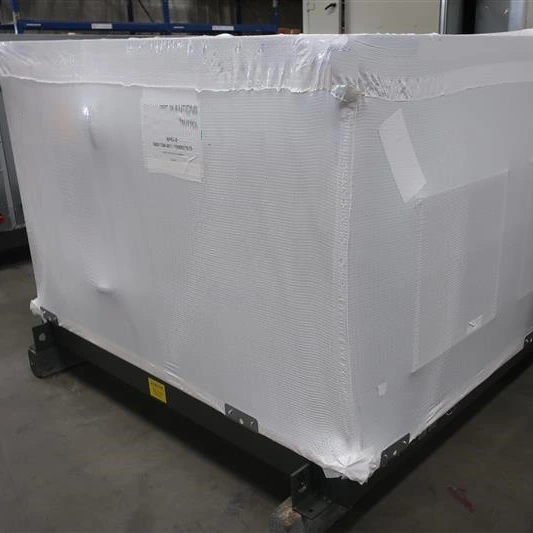
Industrial shrink wrapping can look inexpensive when a buyer considers only the cost of film. An actual installation may also require access equipment, surface preparation, fixing materials, heat-sealing time, suitable tools, inspections, and rework allowances. These costs vary significantly between a simple equipment enclosure and an elevated scaffolding project with numerous joints and openings. A credible industrial shrink wrap installation cost estimate must therefore separate material quantity from on-site work rather than quote a universal rate for every project.
Reinforced heat shrink wrap is one of the materials that may form part of the budget. Installation work is normally planned and priced separately by the contractor or packaging team carrying out the job. This guide helps buyers and project estimators identify the inputs needed for a realistic budget. The method uses clear cost categories and illustrative calculations, not invented market prices or a promise that ECOPACK provides installation contracting.
Budget model
Total installed cost = specified film and accessories + installation labor + equipment and access + preparation and waste + inspection and contingencies. Each category should be based on the actual project scope.
Define the Installation Scope First
Before calculating film area, identify the object or structure being enclosed and the protection expected from the wrap. A short-term dust barrier around stored machinery requires different details from scaffold containment exposed to wind and regular site access. The project may include full encapsulation, selected walls, or a cover that is opened for maintenance.
Create a simple scope drawing showing length, width, height, uncovered areas, and required overlaps. Note whether the structure is accessible from the ground or requires lifts, scaffolding adjustments, or temporary work platforms. Industrial shrink wrap cost factors are driven by geometry as much as total area; complicated corners and numerous penetrations can demand more labor than a large flat section.
Calculate the Correct Film Quantity
Start with the net surfaces to be covered, then add allowances for seams, overlaps, changes in direction, edge returns, openings and trimming. A rectangular equipment enclosure can be estimated by measuring its exposed faces, but irregular machines need a more detailed takeoff. Ordering only the mathematical surface area almost always overlooks material used to form joints and secure the wrap around projections.
Roll width and supplied length also influence waste. A narrower roll may require more longitudinal seams, while an oversized width can generate larger offcuts. The contractor should prepare a cutting and installation plan using the selected heat shrink wrap material category, rather than applying a blanket waste percentage to every job. For repeat projects, actual consumption records from similar installations provide a better starting point than an arbitrary industry average.
Separate Film Grade from Installation Cost
Different shrink-film constructions are selected for different environments. Standard heat-shrink film may be sufficient for a short indoor protection task, while reinforced film can be appropriate where abrasion or demanding outdoor handling is expected. If the project has specific flame-retardant requirements, the chosen material must meet the applicable site specification.
Material quotations should identify roll dimensions, thickness or construction, usable area, delivered price, and required accessories. Avoid comparing film only by price per kilogram when projects use different widths or layer designs. A higher material unit price may be offset by less waste in a compatible layout, although that must be measured rather than assumed. The industrial shrink wrap manufacturer discussion should support material selection without implying a fixed contractor labor price.
Budget component
Estimating input
Common reason for variation
Shrink film
Net area plus layout allowance
Geometry, roll width and material grade
Seam and fixing materials
Seam length, edges and anchors
Openings and joint complexity
Labor
Crew size and estimated work hours
Access, weather and installation detail
Access equipment
Lift or working-platform requirements
Height and site restrictions
Preparation
Cleaning, edge protection and supports
Condition of the object or scaffold
Inspection and rework
Test scope and correction allowance
Exposure risk and acceptance standards
Estimate Labor from Tasks, Not a Flat Rate
Heat shrink wrap labor cost depends on how many operations the crew performs. Time may be needed to measure and stage the film, position sheets, secure edges, form seams, use approved heating equipment, install openings, and inspect the enclosure. At height, safe access and changing weather can influence the work rate.
An illustrative calculation is straightforward: estimated crew hours multiplied by the applicable fully burdened labor rate. If a site expects two workers for three shifts of eight hours, it has planned 48 worker-hours before considering delays or rework. That example is a method, not a recommended crew size or production rate. Actual staffing and safety planning belong to the qualified installation team responsible for the project.
No universal cost per square foot
A fixed price copied from an unrelated scaffold project can be misleading. Height, wind exposure, safety restrictions, seam length, access doors and local labor rates may make two projects with similar surface area very different to install.
Include Accessories and Heat-Sealed Joints
Shrink wrap accessories cost can include compatible tape, fixing clips, edge protection, access-door components, and other materials needed by the chosen method. Where heat welding or heat sealing is required, the installer also needs appropriate equipment and an approved procedure. A large number of small seams can add substantial labor. The cost estimate should therefore contain a seam-length or joint-complexity factor, not just a film-area allowance.
ECOPACK offers shrink wrap accessories alongside its film products, allowing buyers to review compatible material options. That does not mean every accessory is required on every job. A machinery cover with few seams may have a short accessory list, while construction containment can require more extensive anchoring and access details. An accurate purchasing schedule prevents both forgotten items and unnecessary overspecification.
Prepare a Scaffolding-Specific Cost Allowance
Scaffold shrink wrap installation cost should consider the scaffold's structural design, wind loading, tie locations, working height, and required access arrangements. Encapsulation changes the way wind acts on a scaffold, so the installation must be reviewed by the appropriate competent professionals. Costs may arise from engineering checks or modifications before any film is applied. Those requirements should not be hidden inside a generic material estimate.
The construction scaffolding containment application also introduces practical complications such as doors, service penetrations, working platforms, and temporary openings. These may change during the project, creating additional work. An estimator should agree on which changes are included in the original quotation and how later changes will be priced. This helps prevent disagreements between material suppliers, contractors, and site managers.
Turn Measurements into a Transparent Estimate
One useful budgeting worksheet can separate the total into material, accessories, labor, access, preparation, and contingency categories. For each row, record the quantity, unit basis, unit cost, and total. Keep assumptions visible. If a protection period changes from a few weeks to several months, revise the film grade and inspection allowance rather than simply increasing the original total by an arbitrary amount.
Where two materials are under consideration, calculate the installed package for both. A stronger film can cost more per unit yet potentially require fewer repairs under specific conditions; that benefit must be supported by project history or a trial. Similarly, lower-priced film may create more seams if its available width is unsuitable.
Cost estimate workflow
01
Survey — Measure surfaces, access and environmental exposure
02
Design — Define film grade, overlap, fixing and openings
03
Take off — Calculate film area, accessories and seam length
04
Price — Apply local crew, equipment and preparation costs
05
Review — Include inspection, changes and sensible contingency
What to Send When Requesting Material Prices
A procurement inquiry should provide project drawings, net dimensions, expected coverage period, site location, environmental conditions, and relevant construction requirements. Specify preferred film type, color, and roll format where already defined. Ask for compatible material and accessory options, but keep contractor labor estimates separate. This prevents a material quotation from being mistaken for a complete installed-price contract.
A heavy-duty industrial packaging supplier can help clarify available film constructions and roll formats. The industrial shrink wrap material inquiry should state quantities and desired delivery dates, along with any need for samples. Once the material specification is confirmed, the installer can build a properly scoped labor and equipment estimate around the chosen system.
Cost estimate review
✓ Net coverage area and film layout completed
✓ Overlaps, seams and openings included
✓ Film grade and accessories specified
✓ Local labor and access costs separated
✓ Safety and engineering requirements identified
✓ Inspection, waste and changes allowed for
Conclusion
Industrial shrink wrap installation cost is controlled by the combination of material and site work. Accurate drawings, a realistic film takeoff, clear labor tasks, and a separate allowance for access and safety create a more reliable budget than any universal rate. ECOPACK's role is to supply suitable materials and technical product information, while installation pricing remains specific to the project and responsible contractor.
Frequently Asked Questions
Why do installation quotes vary for the same film area?
Access height, surface geometry, fixing details, openings and site safety requirements change labor and equipment needs. Film area alone cannot determine a reliable installation price.
Should seam overlap be included when estimating film quantity?
Yes. Allow for approved overlaps, access openings, trimming, irregular shapes and expected waste. A measured layout is more dependable than using external dimensions alone.
Is there a standard shrink-wrap installation rate?
No universal rate applies. Material supply and site installation are separate costs. A qualified contractor should price labor, equipment and access requirements using the project's actual plans.