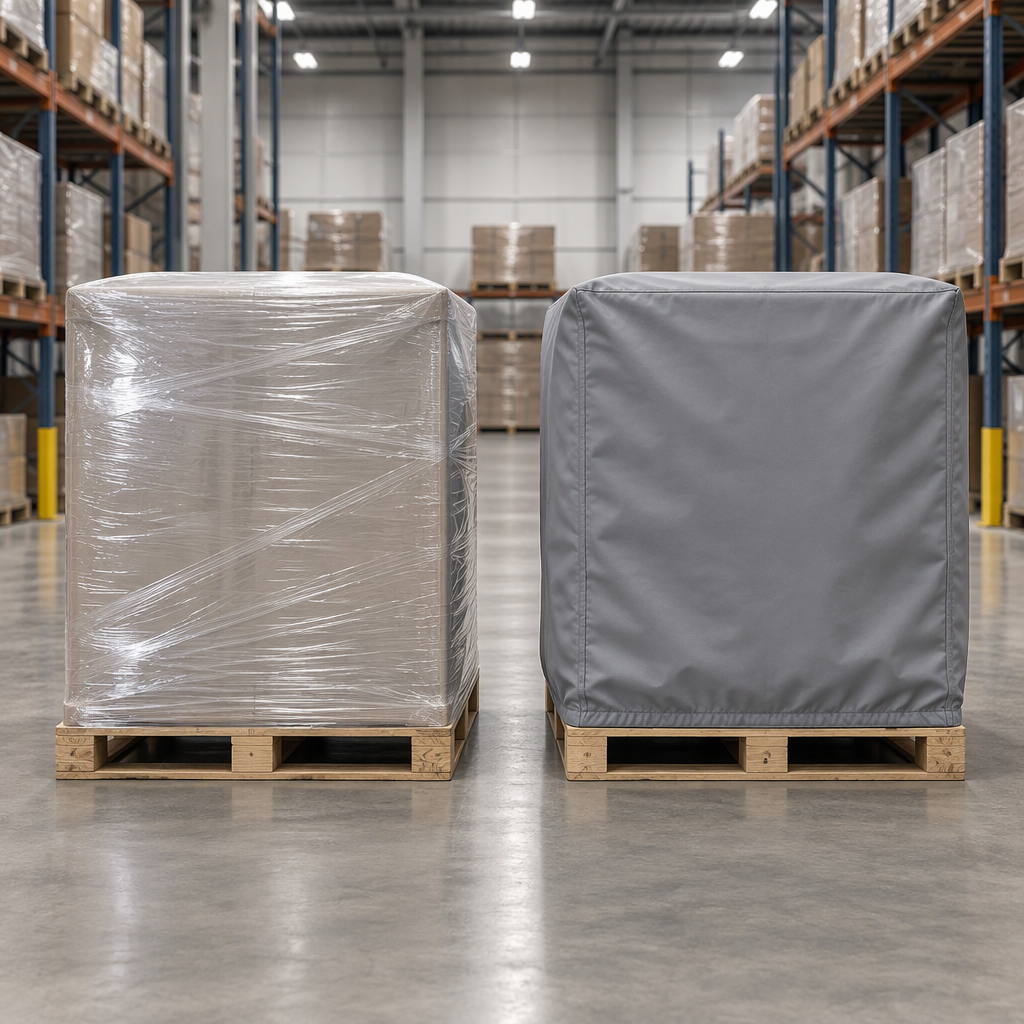
Is shrink wrap always cheaper than a fitted protective cover?
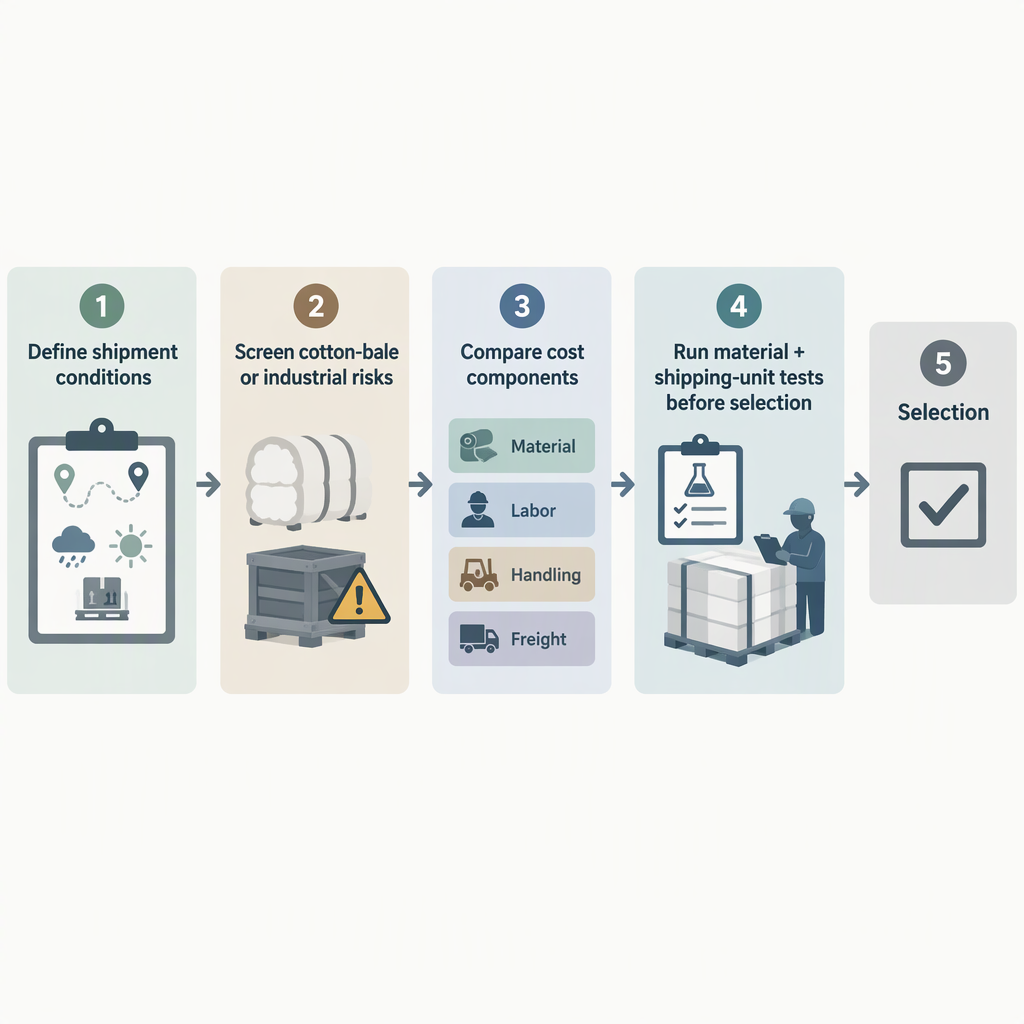
Not necessarily. Compare material, labor, equipment, waste, inspection, rework, removal, and route-test costs before deciding.
Is a fitted protective cover always better for repeated handling?
It can be a strong candidate when access and re-covering matter, but the actual cover must still fit the load and pass the route conditions.
Which option should cotton processors consider first?
Start with bale-protection requirements, contamination risk, handling points, storage exposure, and transportation damage risk, then compare both methods against those conditions.
Does a shrink-film test prove the whole shipment will perform well?
No. Film shrinkage testing helps characterize the film, but finished shipment performance needs complete shipping-unit evaluation.
What should be tested before switching methods?
Test the protected shipping unit against the expected distribution hazards, including handling, storage, and transport assumptions for the route.
What cost data should procurement request from suppliers?
Request comparable assumptions for load size, route, application labor, equipment, removal, waste or return logistics, inspection access, and trial acceptance criteria.
What safety step matters during wrapping-equipment trials?
If a powered wrapper, heat tool, or powered accessory must be cleaned, cleared, or manually accessed, switch it off and disconnect the applicable power source before access, then follow the official manual.