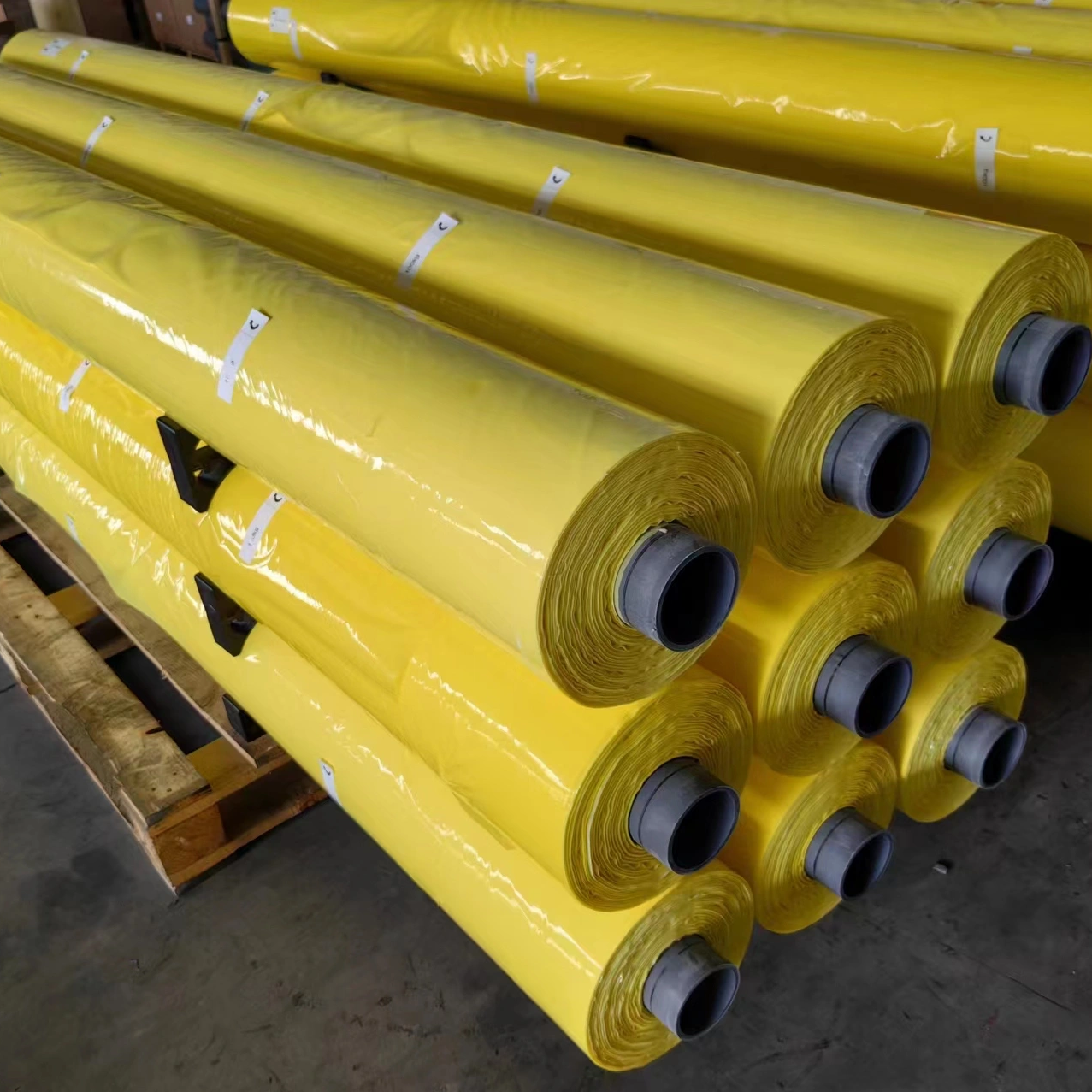
Harvested cotton faces severe environmental and mechanical risks during extended staging and transit. Moisture infiltration and particulate contamination degrade fiber quality rapidly. This degradation leads directly to significant financial penalties and grade reductions at the gin. Standard agricultural wraps frequently fail under the compounding pressures of mechanical transit stress, load shifting, and environmental exposure. When the barrier fails, the result is mold proliferation, permanent discoloration, dust ingress, and contaminated modules. Protecting your yield requires a technical framework for evaluating and selecting the right packaging material. Superficial marketing claims cannot prevent transit damage. You must focus on material science, equipment compatibility, and strict handling protocols. Selecting a high-performance moisture resistant cotton wrap film is an operational requirement for safe transportation and maximum crop valuation.
Material Engineering: True moisture resistance requires multi-layer polyethylene construction (typically around 75 microns) that optimizes the weight-to-strength ratio, delivering extra strength without stiffness.
Immediate & Continuous Protection: Effective films utilize a high-cling inner layer to hermetically seal out dirt, dust, and moisture from the exact moment the bale is formed in the field through to final delivery.
Equipment Synergy: Film must meet strict OEM tolerances (e.g., John Deere cotton bale wrap film standards) to ensure proper tensioning, accommodate large module sizes comfortably, and prevent harvester jams.
Handling Realities: The highest-grade wrap will fail if hauling equipment is not audited for sharp edges or if improper unboxing techniques compromise the film before application.
The Mechanics of Fiber Degradation in Transit (Success Criteria)
Environmental Threats During Extended Logistics
Baled cotton often sits on turnrows or flatbed trailers for weeks before reaching the gin. During this staging phase, modules face relentless exposure to rain, morning dew, and rapid humidity fluctuations. Ground moisture wicking presents a constant threat to the bottom surface of the bale. When water breaches the protective plastic barrier, it becomes trapped against the raw fiber. Solar radiation then heats the module throughout the day. This creates a localized greenhouse effect beneath the wrap, driving humidity levels inside the bale to extreme highs.
This trapped moisture triggers immediate biological and chemical reactions. Fungal spores naturally present in the field environment begin to proliferate rapidly. This causes aggressive mold growth and structural fiber rotting. Simultaneously, chemical oxidation leads to permanent yellowing or graying of the cotton, often graded as spotted or tinged. Wind-driven dust and field dirt exploit the exact same micro-tears in the plastic. Particulate matter embeds deep into the outer layers of the module. The gin relies on strict grading standards to determine payout. There is a direct, unavoidable correlation between moisture or particulate contamination and heavily downgraded bale valuations. You lose money for every ounce of compromised fiber.
Mechanical Stress in Long-Haul Shipping
Logistics introduce a separate category of destructive physical forces. When operators load modules onto flatbeds or chain-bed trailers for highway transport, the bales endure sustained vibration, lateral load shifting, and intense friction. The deck of a trailer acts as a massive abrasive surface. As the truck navigates uneven county roads and hits 65 mph highway speeds, the bales shift. They rub against each other, the tie-down straps, and the transport equipment.
Standard wrap thickness and elasticity routinely fail under these harsh conditions. A basic agricultural film cannot withstand the combined assault of environmental weathering and mechanical abrasion. The plastic stretches beyond its yield point. It thins out until it finally ruptures. Once the structural integrity of the wrap is compromised, road spray, diesel exhaust particulates, and highway debris enter the module freely. Utilizing a specialized cotton bale wrap film for long-haul shipping provides the necessary tensile strength. It absorbs these kinetic forces without shearing or splitting open on the highway.
Technical Specifications of Moisture Resistant Cotton Wrapping Film (Evaluation Dimensions)
Material Composition and Micron Thickness
Premium module wraps rely on advanced high-performance polyethylene (PE) blends. Manufacturers engineer these blends through multi-layer blown film extrusion processes. They incorporate linear low-density polyethylene (LLDPE) and metallocene additives to boost tear resistance. The industry standard for optimal protection is a 75-micron thickness. This specific gauge is not arbitrary. It represents the exact intersection where flexibility meets maximum puncture resistance, verified through ASTM D1709 dart drop testing.
If a film is too thin, it cannot survive the mechanical stress of transport or the sharp stalks left in the field. If it is too thick, it becomes rigid. Rigid film causes tension faults in the baler and fails to conform tightly to the module's circumference. A high weight-to-strength ratio is paramount. This ratio ensures the film delivers heavy-duty protection without the stiffness that impedes efficient wrapping. Evaluating these material properties is the only way to identify a genuine moisture resistant cotton wrapping film capable of surviving extended logistics.
Adhesion, Cling, and Non-Tack Properties
The effectiveness of a module wrap depends entirely on its layer construction. The inner layer must possess aggressive cling properties, typically achieved using Polyisobutylene (PIB) additives. As the on-board module builder applies the film, this inner layer adheres tightly to itself. It creates a hermetic, overlapping seal. This airtight and watertight barrier is what physically locks out environmental moisture, field dust, and road debris.
Conversely, the outer layer must be strictly non-tack. Manufacturers use specific slip agents during extrusion to achieve this. If the exterior of the bale is sticky, modules will adhere to one another during staging and transport. When operators attempt to separate these stuck bales using loaders, the film tears. This destroys the moisture barrier instantly. A smooth, non-tack outer surface allows bales to slide against each other safely during loading, transit load shifting, and unloading at the gin yard.
UV Stabilization and Thermal Resistance
Agricultural plastics degrade rapidly under direct sunlight through photo-oxidation. Ultraviolet (UV) radiation breaks down the polymer chains in polyethylene. This causes the film to become brittle, chalky, and prone to shattering. Premium wraps incorporate heavy UV inhibitors, such as Hindered Amine Light Stabilizers (HALS), during the extrusion process. This stabilization is mandatory for bales staged in open fields for weeks or months prior to long-haul transport.
Thermal resistance is equally critical. In freezing conditions, inferior plastics lose their elasticity and crack upon impact from loaders. In extreme heat, standard films soften. This causes the non-tack outer layer to become sticky and the inner cling layer to lose its adhesive grip. High-grade wraps maintain their structural and chemical properties across extreme temperature spectrums, ensuring the seal remains intact regardless of the weather.
Technical Comparison of Module Wrap Materials
Specification Metric
Standard Agricultural Wrap
Premium Multi-Layer Module Wrap
Micron Thickness
50 - 60 Microns
75 Microns
Layer Construction
Single or Dual Layer
Multi-Layer (Cling Inner, Non-Tack Outer)
UV Stabilization
Basic (3-6 months)
Advanced (12+ months)
Puncture Resistance
Low to Moderate
High (Engineered for transport abrasion)
Moisture Barrier
Permeable under mechanical stress
Hermetic seal (Airtight/Watertight)
Equipment Compatibility and Operational Integration (Solution Categories)
Matching Film to Harvester Specifications
Modern round balers operate with precise mechanical tolerances. The packaging material must integrate seamlessly with the harvester's feeding and tensioning systems. The film must stretch exactly to the manufacturer's specified percentage to encapsulate large cotton modules comfortably. Over-stretching causes the film to snap during application. Under-stretching leaves loose pockets where moisture pools and penetrates the fiber.
Core dimensions, roll weight, and tack profiles must align perfectly with OEM requirements. Utilizing a certified John Deere cotton bale wrap film ensures the material feeds smoothly. It prevents the plastic from gumming up the tensioning rollers or triggering false sensor faults in the cab. The operational risks of using out-of-spec films are severe. Mis-wrapping in the field causes immediate harvest delays. Repeated tension faults lead to equipment downtime. Running unapproved materials can even void expensive harvester warranties.
Vetting a Cotton Bale Wrap Manufacturer
Procuring reliable packaging material requires vetting the production source rigorously. You must establish strict criteria for selecting a cotton bale wrap manufacturer. Look for facilities operating under ISO certifications. These certifications guarantee standardized manufacturing processes and clean-room environments that prevent gel particles from weakening the film. Quality assurance (QA) testing protocols must be documented, verifiable, and available upon request.
Batch-to-batch consistency is the most critical factor. A single roll of defective film can compromise an entire module, costing thousands of dollars. Evaluate the manufacturer's supply chain stability to ensure material availability during peak harvest windows. Always demand Technical Data Sheets (TDS) before purchasing. These documents provide empirical proof of the film's tensile strength, dart drop impact, Elmendorf tear resistance, and moisture vapor transmission rates (MVTR).
Risk Mitigation and Handling Protocols (Implementation Risks)
Pre-Transport Equipment Inspection
The highest quality wrap cannot survive negligent transport conditions. Before loading modules, logistics teams must execute a strict audit of all hauling equipment, flatbeds, and loaders. The goal is to eliminate any physical hazards that could compromise the film's integrity during loading or transit.
Inspect trailer decks for exposed nails, splintered wood, or sharp metal burrs. Check the side rails, rub rails, and stake pockets for rust protrusions and abrasive weld spatter. Loader forks and grabs must be smooth and free of sharp edges. A micro-tear caused during loading will expand rapidly under highway wind shear, destroying the moisture barrier completely. Implementing these equipment audits is mandatory when utilizing cotton packaging film for transportation.
Storage and Unboxing Best Practices
Film degradation often occurs before the roll even reaches the baler due to improper handling. Establish strict guidelines for unboxing wrap cartons in the field or shop. Prohibit operators from using deep-blade knives to cut open the packaging. A knife blade that penetrates the cardboard will score the outer layers of the film roll. This invisible damage creates a repeating weak point. The film will snap repeatedly during baler tensioning or split open on the finished module.
Staging practices for the wrapped modules are equally important. Modules should be staged on elevated, well-drained ground. Avoid placing bales in low-lying areas prone to standing water or heavy runoff. Continuous exposure to pooled water accelerates ground moisture wicking, testing the absolute limits of the bottom seal. Proper staging ensures your cotton packaging material for safe transportation performs to its maximum specification. Additionally, always store unused rolls vertically to prevent telescoping and edge damage.
Cost-to-Value Trade-offs in Cotton Packaging Film for Transportation (Overall Value)
Upfront Material Costs vs. Yield Protection
Procurement decisions driven solely by the lowest unit cost create massive financial exposure. You must calculate the Return on Investment (ROI) based on yield protection. The marginal cost increase per bale for a premium, 75-micron, multi-layer film is negligible when compared to the total value of the cotton it protects.
When inferior film fails, the financial penalties are severe and immediate. The gin will downgrade the cotton for moisture rot, permanent discoloration, and embedded dust. In extreme cases of contamination, entire loads are rejected outright, leaving the grower with zero revenue for that module. Investing in the correct cotton wrap film for storage and transportation acts as a direct insurance policy against these catastrophic grade reductions.
The Hidden Costs of Inferior Wraps
The true cost of cheap wrap extends far beyond the initial purchase price. When a standard film tears in the field or splits during loading, the module must be re-wrapped. This requires specialized equipment. It diverts labor from the harvest and spikes logistical costs. If the bale cannot be re-wrapped, it must be transported with a compromised barrier, guaranteeing moisture ingress and fiber damage.
Transport-related damage also carries heavy liability. If a module disintegrates on the highway due to film failure, you face lost payload and expensive cleanup costs. You also take on potential safety liabilities from road debris striking other vehicles. The structural failure of the plastic directly erodes your operational margins through hidden labor, equipment downtime, and logistical penalties.
Request comprehensive Technical Data Sheets (TDS) from shortlisted suppliers to verify micron thickness, dart drop impact, and puncture resistance.
Conduct a limited field trial with the chosen film to verify seamless tensioning and compatibility with your specific harvester models.
Implement strict handling protocols across your operation, banning deep-blade knives during unboxing to prevent roll scoring.
Mandate pre-transport equipment inspections for all logistics teams to eliminate sharp edges on flatbeds, trailers, and loaders.
FAQ
Q: What makes cotton bale wrap film for long-haul shipping different from standard agricultural wrap?
A: Long-haul wrap is engineered with a heavier micron thickness and multi-layer construction. It features higher tensile strength and puncture resistance to survive highway vibration, load shifting, and wind shear. Standard wraps tear easily under these mechanical stresses.
Q: How thick should moisture resistant cotton wrap film be to prevent transit damage and dust ingress?
A: The industry standard for optimal protection is 75 microns. This thickness provides the necessary balance of flexibility for harvester application and heavy-duty puncture resistance to block environmental moisture and road dust.
Q: What are the specifications required for John Deere cotton bale wrap film?
A: It must meet precise OEM tolerances for core dimensions, roll weight, and stretch percentage. The film requires a specific tack profile to feed smoothly through the baler's tensioning rollers without causing sensor faults or equipment jams.
Q: How do non-tack layers prevent cotton modules from tearing during transport?
A: A non-tack outer layer ensures the exterior of the bale remains smooth. This prevents modules from sticking together on the trailer. When bales slide safely against each other during load shifting or unloading, the plastic does not catch and tear.
Q: Why is the weight-to-strength ratio important when selecting cotton wrap film?
A: A high weight-to-strength ratio means the film provides maximum durability and puncture resistance without becoming overly rigid. If the film is too stiff, it will not conform tightly to the module, leaving air pockets where moisture can pool.
Q: What is the correct way to unbox and store cotton wrap film to prevent premature damage?
A: Never use deep-blade knives to open cartons. This scores the outer layers of the roll and causes the film to snap during baling. Store rolls vertically in a dry, climate-controlled environment away from direct sunlight until use.
Q: How does moisture and dirt infiltration during shipping affect final cotton bale grading?
A: Moisture causes fungal growth, fiber rotting, and permanent discoloration. Dirt embeds deeply into the module. Gins heavily penalize these defects, resulting in severe grade reductions and significant financial losses for the grower.