


Specify equipment transport protection by defining the route hazards, weather exposure, handling method, package format and verification plan before naming a wrap or cover. A shipping-unit test plan can be framed around anticipated distribution hazards, but it must be matched to the actual equipment, load path and exposure assumptions.
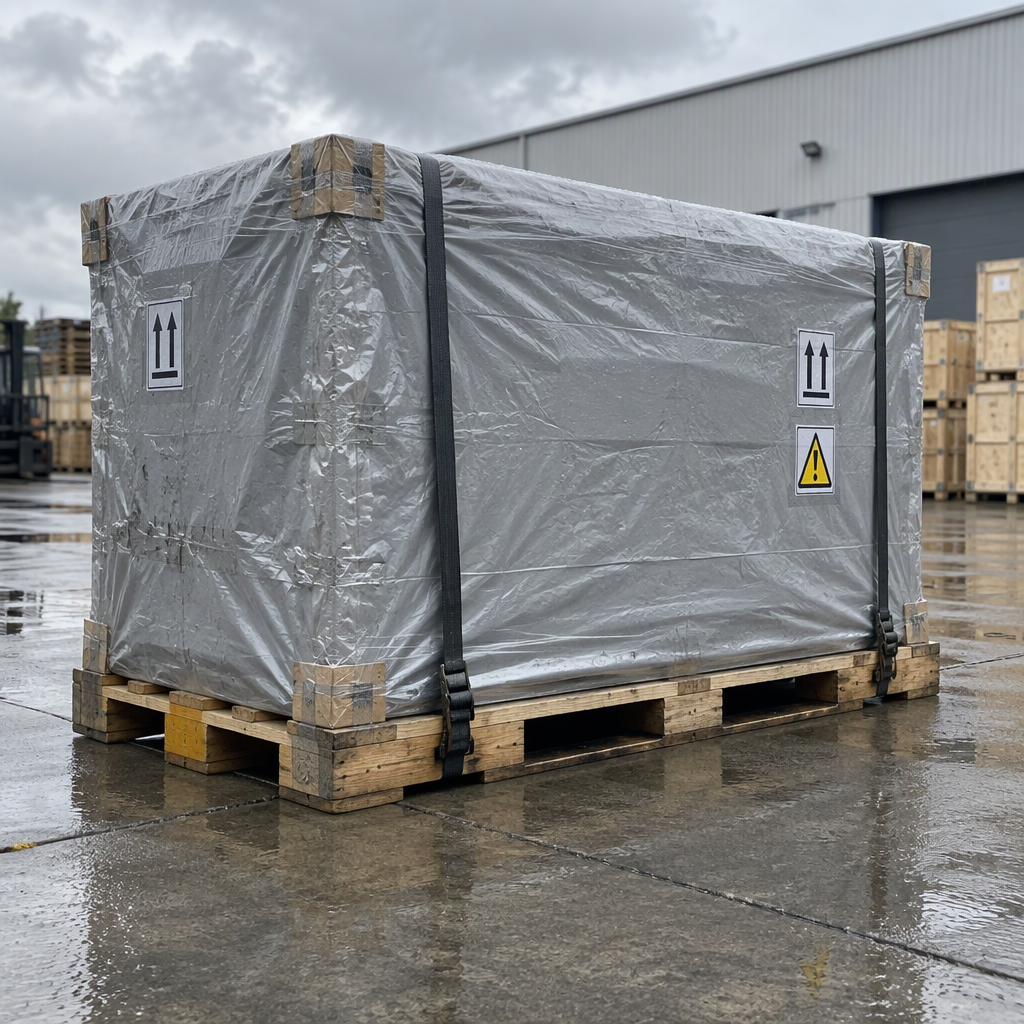
Start with route hazards, not the wrap name
Equipment transport protection should begin with the distribution hazards the packaged unit is expected to meet, not with a generic request for shrink wrap, cotton wrap or a cover.
- Map the shipping unit. Record the equipment dimensions, mass, support points, protrusions and whether the item ships as a crate, skid, palletized load, exposed machine or bundled component set.
- Define the route. Identify road, sea, rail, air, cross-dock, outdoor yard and last-mile legs, because each leg can add different vibration, compression, impact and exposure assumptions.
- Separate simulation from inspection. ISTA describes general simulation procedures for packaged products as tests that simulate damage-producing motions, forces, conditions and sequences of transport environments.
- Turn hazards into requirements. Convert the route into a package brief: moisture barrier need, abrasion resistance need, load stability, lifting access, identification visibility and inspection points.
Define the weather exposure before choosing materials
Weather protection can only be specified clearly when the buyer states the expected atmosphere, outdoor duration and conditioning assumptions before testing or quoting.
- State whether exposure is brief transfer, outdoor staging, open-yard storage, container condensation risk or mixed indoor-outdoor handling.
- Define temperature and humidity assumptions for the route or storage phase, especially where condensation or material stiffness could affect package behavior.
- Tell suppliers whether package components should be conditioned before testing in standard or special atmospheres.
- Separate rain shielding, dust control, abrasion protection, UV exposure and contamination prevention instead of using one vague phrase such as “weatherproof.”
- Identify inspection needs, such as readable labels, access to lifting points and visible tamper or tear checks after handling.
ASTM D4332-22 covers conditioning containers, packages or packaging components in standard or special atmospheres before testing, including atmospheres selected to simulate distribution phases.
Match protection to the handling method
Handling changes the specification because a package moved by forklift, pallet jack, crane, conveyor or mechanical bulk equipment faces different contact, compression and stability risks.
| Handling situation | Specification focus | Buyer check |
|---|---|---|
| Forklift or pallet-jack movement | Keep fork entry, pallet stability and bottom-edge protection compatible with the load path. | Confirm fork pocket access, load center and whether the wrap may contact floor or pallet edges. |
| Mechanically handled bulk or unitized loads | ISTA notes that some procedures address mechanically handled bulk transport containers and unitized-load handling contexts. | Ask which test sequence and load format match the actual handling method. |
| Oversize or sensitive equipment | Use a shipping-unit performance approach that accounts for anticipated distribution hazards. | Define lifting points, center of gravity, shock sensitivity and allowed clamping or strapping zones. |
| Outdoor storage before installation | Balance weather shielding with condensation management, inspection access and label visibility. | State whether the unit will sit on soil, pavement, pallet, rack or vessel deck. |
Select the protection format for the application
The right format depends on the load, exposure and handling brief; ECOPACK presents broad industrial packaging categories including heat shrink wrap, cotton bale wrap, pallet wraps, pallet stretch hood and protective covers.
| Protection format | Where it can fit | Data to request before quoting |
|---|---|---|
| Heat shrink wrap | Industrial loads that need a fitted outer layer and route-specific weather or contamination shielding. | Film behavior data may include thermal shrinkage characterization, but the finished package still needs route-based verification. |
| Cotton bale wrap | Cotton-processing logistics where contamination prevention, bale handling and storage exposure must be defined. | Bale dimensions, bale density, storage location, handling equipment and contamination-control expectations. |
| Pallet wraps or pallet stretch hood | Unitized pallet loads that need load stability during storage and distribution. | Pallet pattern, stacking height, corner exposure, top cover need and equipment compatibility. |
| Protective covers | Equipment, machinery or components that need removable shielding during transport or storage. | Attachment method, inspection access, expected wind, rain, dust and abrasion exposure. |
Apply the same logic to cotton bale protection
For cotton bales, specify contamination, moisture, storage and handling requirements first, then ask suppliers to match the wrap format to those conditions.
- Define the contamination sources to control, such as dust, soil contact, handling marks or contact with other stored materials.
- State whether bales are stored indoors, under cover, outdoors, in transit containers or in mixed yard conditions.
- Confirm bale dimensions, compression, strapping or tie configuration and the handling equipment used at the gin, warehouse and destination.
- Use ECOPACK category information only as a starting point for cotton bale wrap relevance; request product-level datasheets for thickness, strength, compatibility and handling limits.
- Ask how the receiving team should inspect wrap integrity without contaminating the bale or disrupting normal handling.
Do not overread film shrinkage data
Film shrinkage data helps characterize a film material, but it does not by itself prove weather resistance, load stability, puncture resistance or finished-package transit performance.
ASTM D2732-14(2025) covers unrestrained linear thermal shrinkage testing for plastic film and sheeting up to 0.76 mm thickness at specified specimen temperatures.
Plan verification before shipment
Verification should be chosen before shipment by matching the package format, route hazards and environmental assumptions to a suitable performance or simulation procedure.
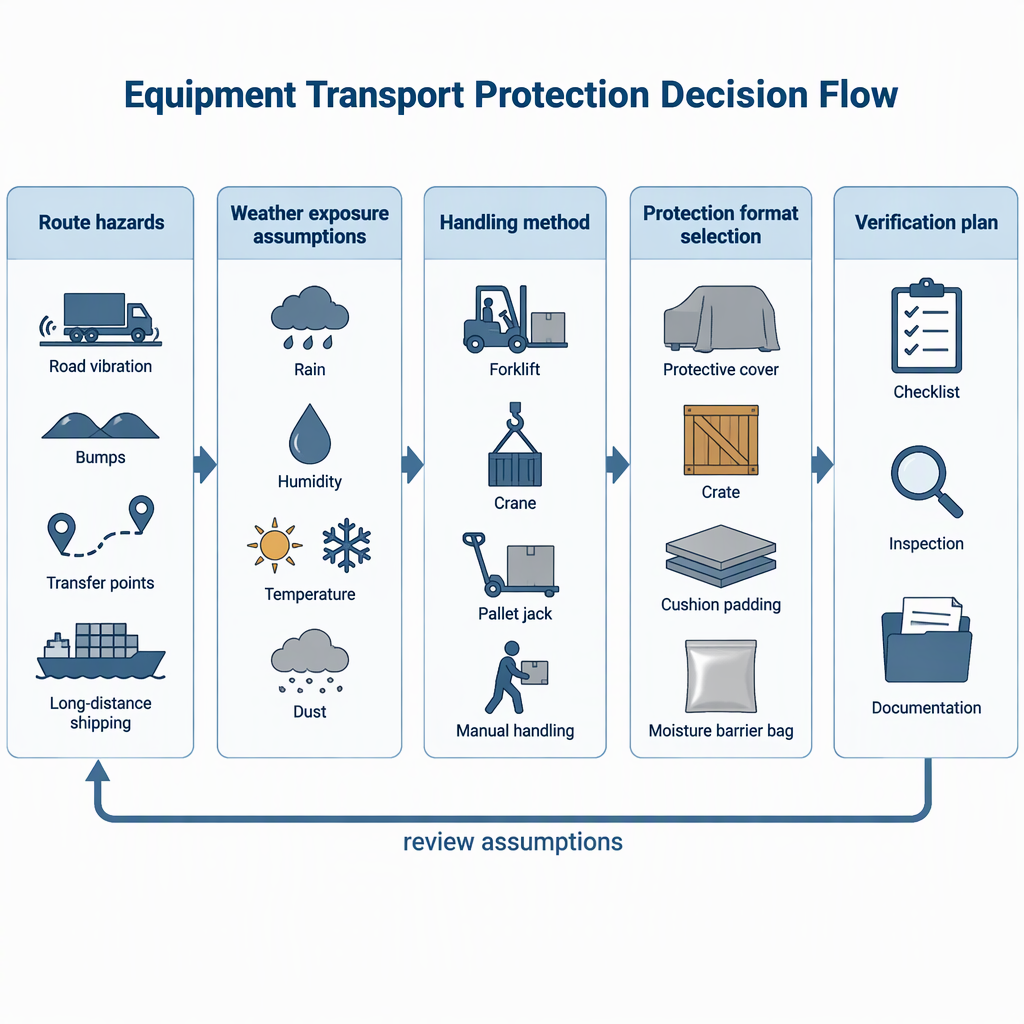
- Use ASTM D4169-23e1 when the RFQ needs a laboratory basis for evaluating shipping units against anticipated distribution hazards through a test plan for containers and systems.
- Use conditioning language when atmosphere may affect package behavior before testing; ASTM D4332-22 supports standard or special atmosphere conditioning for packages and components.
- Review ISTA test procedures when the buyer needs to distinguish general simulation, screening and development procedures for packaged products.
- Define pass/fail criteria in buyer terms: no unacceptable water ingress, no loss of unit stability, no blocked handling access, no critical abrasion and no unreadable shipment identification.
ISTA describes its 3-Series procedures as general simulation performance tests for packaged products that simulate damage-producing transport motions, forces, conditions and sequences.
Build an RFQ checklist suppliers can answer
An RFQ for equipment transport protection should give suppliers enough route, load, handling and verification data to recommend a package without guessing.
- Equipment or bale dimensions, weight, center of gravity, fragile areas and protrusions.
- Route legs, transfer points, expected outdoor storage and final receiving conditions.
- Temperature, humidity, condensation and conditioning assumptions when the package will be tested or stored under defined atmospheres.
- Handling method: forklift, pallet jack, crane, clamp, conveyor, mechanically handled unit load or manual receiving.
- Required protection outcomes: contamination control, weather shielding, abrasion control, load stability, identification visibility and inspection access.
- Material data requested from the supplier, including any relevant film characterization, without treating that data as a finished-package performance guarantee.
- Preferred verification route, such as an ASTM shipping-unit test plan, ISTA procedure review, inspection checklist or a supplier-proposed development test.
Conclusion
The next step is to convert the route, weather and handling facts into a written protection brief, then ask suppliers to respond with format, material data and verification method.
- Start with hazards and shipping-unit requirements.
- Define weather exposure and conditioning assumptions.
- Use film data as one input, not a finished-package proof.
- Treat supplier category pages as starting points until product-level data is provided.
FAQs about equipment transport protection
These questions help buyers close the most common gaps before choosing a wrap, cover or test plan.
Is a transit test the same as a real shipment guarantee?
No. A transit test evaluates the package against defined hazards and assumptions; it does not guarantee every outcome on every future route.
Why does conditioning matter before package testing?
Conditioning matters because temperature, humidity and special atmospheres can affect packages or components before testing.
Can one supplier provide cotton bale and industrial equipment protection categories?
ECOPACK presents broad categories that include cotton bale wrap and industrial packaging options, but buyers should still request application-specific product data before selection.
What does ASTM D2732 tell a buyer?
ASTM D2732 tells the buyer how unrestrained linear thermal shrinkage of certain plastic film and sheeting can be tested; it does not prove final transport protection.
What belongs in a transport-protection RFQ?
Include load dimensions, weight, route, handling method, outdoor exposure, package format, inspection needs and the verification method expected for the shipping unit.
When should logistics engineering be involved?
Involve logistics engineering when the load is high value, oversize, mechanically handled, weather exposed or sensitive to shock, vibration, compression or stability loss.


