


Start with the receiver, not the bale. Plastic bags, wraps and film can be recycled, but they do not belong in a household or curbside bin, and the resin code printed on a film does not tell you whether the scheme serving your site will take it. The decision that matters is narrower: will a specific facility accept your used bale wrap in the condition your crew can supply? Get that answer in writing first.
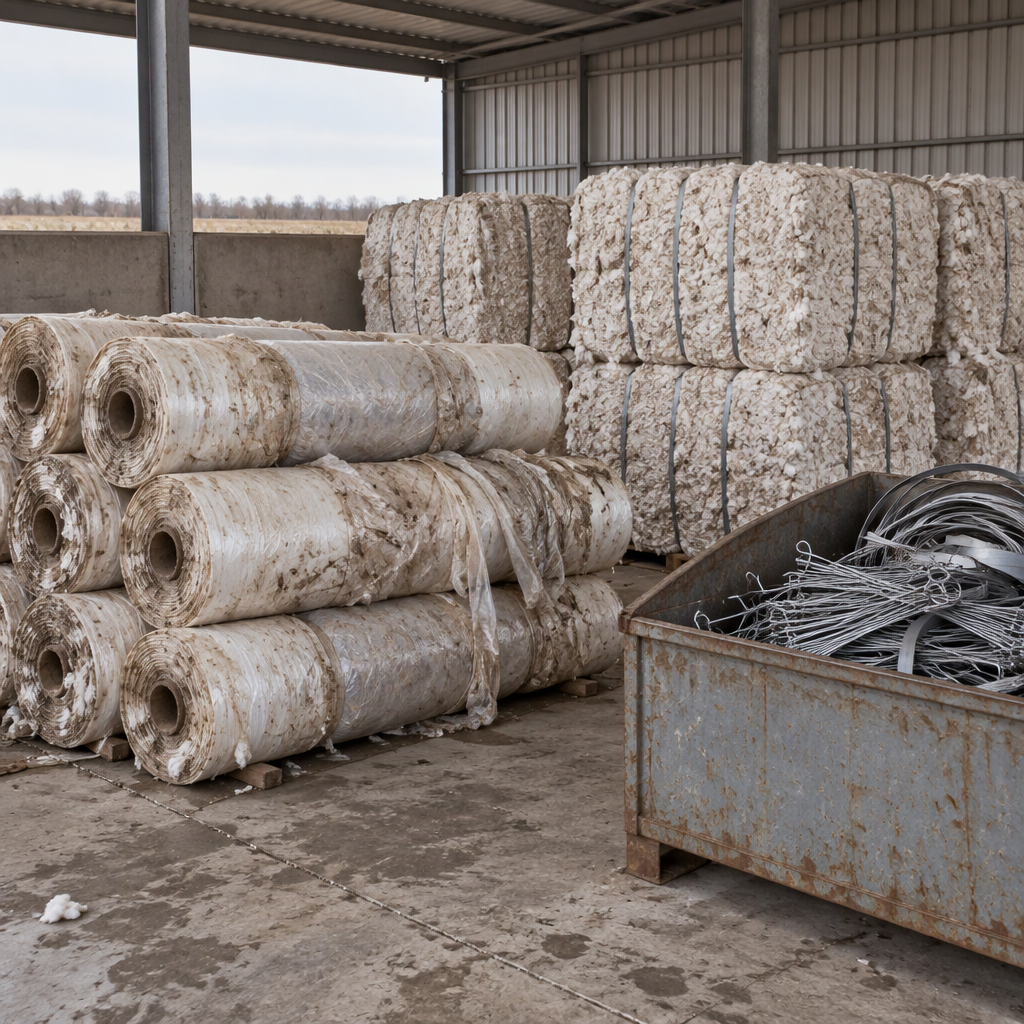
Where is used cotton bale wrap actually accepted for recycling?
Plastic bags, wraps and film are recyclable, but they cannot go into household recycling bins. For used bale wrap that means an out-of-home route: a retail drop-off point, a commercial film recycler or a regional agricultural film collection programme, each one accepting only what its own programme specifies. The EPA's frequently asked questions on recycling states that bags, wraps and film generally cannot go into curbside bins, that many grocery and department stores accept them, and that a programme's own rules, not the resin code on the film, decide what is collected.
| Route | What it is set up to take | Fit for gin-scale bale wrap | Confirm before you collect |
|---|---|---|---|
| Household or curbside bin | Not an accepted route: bags, wraps and film generally cannot go into curbside bins, and non-recyclable items in a bin can contaminate a whole load. | Not suitable | Nothing to confirm; keep bale wrap out of this stream. |
| Grocery or retail store drop-off | Many grocery and department stores accept plastic bags and wrap from customers. | Decided by the store's own policy | Whether the store takes industrial film, in what quantity and in what form. |
| Commercial film recycler | Industrial plastics facility that processes polyethylene film | Possible at industrial volumes | Accepted material description, contamination limits, minimum quantity, delivery or pickup. |
| Agricultural film collection programme | Region-specific collection of agricultural plastics | Possible where a programme covers your area | Whether a programme operates near you and whether it covers bale wrap as well as other agricultural film. |
What makes a load of used bale wrap acceptable or rejected?
Contamination decides the outcome: a receiver that finds ties, strapping, twine, soil, cotton lint or soaked film in your bales may turn the lot away instead of sorting it. The limits belong to the receiving facility, so treat any figure you were given verbally as provisional until it is written down.
| What is in the lot | Question the receiver will ask | Action at the bale |
|---|---|---|
| Wet or damp film | Is dry film required, or is damp material accepted? | Keep the collection covered and off wet ground; divert soaked film. |
| Soil, grit and cotton lint | What visible contamination limit applies? | Brush off loose material before the film goes into the container. |
| Wire ties, strapping, twine, labels, woven bagging | Does the facility take film only, or mixed bale packaging material? | Separate the non-film items into their own container at the bale. |
| Other plastics | Does a single load with non-recyclable items risk the entire load? | Remove non-film plastics before the lot is compacted. |
| Film with no readable material marking | Does the facility need a declared material description? | Request composition documentation from the film supplier. |
The 2026 JCIBPC specifications for cotton bale packaging materials note that careless handling, storage and transport can damage packaging materials, which is a further reason to bag torn film immediately rather than leaving it loose in the yard.
Cut stripped film with a fixed-blade safety knife, keep the blade moving away from your body, and keep your other hand clear of the film's tension line so a snapping wrap cannot catch it.
How should used bale wrap be stripped and collected, step by step?
Work in the order that keeps the film acceptable: confirm the receiver and its condition limits, strip each bale with a controlled cut, separate film from ties, strapping, twine and bagging at the bale, keep the film dry and covered, then compact, label and weigh the lot.
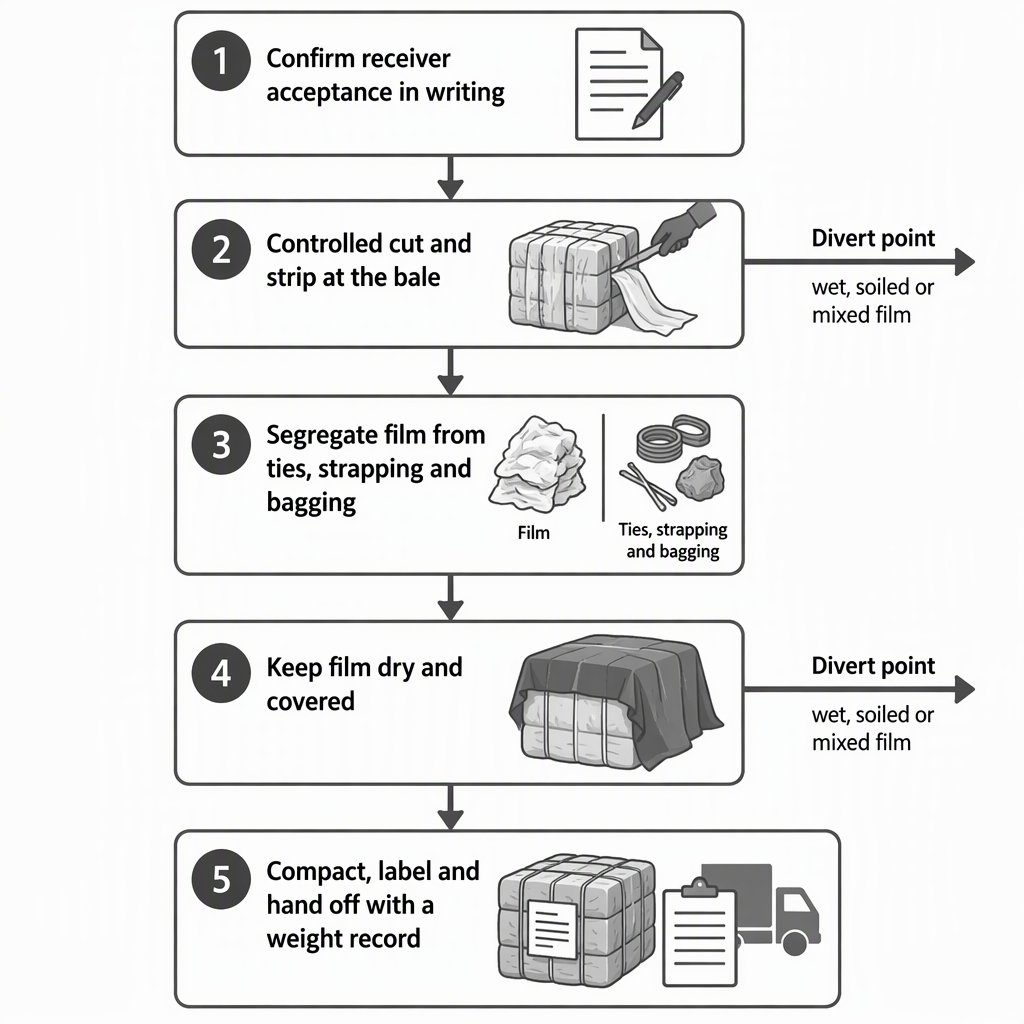
- Confirm acceptance in writing. Record the receiving facility, the material description it accepts, its contamination limits, its minimum quantity and the presentation it expects.
- Set a strip point clear of the bale staging lane. Use a fixed-blade safety knife with controlled strokes, never cutting toward your body or another person. Where wrap is removed at a powered bale opener, feeder or press, switch the machine off and disconnect or lock out its power supply before anyone reaches into the feed path or the machine itself; following the operator manual is not an isolation step on its own.
- Segregate at the bale. Film goes into one container; wire ties, strapping, twine, labels and woven bagging go into another.
- Keep the film dry. Move it under cover straight off the bale, stored off wet ground and away from lint and dust.
- Compact and label. Bag or bale the film by material, tag the lot with its date and origin, and record its weight.
- Divert rather than blend. Soaked, heavily soiled or mixed film goes to the route the receiver nominates, or to your site's waste procedure.
How should collected wrap be prepared and stored before pickup?
A receiver expects a dry, segregated, compacted lot that matches the material description you agreed, presented in the format it asked for and identified with its date, origin and weight. Anything soaked, dirty or mixed should already have been diverted before the collection vehicle arrives.
- Film is dry, with no standing water, soaked rolls or damp pockets in the bale.
- No wire ties, strapping, twine, labels, woven bagging or cotton lint inside the film container.
- Presentation matches the agreement: bagged, baled or loose.
- The lot is tagged with the collection date and the site or line it came from.
- Lot weight is recorded rather than estimated from the number of bales.
- Storage is covered, off wet ground and away from the bale staging area.
- Quantity meets the minimum the receiver stated.
- Contact, pickup window and who signs for the load are confirmed.
- An alternative route is agreed for anything the receiver rejects.
How do you verify a recycler or collection programme before you commit?
Get four things in writing first: the exact material description the facility accepts, its contamination limits, its minimum quantity and the presentation it expects. Add the practical details as well: whether it collects or you deliver, what happens to a rejected load, and what documentation it wants with the delivery. A phone confirmation starts the process; it is not the commitment.
This is why verification comes first. The EPA's guidance on common recyclables records that plastic bags, wraps and films are recyclable but cannot go into household recycling bins, that retail and grocery stores often accept them, and that a resin symbol does not necessarily mean an item is collected in your community. The code describes the material; the programme decides acceptance, so get the facility's answer in writing.
What does end-of-life handling mean for the wrap you specify next season?
It should shape two purchase decisions: how cleanly the film separates from ties, strapping and bagging at the bale, and whether your supplier can provide composition and thickness documentation that a receiving facility will accept as a material record. ECOPACK, an industrial packaging manufacturer established in 2000, publishes its cotton bale wrap film as a high-strength polyethylene five-layer co-extruded film supplied in customizable thickness and width for protecting bales during transport and storage, and lists cotton bale wrap and cotton picker film within its product catalogue. Treat that as a material record to hand to a receiver, not as confirmation that any programme will accept the film.
- Buy one film grade per collection lot so that a single material description matches what you hand over.
- Ask for documents rather than adjectives: composition, thickness and width, in writing.
- Plan bagging and ties on the same timeline. The JCIBPC has adopted a phase-out of woven polypropylene bale bagging with a last approved loan-eligible year of 2031 and a longer transition for wire ties, restricted to export after the fifth crop year in the U.S. loan-eligibility system, as described on the National Cotton Council's bale packaging page.
- Confirm receiver acceptance before you commit storage, equipment or crew time.
Conclusion
Start with the receiver. Get written confirmation of the material description, contamination limits, minimum quantity and presentation, then run one pilot lot through strip, segregate, dry store and weigh before you commit storage space or crew time. If no facility confirms acceptance, keep the film out of any recyclable lot and send it through your site's waste procedure rather than stockpiling it.
Collection works only when the receiving end is fixed first: verify acceptance, strip and segregate cleanly, keep the film dry, hand it over with a weight record, and divert anything that does not meet the agreed description. The same care that keeps film out of the cotton bale also keeps it acceptable to the facility that takes it.
Frequently asked questions
These are the questions that come up most often once a gin or packaging team starts planning a bale wrap collection.
Is used cotton bale wrap recyclable at all?
Polyethylene bags, wraps and film are recyclable, but not through household bins. Whether your used bale wrap is actually recycled depends on a receiving facility accepting it in the condition you can supply, so confirm the route before collection starts.
Can bale wrap go into the normal kerbside or household recycling bin?
No. Bags, wraps and film generally cannot go into curbside bins, and non-recyclable items placed in a bin can contaminate a whole load so that it is thrown out. Keep gin film out of any stream intended for household recyclables.
Where is film actually accepted?
Retail and grocery drop-off points accept bags and wrap from customers, while industrial film recyclers and agricultural film collection programmes handle larger volumes where they operate. Confirm the specific facility and its limits rather than assuming a route is available near you.
How clean and dry must the wrap be before a receiver will take it?
Dry, and free of soil, cotton lint, twine, strapping, labels and other plastics, in the presentation the receiver asks for. Ask the facility for its exact limits in writing.
How do you strip wrap off a bale without damaging the bale or contaminating the cotton?
Cut with a controlled stroke using a fixed-blade safety knife, keep cut film away from the bale surface, and collect film, ties and bagging separately at the bale. Where wrap is removed at powered equipment, switch the machine off and disconnect or lock out its power supply before anyone reaches into the machine. Industry bale-opening guidance covers cutting practice, safety and housekeeping for exactly this reason.
How should collected wrap be baled, bagged and stored before pickup?
In the receiver's required presentation, dry and covered, off wet ground and away from lint and dust, tagged with its date and origin and recorded by weight. Anything soaked, dirty or mixed goes to the alternative route instead of into the lot.
What should I ask a recycler or collection programme before I start collecting?
Ask for the accepted material description, contamination limits, minimum quantity, presentation, delivery or pickup arrangements, the procedure for a rejected load, and the documentation required with delivery, and ask for the answers in writing.
Does the resin identification code on the film mean it will be accepted locally?
No. A resin symbol does not necessarily mean an item is collected in your community; it identifies the material, while the collection programme sets its own acceptance rules. Written confirmation from the receiving facility is what matters.
Does end-of-life handling change how I specify bale wrap film?
It can. Choose a film that matches the material description your receiver accepts, keep one grade per lot, and plan bagging and ties on the same phase-out timeline.


