


Cotton bale wrap storage is a packaging-risk control, not just a warehouse housekeeping task: the National Cotton Council/JCIBPC specifications page states that improper or careless handling, storage, and transportation may damage cotton bale packaging materials, so buyers should protect unused wrap before application and inspect wrapped bales before shipment.
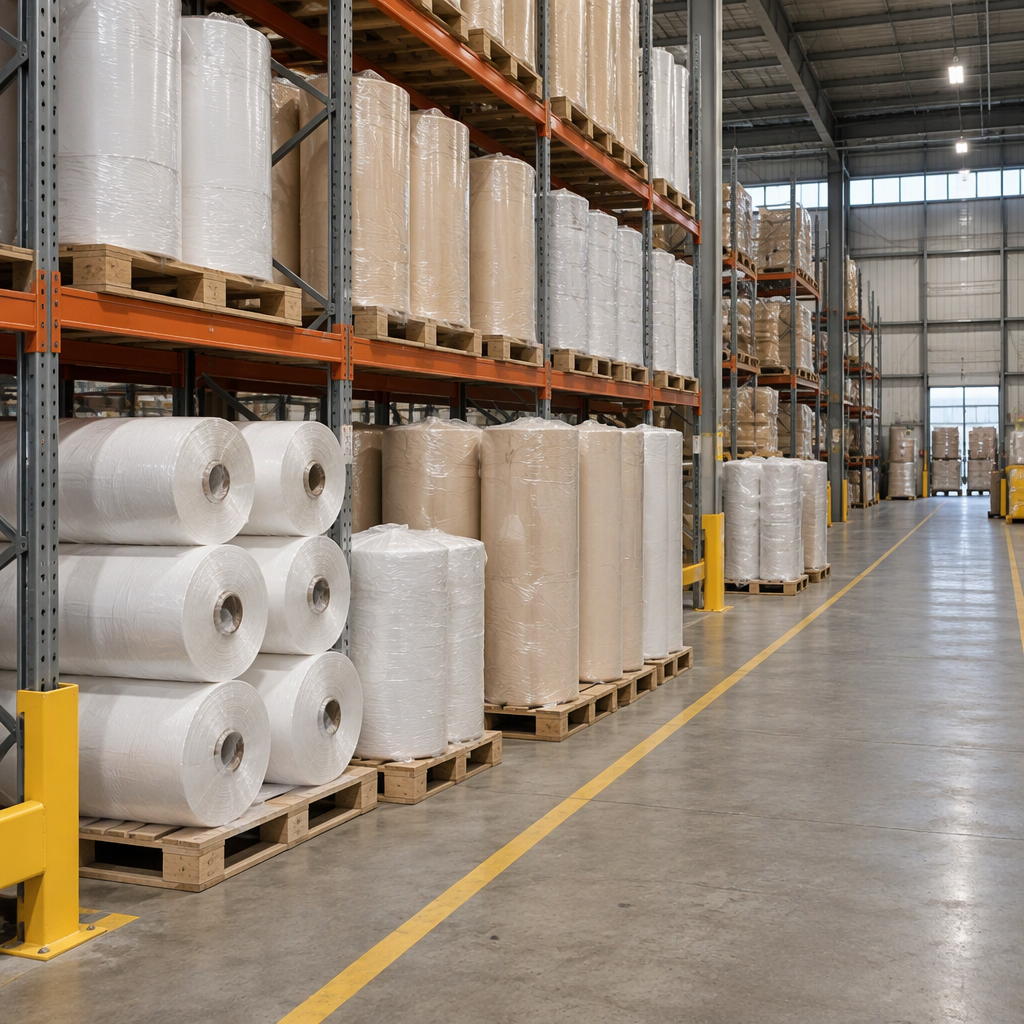
How to Store Cotton Bale Wrap Before Use
Store unused cotton bale wrap so the material is protected from rough handling, weather exposure, floor damage, and contamination before it reaches the wrapping line.
- Receive wrap as a packaging material that can be damaged during handling and storage, and check the outer packaging before accepting it into the usable inventory.
- Keep rolls, sheets, or packs in a clean storage zone away from forklift impact paths, sharp edges, dragged pallets, loose strapping, and other sources of abrasion.
- Protect the material from weather and standing water; when a site cannot avoid temporary staging, separate staged stock from production-ready stock until it has been inspected.
- Use first-in, first-out inventory control by lot, batch, or receipt date when the supplier provides those identifiers, and do not treat older material as acceptable without a condition check.
- Before loading the wrapping line, inspect the visible surface, edge condition, labels, and packaging integrity so damaged material is not applied to cotton bales.
- Confirm that the storage area keeps packaging materials separated from dust, oil, chemicals, standing water, and scrap.
- Confirm that handling equipment lifts rather than drags wrapped packages or rolls.
- Confirm that any supplier storage instructions on the label or data sheet override generic warehouse habits.
- Confirm that questionable wrap is quarantined for supplier review instead of being mixed into line-side stock.
How to Protect Wrapped Cotton Bales in Storage
Protect wrapped cotton bales by keeping the package intact, dry enough for the cotton condition, separated from contamination sources, and handled so the wrap is not punctured or abraded while waiting for shipment or processing.
- Move wrapped bales with handling methods that avoid cutting, dragging, crushing, or scraping the packaging material.
- Store bales on a surface and in a traffic pattern that reduces contact with sharp debris, exposed nails, broken pallet pieces, or metal edges.
- Treat moisture condition as a quality concern because USDA ARS explains that cotton moisture affects downstream textile processing, with too little moisture increasing susceptibility to damage and too much moisture causing sticking to machinery components.
- Separate bales with torn, wet, contaminated, or heavily abraded wrapping so the logistics team can decide whether to rework, segregate, or obtain buyer instructions before shipment.
Inspection Priorities for Stored Wrap and Wrapped Bales
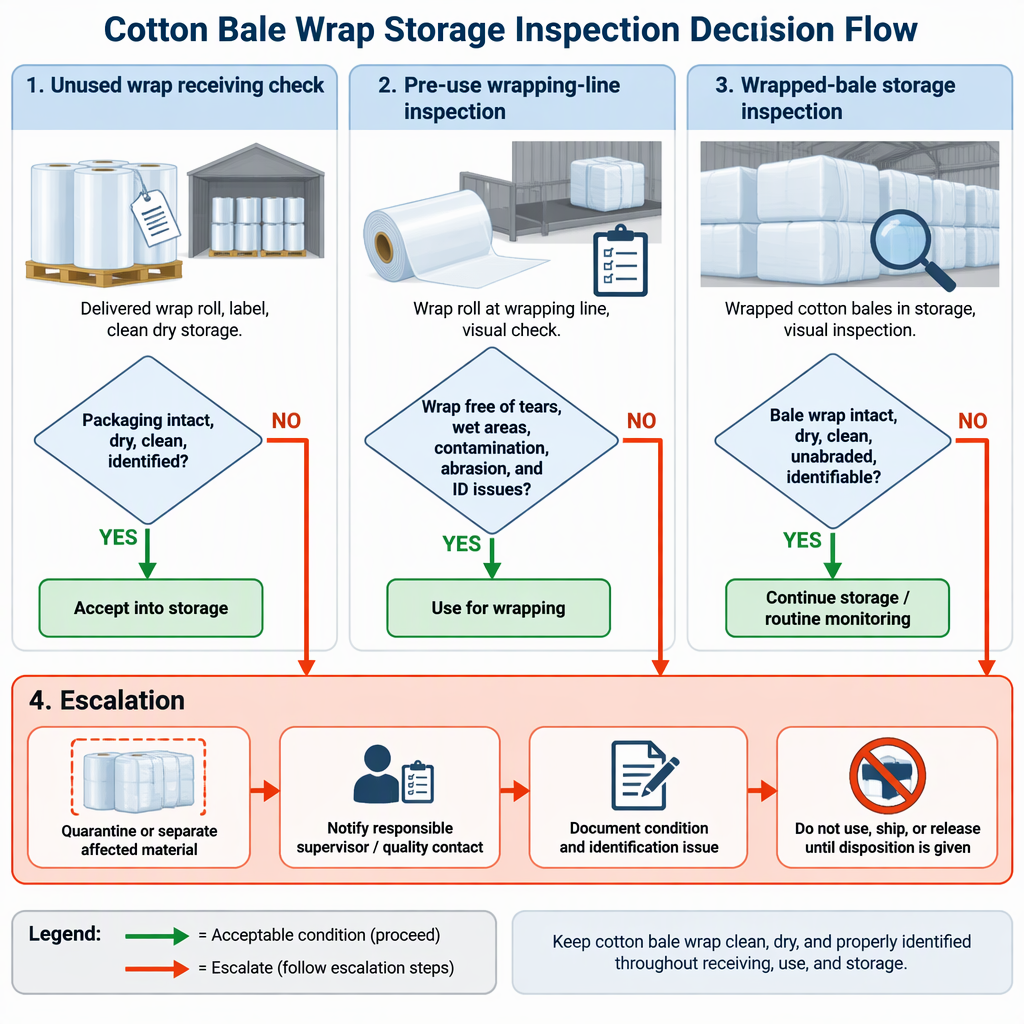
Inspect the risks most likely to make packaging unsuitable for use or shipment: physical damage, moisture exposure, contamination, identification gaps, and handling damage.
| Inspection point | What to check | Buyer decision |
|---|---|---|
| Unused wrap condition | Look for torn outer packaging, crushed edges, abrasion, water exposure, missing labels, or signs that material was dragged. | Use only after line-side inspection; quarantine questionable stock for supplier guidance. |
| Wrapped bale integrity | Look for punctures, loose wrap, rubbed corners, contamination marks, or damage from handling and transport staging. | Segregate damaged bales and decide whether repair, rework, or buyer notification is required. |
| Cotton moisture condition | Check whether the bale condition meets the applicable cotton handling and receiving requirements, because moisture affects processing behavior. | Do not rely on wrap appearance alone; use the site’s cotton-quality controls and customer specifications. |
| Traceability | Match wrap lot information, receipt records, wrapping date, bale identification, and shipment destination where the operation tracks them. | Keep records sufficient to investigate a packaging concern without assuming every bale used the same material. |
- Inspect after receiving, before application, after wrapping, before long storage, and before loading when risk or customer requirements justify those checkpoints.
- Train handlers to report torn packaging instead of concealing or moving it into the next process step.
- Treat storage findings as procurement feedback: repeated edge damage, moisture exposure, or label loss may require changes to packaging format, storage layout, or handling practice.
Standards Boundary: What JCIBPC Context Can and Cannot Prove
JCIBPC context can guide cotton bale packaging expectations, but it is not a substitute for product-specific supplier proof, approval status, or buyer acceptance documentation.
Carryover Materials and Shelf-Life Limits
Carryover material decisions should follow the active program rules and a physical condition check; do not convert carryover eligibility into a universal shelf-life claim.
A practical carryover review should combine documentation and inspection: confirm the material identity, check whether it belongs to an allowed program and crop-year context, inspect for damage from storage and handling, and obtain written supplier or buyer acceptance when the shipment is sensitive.
RFQ Checklist for Cotton Bale Wrap Storage Conditions
Before requesting cotton bale wrap for storage-heavy operations, describe the storage route, handling conditions, inspection requirements, and documentation expectations instead of asking only for a price.
- State whether the wrap will be stored indoors, staged outdoors, moved between warehouses, or held near the wrapping line.
- Describe handling equipment, pallet condition, traffic exposure, and whether rolls or packages may be stacked, moved frequently, or transported before use.
- Ask for the supplier’s storage instructions, package-label requirements, lot traceability format, and procedure for questionable or damaged material.
- Ask which cotton bale packaging specifications, crop-year requirements, or buyer standards the quoted material is intended to support, and request documentary proof rather than a general marketing statement.
- If bale moisture condition is a critical receiving or processing factor, tell the supplier and logistics team how moisture will be measured, documented, and handled before shipment.
| RFQ detail | Why it matters | What to request |
|---|---|---|
| Storage exposure | Packaging material can be damaged through storage and handling. | Product-specific storage instructions and packaging format recommendations. |
| Shipment program | Cotton bale packaging requirements can be tied to the program, crop year, or buyer acceptance context. | Current applicability statement and supporting documents. |
| Moisture-sensitive handling | Cotton moisture condition can affect downstream textile processing. | A shared inspection and escalation process for wet, contaminated, or questionable bales. |
Conclusion
Good cotton bale wrap storage protects the packaging material before use, protects the wrapped bale after application, and turns warehouse findings into purchasing and handling requirements.
Use current cotton bale packaging guidance for the applicable program, protect materials from avoidable damage during storage and transport, and treat cotton moisture condition as a processing-quality concern rather than a cosmetic issue. For purchasing, ask for exact supplier documents instead of relying on generic wrap descriptions.
FAQs About Cotton Bale Wrap Storage
Most buyer questions come down to three checks: whether the wrap remains physically usable, whether the wrapped bale remains protected, and whether the documentation matches the intended shipment program.
Can cotton bale wrap be stored outdoors before use?
Do not assume outdoor staging is acceptable unless the supplier’s current storage instructions allow it. The safer RFQ position is to disclose outdoor exposure and request written guidance for weather, handling, and inspection.
What should be checked before cotton bale wrap is loaded onto the wrapping line?
Check labels, lot identity, outer packaging, roll or sheet edges, visible abrasion, water exposure, contamination, and signs of rough handling before the material reaches production use.
Does a clean-looking wrapped bale always mean the cotton condition is acceptable?
No. Wrap appearance is not a substitute for cotton-quality controls. USDA ARS explains that cotton moisture matters to textile processing, so use the site’s measurement and receiving requirements where moisture is critical.
Can older cotton bale wrap be used if the package is unopened?
An unopened package still needs a documentation and condition check. Confirm the applicable program rules, supplier storage instructions, lot identity, and physical condition before using older material.
Are JCIBPC specifications proof that a supplier’s wrap is approved?
No. JCIBPC specifications provide cotton bale packaging context, but approval, listing, or compliance for a specific supplier product requires product-specific proof and current applicability documentation.
What should logistics teams do with torn or wet wrapped bales?
Segregate the bale, record the condition, and follow the buyer’s or facility’s escalation process before shipment. Do not mix questionable bales into normal loading simply because the damage appears minor.
What should be included in a cotton bale wrap storage RFQ?
Include storage location, handling method, expected staging duration, exposure to traffic or weather, traceability needs, applicable cotton bale packaging program, inspection checkpoints, and the supplier documents needed before purchase.


