For most uses in 2026, polyolefin shrink wrap is the best choice. It gives you better clarity, strength, and flexibility. PVC heat shrink wrap works well for low-budget projects. Polyethylene shrink wrap is great for tough industrial jobs. You must think about clarity, strength, shrink rate, cost, and eco-friendliness. This guide helps you pick the right shrink wrap for your packaging. Knowing these shrink wrap types changes how you make packaging choices.
When a product sits on a store shelf, how it looks helps sell it. Polyolefin shrink wrap gives what experts call "glass-clear" transparency. This film lets shoppers see every part of the product without blur. You can read labels, check colors, and look at textures right through the packaging. This clear view makes polyolefin the top pick for store packaging where seeing the product matters for buying choices.
The optical quality of polyolefin shrink wrap stays steady over its whole life. It resists clouding and keeps its transparency even after long storage. You will spot the difference right away when you compare it next to other films. The material takes high-quality printing without losing its see-through nature. For cosmetics, electronics, and food items, this clarity gives a premium look that shoppers trust.
PVC's Yellowing vs. Polyethylene's Haze
PVC heat shrink wrap starts clear but does not remain that way. Ultraviolet light triggers a chemical reaction that causes yellowing over time. You might see this color change within months, especially in bright store lighting. This yellowing makes products look old and unappealing, which can hurt your brand image. For short-term packaging needs, PVC works fine, but avoid it for products that stay on shelves for long periods.
Polyethylene shrink wrap brings a different issue. This material has a naturally hazy look that lowers product visibility. You can see the basic shape of the product, but fine details become hard to make out. This haze makes polyethylene poor for store displays where customers need to inspect the product closely. However, for industrial uses like protecting machinery or palletized goods, this lower clarity rarely matters. The packaging focus shifts from looks to protection in those cases.
When you look at shrink wrap choices, think about how long your product will stay packaged and where customers will see it. These factors decide whether glass-clear clarity or acceptable haze fits your needs best.
Strength and Durability
When you pick shrink wrap, strength is as important as how it looks. Each type of material deals with stress, holes, and temperature changes in its own way. Your choice depends on what you want to protect and where you keep it.
Polyethylene Shrink Wrap's Industrial Toughness
Polyethylene shrink wrap works great in tough conditions. It stops holes and holds heavy items without ripping. Companies use it for packing heavy goods, machines, and outdoor storage. ECOPACK's Heat Shrink Wrap has reinforced and fire-resistant choices for these hard jobs. This film gives load stability that other materials cannot match.
The tear resistance of heavy-duty polyethylene shrink wrap changes based on direction. Here is the data for a 5-10 mil thickness used in building:
Direction
Tear Strength (Notched Elmendorf, lbs)
Test Method
MD (Machine Direction)
5
ASTM D1922
CD (Cross Direction)
10
ASTM D1922
The cross direction has twice the tear resistance of the machine direction. This makes the film great for wrapping uneven loads with sharp edges. You can trust this material for long-term outdoor storage. Wind and dirt cannot easily damage it. This shrink wrap protects your investment during transport and storage.
Polyolefin's Flexibility vs. PVC's Brittleness
Polyolefin shrink wrap gives you a strong, bendable seal. It handles many touches without breaking. You can move, stack, and ship products without worry. The film stretches under pressure instead of breaking. This flexibility makes it a great choice for store packaging. You get reliable protection for products that get touched often.
PVC acts differently. It gets brittle in cold weather. It cracks or tears when handled. You see this issue during winter shipping or in cold storage. The material also loses bendability over time. Plasticizers leave the film. This makes PVC a bad choice for long-term protection. You should use polyolefin if your packaging deals with temperature changes or rough transport. The shrink wrap seal stays strong through the whole supply chain. It gives you the toughness you need for steady results.
Shrinkability and Performance
Polyolefin's High Shrink Ratio
Polyolefin shrink wrap stands out for its impressive shrink ratio. Most polyolefin films shrink between 30% and 50% of their original size. Some specialized grades reach a 2:1 ratio, meaning they shrink to half their starting dimensions. This high shrink ratio lets the film pull tight around products with unusual shapes. You can wrap items with curves, corners, and protrusions without worrying about loose spots or gaps.
The material shrinks evenly in all directions. This uniform behavior creates a smooth, wrinkle-free surface that hugs every contour. For food packaging, polyolefin films can achieve shrink ratios between 50% and 70%. This makes the film ideal for wrapping fresh produce, baked goods, and other items with irregular forms. The tight fit not only looks professional but also protects the product from moisture and contaminants. You get a clean, secure package that presents well on store shelves.
PVC's Distortion and Polyethylene's Low Shrinkage
PVC shrink wrap behaves differently during the shrinking process. It requires higher temperatures, typically between 120°C and 180°C, to activate. This intense heat can cause uneven shrinking. You might see warping, curling, or distortion on complex shapes. The film pulls tighter in some areas and looser in others. This inconsistency creates an unprofessional look and can damage delicate products.
Polyethylene shrink wrap has a lower shrink ratio than polyolefin. It works best on simple, uniform shapes like pallets and large equipment. The film does not conform tightly to intricate details. Instead, it provides a snug but looser fit around basic geometries. For heavy-duty industrial applications, this lower shrinkage works perfectly. You get reliable protection without needing the precise fit that retail packaging demands.
Attribute
PVC Shrink Wrap
Polyolefin Shrink Wrap
Shrink Temperature
120°C to 180°C
70°C to 110°C
Shrink Force
Tight and firm
Uniform and consistent
Durability
Prone to tearing
Strong and tear-resistant
The table shows why polyolefin outperforms PVC in most shrink wrap applications. The lower temperature requirement means less energy consumption and faster processing. You also avoid the risk of heat damage to sensitive products. When you choose shrink wrap for your packaging needs, consider how the material behaves during the shrinking process. This performance factor determines the final quality of your packaged product.
Cost Analysis
PVC Heat Shrink Wrap: The Budget Option
PVC heat shrink wrap has the lowest starting price. You can buy 100 gauge central fold PVC shrink film rolls for $56.15 to $190.72. Buying in bulk gives even better deals. You get 10% off for orders over $300.00. You get 14% off for orders over $500.00. You save 17% when your order is over $1000.00. These savings make PVC good for businesses on a tight budget.
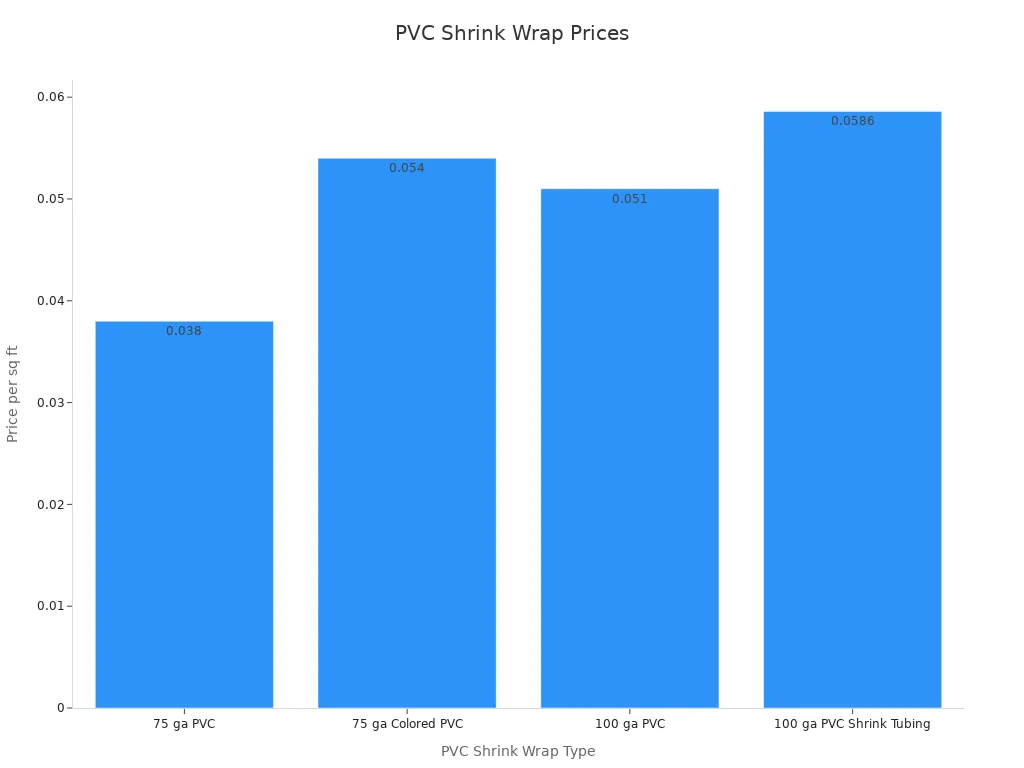
The price per square foot also shows savings. Standard 75 gauge PVC costs $0.038 per square foot. Colored 75 gauge PVC runs $0.054 per square foot. The 100 gauge option costs $0.051 per square foot. PVC shrink tubing for 100 gauge material is $0.0586 per square foot. These numbers show why many firms pick PVC for simple packing jobs.
PVC Shrink Wrap Type
Price per sq ft
75 ga PVC
$0.038
75 ga Colored PVC
$0.054
100 ga PVC
$0.051
100 ga PVC Shrink Tubing
$0.0586
But the low price hides costs over time. PVC turns yellow under UV light. It gets brittle in cold weather. You may have returns from damaged items. You might need to re-wrap products that fail during shipping. These costs add up fast. The first savings vanish when you add replacement costs.
Polyolefin's Value and Polyethylene's Efficiency
Polyolefin shrink wrap costs more at first than PVC. Yet it gives better value over time. The film resists yellowing and tearing. It stays clear for its whole life. You avoid the re-wrap costs that PVC users face. This value makes polyolefin a smart choice for retail packing where product looks matter.
Polyethylene shrink wrap offers a different kind of value. The material costs more per unit than other options. But you can use thinner gauges for tough jobs. The film's toughness means you need less material for the same protection. For bulk industrial packing, this efficiency saves real money. You protect large equipment and cargo without wasting material.
The real cost of shrink wrap goes beyond the buy price. Think about the whole packing process. Consider storage time, shipping conditions, and customer hopes. A cheaper film that fails costs more than a premium film that works. Check your specific needs before you choose. The right shrink wrap balances first costs with long-term reliability. This way you get the best return on your packing investment.
Environmental Impact
The Case Against PVC
PVC shrink wrap carries a heavy environmental burden. This material contains chlorine, a chemical element that creates serious problems. During manufacturing, PVC production releases dioxins into the air. These toxic compounds harm human health and damage ecosystems. When you incinerate PVC shrink wrap, it releases more dioxins. This makes PVC the least eco-friendly option among the three materials.
You might think recycling solves the problem. Unfortunately, PVC recycling remains difficult and rare. Most recycling facilities reject PVC because it contaminates other plastic streams. A single PVC film can ruin an entire batch of recyclable plastics. This means most PVC shrink wrap ends up in landfills. There, it sits for decades without breaking down. The environmental cost of choosing PVC extends far beyond your initial purchase.
Recyclability of Polyolefin and Polyethylene
Polyolefin and polyethylene shrink wrap offer a cleaner environmental profile. Both materials contain zero chlorine. They produce no dioxins during manufacturing or disposal. You can recycle both through standard plastic recycling programs. This makes them far better choices for businesses that care about sustainability.
Polyethylene stands out as the most widely recycled shrink wrap material. Many municipal recycling systems accept it without special handling. ECOPACK takes this commitment further. They offer biodegradable options for their polyethylene heat shrink wrap. These films break down naturally over time, reducing landfill waste. You can meet your sustainability goals without sacrificing protection.
Polyolefin also recycles well, though you need to check local facilities. Many recyclers accept it alongside other polyolefin plastics. The key difference lies in the absence of harmful chemicals. Your packaging choices affect the planet. Choosing chlorine-free shrink wrap reduces your environmental footprint. It also signals to customers that you take sustainability seriously. This matters more each year as consumers demand greener products.
Best Use Cases
When to Choose Polyolefin Shrink Wrap
You should pick polyolefin shrink wrap when your product has to look great on a store shelf. Retail products, food, cosmetics, and electronics all do well with this film's clear finish. The wrap fits tightly around every part of your product. This neat, professional look tells customers the item is high quality before they touch it.
The food industry uses this material a lot. Polyolefin shrink wrap meets FDA rules for direct food contact. Unlike PVC, it has no chlorine and gives off no bad fumes during sealing. This makes it the only safe pick among the three for food packaging. The film also handles heat and cold well. It keeps your products fresh and safe through the whole supply chain.
Market data shows strong demand in many areas. North America uses polyolefin a lot for food and store packaging. Europe likes it for cosmetics and electronics. Asia-Pacific counts on it for medicine and drinks. Latin America uses it for consumer goods and farming. The Middle East and Africa apply it in building and food. This wide use confirms its flexibility.
E-commerce is a growing chance. Online sellers need safe shipping packaging for many items. Polyolefin gives the toughness to survive travel. It also keeps a clean look when the package arrives. You get both protection and good looks in one product.
When to Choose PVC or Polyethylene Shrink Wrap
PVC heat shrink wrap still works for simple, low-cost jobs. Think about CDs, DVDs, or free giveaways. These items have simple shapes and short shelf lives. The low price makes PVC good for these uses. You avoid the yellowing problem because the product sells fast. Just keep in mind that PVC cannot handle food contact or long storage.
For heavy-duty industrial work, polyethylene shrink wrap stands alone. Boats, cars, machines, modular buildings, and building projects all need serious protection. ECOPACK's Heat Shrink Wrap gives that. The strong film blocks moisture, dust, wind, and UV rays. You can leave equipment outside without worrying about weather damage.
The building industry gains a lot from this material. Workers use polyethylene shrink wrap to protect structures while building. They cover bridges and tunnels during repairs. They guard wastewater plants and temporary buildings. The film stops water, wind, and dirt from causing harm. This makes both structures and equipment last longer.
ECOPACK offers special options for tough places. You can pick flame-retardant film for fire-sensitive areas. VCI options stop rust on metal parts. Biodegradable versions meet green goals. Custom sizes and colors fit your exact needs. This flexibility makes polyethylene shrink wrap the clear winner for industrial jobs where toughness matters more than looks.
Best practice for food packaging: Always pick certified, food-grade, FDA-approved polyolefin film that can touch food directly. PVC shrink film is not FDA-compliant and gives off bad fumes when heated, so it is not good for food packaging.
Your choice depends on what your product needs. Match the material to the job, and you will get the best results.
How to Choose the Right Shrink Wrap
Key Questions to Ask Your Supplier
Before you buy any film, you need the right details from your supplier. Start with shrink tunnel temperature needs. Different shrink wrap materials need different heat levels to work. PVC works at lower temperatures, around 215–235°F for 75 gauge film. Polyolefin needs more heat, usually 255–275°F for the same gauge. Ask your supplier for the exact temperature range for the film you plan to use. This matters because your current equipment may not reach the required heat.
You should also ask about seal strength. The seal is the weakest part of any shrink wrap package. A weak seal means product damage during shipping. Ask your supplier if they test their film using ASTM F88. This standard measures the force needed to pull a seal apart. It gives you a clear number to compare between different films. You want a film that delivers strong, steady seals every time.
Food-grade compliance is another key question. If your product touches food, you need film that meets FDA standards. Polyolefin shrink wrap passes FDA and EC rules for direct food contact. PVC does not. Ask your supplier for proof that their film is safe for your specific use. Do not skip this step. The wrong film can contaminate your product and cause legal issues.
Finally, ask about UV stabilization. If your packaged product sits in sunlight, you need film that resists UV damage. Polyethylene shrink wrap often comes with UV stabilizers built in. Polyolefin resists yellowing naturally. PVC breaks down quickly under UV light. Your supplier should tell you exactly how their film handles sun exposure.
Testing Your Product for the Perfect Fit
You cannot judge shrink wrap materials by spec sheets alone. You need to test samples on your actual products. Ask for sample rolls from your supplier before you buy a full order. Run them through your shrink tunnel at the recommended temperatures. Watch how the film acts as it shrinks. Does it fit tightly to your product's shape? Does it wrinkle or distort? These observations tell you more than any brochure.
Test the clarity of the shrunk film. Put your packaged product under bright lighting. Check if customers can see the product clearly. Look for any haze or yellowing that might hurt your product's look. For retail packaging, this visual test matters as much as the technical specs.
Check the durability of the sealed package. Drop it, stack it, and expose it to temperature changes. See if the seal holds. Check if the film tears or punctures easily. You want a film that survives the real-world conditions your product will face.
For custom uses, testing becomes even more important. ECOPACK offers custom-fit heat shrink wrap options. You can ask for samples made for your exact product sizes. Test these samples fully before placing a bulk order. This testing process helps you avoid costly mistakes. You will know exactly how the film works before you invest in large amounts. The right shrink packaging choice comes from hands-on testing, not guesswork.
In 2026, polyolefin shrink wrap is the best choice for most uses. It gives you better clarity, strength, and flexibility. Use PVC shrink wrap only for low budgets and simple shapes. Use polyethylene shrink wrap for tough industrial or outdoor storage. Do not just pick the cheapest option. Think about your product's needs for clarity, strength, and eco-friendliness. This way, you pick the best packaging for your business and customers, balancing cost and performance.
FAQ
Can you use polyolefin for food packaging?
Yes. Polyolefin meets FDA standards for food packaging. It contains no chlorine and produces no harmful fumes during sealing.
Can you use the same shrink tunnel for different shrink wrap materials?
Each material requires different heat levels. PVC shrinks at lower temperatures than polyolefin. Check your equipment before switching.
Which shrink wrap works best for outdoor storage?
Polyethylene resists UV rays and moisture effectively. ECOPACK offers reinforced options for heavy-duty outdoor protection of equipment.