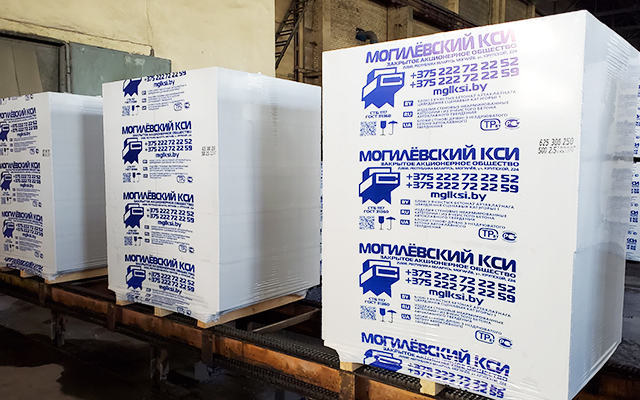
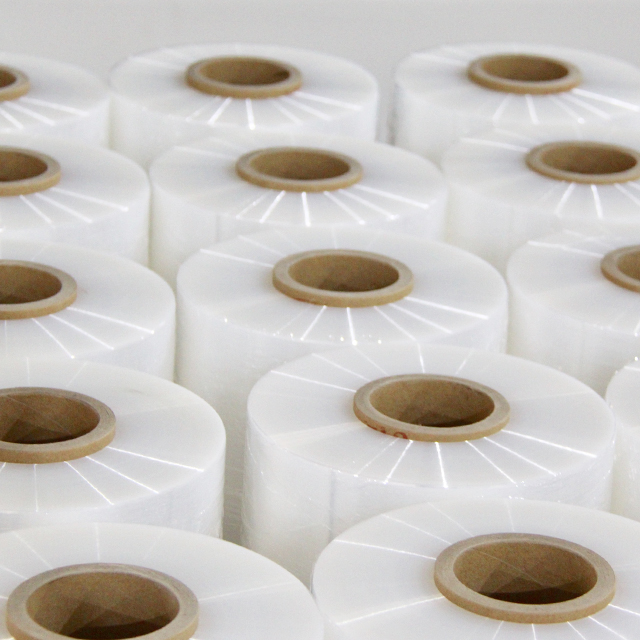
The cheapest stretch film roll is not necessarily the cheapest way to secure a pallet. Purchasing teams often compare price per roll or price per kilogram, but production performance depends on how much usable film reaches each finished load. Film breaks, extra revolutions, discarded tails, and changes in pre-stretch settings can all affect the result. A reliable stretch film cost per pallet calculation therefore starts with measured consumption, not a supplier's claim about how many pallets a roll should wrap.
The 55-layer nano stretch film is one option for evaluating performance and material use on a compatible wrapping system. Its multilayer construction can be assessed against other grades, but the financial comparison must use the same pallet types and acceptance criteria. This guide develops a practical cost model that purchasing and production teams can adapt with their own numbers. It is about procurement mathematics, not a compatibility manual or a general stretch-film product overview.
The equation to remember
Film cost per pallet = delivered cost of usable film consumed for one accepted pallet, plus an allowance for actual material waste. Always measure consumption under an approved wrapping recipe.
Define Which Cost You Are Measuring
“Cost per pallet” can mean several things. One company may count only the film removed from a roll, while another includes broken film, discarded cores, operator time, and equipment downtime. Neither approach is automatically wrong, but the chosen definition must be clear before suppliers are compared. For material purchasing, start with the cost of film actually consumed per accepted load, then add other operating costs in a separate calculation.
The distinction matters when comparing a low-priced film with a higher-performance grade. If the cheaper film requires more revolutions, fails around sharp corners, or produces more scrap, its material cost per finished pallet may be higher. Conversely, an expensive formulation should not be accepted simply because it is described as “nano” or “high stretch.” It must deliver measurable value in the buyer's operation.
Measure Stretch Film Usage per Pallet
The most dependable starting point is a controlled line trial. Weigh a film roll before and after wrapping a known number of accepted pallets, subtracting any separately measured scrap if the objective is net applied film. Alternatively, use calibrated equipment counters with verified film mass-per-meter data. Both methods should be checked against physical measurements where possible. Record the load type and machine recipe because a tall pallet can consume substantially more material than a short one.
Use a sufficiently large sample to smooth out roll-start and roll-end effects. If the trial includes several pallet formats, calculate a separate rate for each group before combining them according to actual production volume. A single average taken from a mixture of light and heavy loads may hide where material is being overused.
Calculate Material Cost Using Real Inputs
A simple formula is: film cost per pallet = net film mass applied per pallet × delivered film cost per kilogram. Add the cost of scrap film per accepted pallet when waste is not already included in the measured usage. If pricing is quoted per roll, divide the delivered roll price by the roll's usable net film mass to obtain a comparable unit cost. This avoids counting cardboard core weight as purchased film.
For illustration only, suppose a site measures 0.16 kg of film per accepted pallet and the delivered film price is $2.40 per kg. Its applied film cost would be $0.384 per pallet before separately counted scrap and other handling costs. These figures are example inputs, not ECOPACK prices or guaranteed material consumption. Replace them with site-specific results to create a working spreadsheet.
Cost input
Example value
Calculation role
Applied film per accepted pallet
0.16 kg
Measured production average
Delivered film price
$2.40/kg
Actual landed material cost
Applied film cost
$0.384/pallet
0.16 × 2.40
Trial scrap allowance
$0.016/pallet
Measured or separately allocated
Total film material cost
$0.400/pallet
Applied film plus scrap
Understand Stretch Wrap Roll Yield
Suppliers sometimes describe how many pallets can be wrapped from a standard roll. That figure is useful only if the load size, film width, wrapping pattern, and machine settings match the buyer's operation. A roll used on a high-turnover distribution line may deliver a different yield from the same roll used for short pallets.
For example, if a roll contains 15 kg of usable film and actual consumption averages 0.15 kg per accepted pallet including normal process loss, the simple yield is 100 accepted pallets. A changed pallet height or wrap recipe can alter that number immediately. Avoid mixing gross roll weight, cardboard core weight, and film-only weight in the same comparison. Buyers evaluating industrial pallet wrap should require suppliers to define the roll format and usable quantity consistently.
Account for Pre-Stretch without Double Counting Savings
Pre-stretch draws a longer length of film from a shorter original length, allowing the carriage to cover the load using less unstretched material when the system and film grade are suitable. However, a higher setting does not necessarily improve real-world economics. The film can neck down, tear, or lose useful containment force if the machine operates outside the material's practical range.
Compare a candidate's actual kilograms per accepted pallet after the wrapping recipe has been approved. Do not calculate one saving from a theoretical pre-stretch percentage and add a second saving from the measured reduction in film weight; that counts the same effect twice. Record the machine's actual settings and monitor break frequency.
Keep savings claims traceable
Percentage reduction in film use is meaningful only when the baseline, load type, film specification, wrapper recipe and measurement method are stated. A manufacturer's stretchability figure is not a site-wide savings guarantee.
Include Waste, Core Weight and Material Changes
A realistic pallet wrapping consumable cost also reflects film left on cores, roll-end scrap, breaks during start-up, and rejects caused by unstable loads. Small losses can add up on a line producing thousands of pallets. If the wrap recipe changes after maintenance or a new carton format is introduced, consumption must be measured again.
Keep core weights and roll handling costs in separate fields rather than hiding them inside a simplified price-per-roll comparison. Supplier quotations should distinguish net film weight, tolerances, packaging, and delivered freight terms. Where product quality is consistent, these details make it easier to compare total annual procurement cost. A stretch film manufacturer and supplier relationship is more useful when both parties agree on how performance and quantity will be verified.
Build a Weighted Cost Model for Several Pallet Types
Many facilities handle more than one pallet size. To obtain an annual estimate, calculate material cost per accepted pallet for each representative group, multiply by the expected yearly number of pallets in that group, and add the results. This produces a weighted total based on actual output. It is more informative than multiplying the highest or lowest observed consumption by all annual shipments.
For budgeting, add a sensitivity check. Model what happens if pallet height increases, if film consumption rises during a high-breakage period, or if delivered film prices change. Those scenarios help procurement understand whether the proposed film has a meaningful advantage or only a small benefit under ideal conditions. The industrial film manufacturing and OEM support discussion can then focus on controlling the inputs that matter most.
Four steps for a defensible cost trial
01
Establish a baseline — Record accepted pallets and film usage under the existing recipe
02
Test a candidate — Run representative loads with controlled settings
03
Calculate cost — Use delivered net-film price and measured waste
04
Validate — Compare stability, stoppages and weighted annual demand
What to Ask When Requesting Quotations
A bulk RFQ should include current monthly roll consumption, wrapper type, film width, core size, load profiles, and the approved performance targets. Ask suppliers to quote usable film weight, roll construction, unit price, freight terms, and sample supply. If alternative grades are proposed, require a practical comparison on the same pallets. The lowest unit price should not decide the order until the site confirms that the proposed material can achieve the required load containment.
A bulk stretch film quotation can also identify opportunities for material and roll-format optimization without relying on unrealistic savings guarantees. Track the selected grade and the accepted trial results as part of supplier qualification.
Data needed for a pallet film cost model
✓ Accepted pallets by load type
✓ Net usable film mass and delivered price
✓ Applied film per pallet under the approved recipe
✓ Broken film and roll-end scrap
✓ Wrapper settings and changeover records
✓ Required containment and quality results
Conclusion
Stretch film cost per pallet is a measured operating result, not a catalog price. By separating usable film weight, applied consumption, waste, and load types, buyers can compare materials on an equal basis. A transparent calculation makes it possible to evaluate new film grades without confusing lower material usage with guaranteed lower total packaging cost.
Frequently Asked Questions
Is price per kilogram the same as cost per pallet?
No. Cost per pallet depends on the usable film applied to each load, along with waste and process performance. Two film grades can have different results at similar unit prices.
Can pre-stretch percentage alone predict film savings?
No. Actual savings also depend on the wrapping recipe, breakage, load geometry and containment requirements. Compare measured film consumption under equivalent operating conditions.
How should buyers compare two stretch film quotations?
Use the same pallet mix, film-weight basis and acceptance test. Record rolls consumed, finished pallets and discarded material rather than comparing headline roll prices alone.