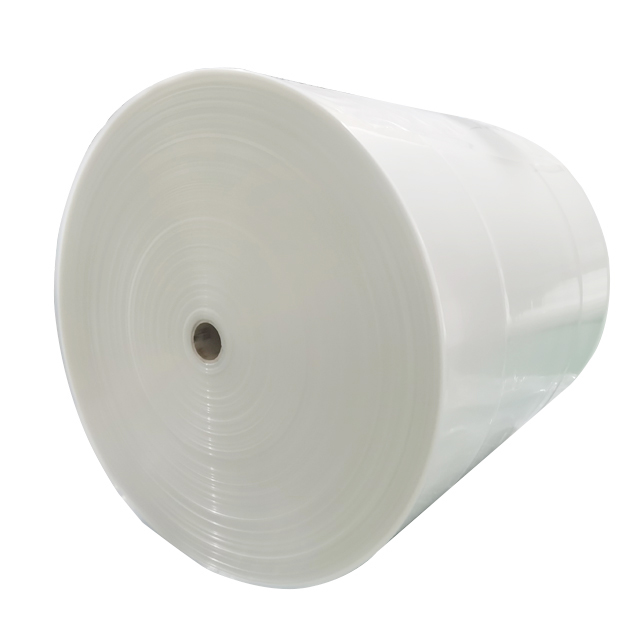
A pallet of bagged fertilizer may look like a simple rectangular load, but its packaging requirements can change with bag size, stacking pattern, pallet overhang, and handling conditions. Bags may settle after palletizing, corners may rub against film, and outdoor staging can introduce moisture exposure. For automated producers, stretch hood film for fertilizer pallets should therefore be specified against the actual loaded pallet and hooding equipment rather than selected by nominal width alone.
A five-layer pallet stretch hood is applied by stretching the film and allowing it to recover around the load. It does not require the heating process used for a shrink hood. This distinction matters when discussing production-line compatibility, packaging energy, and heat-sensitive bag contents. The following buying guide focuses on fertilizer bag pallet specifications, acceptance tests, and procurement information rather than a general description of stretch hood advantages.
Specification priority
Agree on the largest and smallest fertilizer pallet profiles, the hooding machine's working range, and the required load stability before selecting a film thickness or final hood dimensions.
Start with Fertilizer Bag and Pallet Geometry
Fertilizer may be packed in woven bags, laminated sacks, or other primary packaging selected for the formulation and market. Each bag type behaves differently under compression and friction. Stacked bags can form rounded corners, bulging sidewalls, or stepped edges that make the load wider than the pallet base. Measuring the unloaded pallet alone will not capture the film dimensions needed to cover the finished unit.
Record the bag dimensions, nominal bag weight, layers per pallet, stacking pattern, and total loaded height. Pay particular attention to the widest point after settling or strapping, and note whether the pallet has exposed corner boards. For stretch hood film for bagged fertilizer, the relevant geometry is the entire load, including irregular side profiles. A film that fits neatly on a test cube may behave differently on soft stacked sacks.
Specify the Hood's Working Dimensions
A stretch hood must accommodate the load during application and then recover enough to provide restraint. The usable hood size depends on film formulation, machine stretching arrangement, load circumference, and available top and bottom coverage. Insufficient film width may create extreme tension at bag corners, while excess film can reduce the effectiveness of recovery on some load profiles. Actual machine trials should establish the appropriate combination.
Length also deserves attention. The film needs to reach the required lower position without dragging excessively below the pallet or obstructing handling. If pallets vary by product grade or bag size, determine whether one hood specification can accommodate the full range. Procurement should not assume that thicker film will correct a dimension mismatch. Adjusting the size and stretch behavior may be more important than increasing nominal gauge.
Required detail
What the buyer supplies
Why it matters
Bag size and type
Empty and filled dimensions
Affects corners and load profile
Stacking pattern
Bags per layer, number of layers
Defines perimeter and height
Loaded footprint
Maximum measured width and length
Sets required stretched hood range
Pallet construction
Deck shape and handling openings
Influences lower skirt position
Hooding equipment
Machine model and size range
Determines film application compatibility
Environment
Warehouse, yard or export route
Sets exposure and protection priorities
Evaluate Moisture Exposure Realistically
Fertilizer storage can involve humidity, precipitation during loading, and changing temperatures between production and transport. A continuous hood can help shield palletized bagged goods from direct dust and moisture contact when correctly applied. It cannot compensate for wet bags at the packing stage, damaged primary packaging, or long periods of standing water beneath a pallet. Water management starts with sound warehouse procedures and a dry, appropriate pallet condition.
Where pallets move outdoors, specify the likely exposure duration and whether sunlight or abrasive handling is expected. Moisture protection for fertilizer pallets may call for attention to hood overlap, film grade, and pallet underside design. Do not describe a hood as an absolute guarantee against moisture ingress in every climate. The goal is to match the material and wrapping method to the exposure pattern actually encountered on the route.
Match the Film to the Hooding Machine
Automatic hooding systems use mechanical gripping and stretching sequences that must be compatible with the film's behavior. Compare the supplier's film specification with the machine's permitted hood circumference, application method, roll format, and approved operating settings. Abrupt tearing, uncontrolled neck-down, or incomplete lower coverage may result from a mismatch between film, equipment, and pallet profile. These issues should be identified during a controlled trial rather than after a bulk order arrives.
Buyers comparing pallet stretch hood packaging should distinguish cold-stretch film from heat-shrink film. In a stretch hood process, recovery force after stretching provides the principal load-holding action. In heat-shrink packaging, thermal energy changes the film dimensions around the load. Calling both materials “hood film” without identifying the process can lead to the wrong purchase specification and a failed production trial.
A common specification error
Do not use the hood dimensions from a heat-shrink system as a direct substitute for the dimensions required by an automatic stretch hooder. Their film behavior and application processes are different.
Evaluate Film Strength without Overspecifying Thickness
Stretch hood film thickness is useful information, but it is only one part of performance. The load requires sufficient tear resistance during stretching, contact with bag edges, and movement through the supply chain. The film must also recover with enough force to hold the bags without damaging their primary packaging. Higher gauge may add material cost without fixing poor pallet building or incorrect machine settings.
For multi-layer LLDPE film, grade selection can consider elasticity, puncture resistance, and the conditions expected during handling. A practical evaluation looks at film breaks per production shift, applied hood appearance, bag condition after wrapping, and movement during loading. The material should be tested with representative light and heavy loads. Procurement decisions based on real performance are more reliable than comparing isolated strength claims from different test methods.
Build an Acceptance Trial for Fertilizer Pallets
Run a trial across the actual bag sizes used on the line. Record machine interruptions, stretch consistency, lower skirt position, and any tears at pallet corners. After wrapping, inspect whether bags have been pulled out of shape or whether the load has become uneven. If relevant, carry out a monitored warehouse movement or transport simulation using the intended pallet configuration. The target is reliable output, not simply a photograph of one successfully wrapped pallet.
Document acceptance criteria with the production team and use the same method for future material deliveries. Where several fertilizer products share a line, test the most demanding load profile rather than assuming success on one product represents the full range. Consistent records can help isolate whether later faults come from film variation, changed bag supply, or machine adjustment. This approach turns a sample into a useful procurement qualification tool.
Stretch hood approval process
01
Measure — Document the finished fertilizer pallet and bag overhang
02
Check equipment — Confirm hooder format and operating range
03
Trial — Evaluate application, recovery and film breaks
04
Handle — Observe forklift movement and pallet stability
05
Record — Approve film and machine settings together
Define the Purchase Order Clearly
The purchase order should identify the approved film grade, delivered roll format, working dimensions, quantity, and any required sample or inspection documents. Include the fertilizer packaging type and the relevant environmental conditions in the inquiry. If the buyer needs custom dimensions, provide a load drawing or photographs with measured dimensions. This reduces the risk of suppliers substituting a nominally similar film that performs differently on the line.
An OEM pallet packaging manufacturer can discuss material and dimension options when the buyer supplies the operating conditions. ECOPACK supports industrial film selection and customization; an industrial pallet packaging supplier discussion can therefore include the hooding process as well as the film specification. Use a fertilizer pallet hood quotation to confirm trial quantities, delivery format, and repeat-order controls before placing a larger contract.
Fertilizer stretch hood RFQ
✓ Bag type and completed pallet dimensions
✓ Maximum pallet overhang and edge conditions
✓ Hooding machine model and operating range
✓ Required lower and top coverage
✓ Indoor or outdoor exposure requirements
✓ Sample approval and repeat-order specification
Conclusion
Successful fertilizer pallet hooding depends on matching film recovery, load geometry, and equipment operation. Accurate measurements and a trial on real bag stacks provide more purchasing value than a generic thickness recommendation. By specifying the complete pallet and acceptance method, buyers can select stretch hood packaging that supports stable and repeatable fertilizer distribution.
Frequently Asked Questions
Can one stretch hood size cover several fertilizer bag patterns?
Only if the approved film and hooding machine can accommodate the actual range of loaded dimensions. Test the widest, tallest and least stable pallet configurations.
Does stretch hood packaging require heat during application?
No. Stretch hood film is mechanically stretched and released around the load. Heat-shrink packaging uses a different application process and is not interchangeable with the hooding setup.
What should fertilizer producers check in a trial?
Record hood fit, bag movement, corner stress, film damage and handling performance. Include the actual bag types and operating speeds used in production.