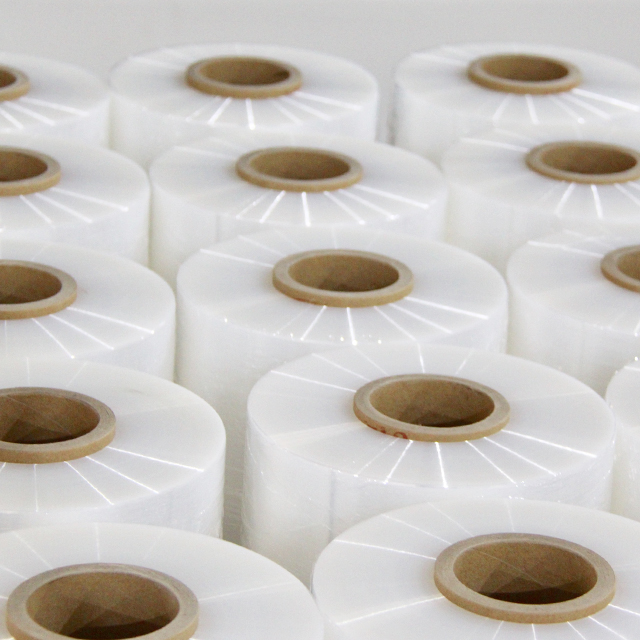
Machine stretch film roll compatibility is a practical production issue, not simply a question of whether a roll fits on a spindle. A pallet wrapper can accept a roll physically and still deliver poor results if film width, core dimensions, brake settings, pre-stretch behavior, or unwind direction are unsuitable.
A suitable 55-layer nano stretch film can be considered for automated wrapping where the machine settings and load profile support its working characteristics. However, material performance alone cannot establish compatibility with every wrapper. This guide explains the checks operators should complete before changing film grades, ordering a new roll specification, or converting a packaging line to a thinner film.
Compatibility in one sentence
Confirm the physical roll format first, test how the film runs through the pre-stretch and tension systems second, and approve it only after wrapped loads meet an agreed stability standard.
Begin with the Wrapper, Not the Film Brochure
Record the wrapper manufacturer, model, film carriage arrangement, and current operating settings before asking suppliers to propose material. Turntable, rotary-arm, and rotary-ring systems can impose different demands on the film, especially during starts, stops, and changes in wrapping speed. A machine equipped with a powered pre-stretch carriage should not automatically be assessed using settings from a basic mechanical-brake wrapper.
Operators should also record load dimensions, typical weight, corner conditions, and whether cartons, bags, or irregular items are being wrapped. High corners and uneven surfaces can create localized tension peaks, while a stable block of boxes may allow more consistent film application. Documenting these characteristics keeps the compatibility discussion focused on the actual line rather than a generic recommendation.
Confirm Stretch Film Core Size and Roll Dimensions
The first inspection is mechanical. Check the core inside diameter, core length, roll outside diameter, overall roll width, and maximum permitted roll mass. A core that is slightly too narrow may not seat correctly, while an oversized roll can interfere with carriage guards or change handling requirements. Even when a roll seems to fit, incorrect positioning can affect film tracking and produce uneven tension across the web.
Machine stretch film roll width is especially important on lines with fixed carriages or predefined overlap patterns. A change in width alters how successive turns cover the load and can affect the number of revolutions needed to achieve an acceptable wrap. The purchasing specification should identify the working film width, not simply the nominal width in a supplier catalog.
Roll attribute
Confirm with the wrapper team
Why it matters
Core inside diameter
Spindle and carriage compatibility
Prevents fitting and alignment problems
Roll outside diameter
Maximum carriage clearance
Avoids interference during rotation
Net film weight
Actual usable material, excluding core
Supports fair comparisons between offers
Film width
Specified delivery width and tolerance
Controls overlap and coverage
Winding direction
Required unwind orientation
Reduces tracking and threading mistakes
Film grade
Tested working range
Prevents over-stretch or unnecessary film use
Understand Pre-Stretch Film Compatibility
The maximum elongation reported for a film is not the same as the pre-stretch setting that a packaging line should use. Maximum extension describes a material limit under specified test conditions; machine pre-stretch concerns how much the carriage draws the film before it reaches the load. Using the highest published number as a machine setting can cause breaks, excessive neck-down, or weak holding force after application. The correct setting must be established through a controlled trial.
The pallet wrapping film range includes different formulations, and higher-performance films may allow an operator to evaluate material reduction at suitable settings. Start with the present approved recipe, change one parameter at a time, and observe film width after stretching, break frequency, and load response. If a change improves consumption but damages corners or allows carton movement, it should not be approved solely because the roll lasts longer. A useful trial balances containment, reliability, and material use.
Do not confuse elongation with containment force
A film may stretch extensively and still provide inadequate retention for a particular load after the wrapping cycle. Evaluate final load stability rather than judging compatibility by a single percentage on a datasheet.
Check Film Tracking, Cling and Tension Delivery
Watch the film from the roll through the carriage and onto the load. Uneven tracking, telescoping, edge curling, and unstable neck-down may indicate a mismatch between winding quality, film formulation, and the carriage. Excessive cling can interfere with release where equipment expects a different surface behavior, while insufficient cling may allow the film tail to loosen. These symptoms can also result from worn rollers or incorrect machine settings, so the material should not be blamed without a mechanical check.
Containment force is affected by application tension, the number and placement of wraps, and the behavior of the film after stretching. Stronger is not always better: excessive force may crush light cartons, distort packaging, or damage corners. For unstable loads, increasing the film force without correcting pallet stacking can simply transfer stress to weak packaging.
Run a Structured Film Trial on the Actual Line
A useful compatibility test begins with an agreed baseline. Wrap a representative group of pallets using the current approved material, and record film consumption, break events, cycle time, and any visible damage. Then test the proposed film on the same load type, with the same operators or comparable operating conditions. Changing film, load pattern, and machine speed simultaneously makes the results difficult to interpret and weakens the purchasing decision.
For high-volume applications, include different operating periods and at least one difficult load profile. An acceptable trial should confirm that the machine starts cleanly, tracks the web consistently, and finishes each cycle without loose tails or visible failure. Where logistics risk is significant, add appropriate containment checks or monitored transport trials. Discuss film changes with an industrial packaging manufacturer that can support material selection and sample evaluation rather than ordering solely by nominal film thickness.
Four checks before approving a replacement film
01
Set a baseline — Record consumption and performance of the currently accepted roll
02
Trial the candidate — Use representative pallets and controlled machine settings
03
Inspect the load — Check corners, overlap, tail adhesion and movement
04
Approve the recipe — Record film grade, machine settings and acceptance criteria
Compare Purchasing Specifications Fairly
When quotations arrive, ensure suppliers state the same unit of comparison. One offer may emphasize gross roll weight, another net film weight, and a third price per roll without explaining core weight or meterage. Those quotations cannot be compared reliably until the usable film quantity and relevant tolerances are clear.
Ask for sample rolls matching the proposed production specification, including film width and core arrangement. Include the wrapper model, planned volume, and current film grade in the technical inquiry. Because ECOPACK supports film customization and application-oriented material selection, questions about winding format, grade matching, and ordering consistency can be addressed during the industrial stretch film supplier discussion. The approved sample and final bulk specification should be identical in their critical attributes.
Problems That Are Often Mistaken for Film Incompatibility
Film breaks do not always mean the grade is wrong. Sharp carton corners, loose pallet boards, dirty carriage rollers, poor tension calibration, and abrupt machine acceleration can create failures across several different films. Likewise, a pallet that shifts after shipment may have an unstable stacking pattern rather than an insufficient film grade.
A useful troubleshooting record should capture where the break occurred, the pallet type, the machine speed, and the condition of the film edge. Repeated breaks at identical points may reveal a consistent contact issue. Problems that appear only after changing a roll may indicate winding or formulation differences.
What to Send with a Machine Stretch Film Inquiry
A good inquiry starts with the exact wrapper and operating conditions. Include the film core diameter, width, permitted roll diameter, current pre-stretch arrangement, load types, and packaging throughput. If the goal is lower material usage, provide a measured baseline rather than simply asking for the thinnest available film. This helps identify candidate grades that are practical to test on the line.
Buyers can use the film specification inquiry process to request material options and trial quantities that fit their operating conditions. Confirm how approved specifications will be controlled in repeat orders and how changes will be communicated.
Trial approval checklist
✓ Core and roll diameter fit the carriage
✓ Film width and winding direction are correct
✓ Pre-stretch and tension settings are documented
✓ Wrapped pallets meet stability requirements
✓ Consumption and line stoppages have been compared
✓ The approved sample matches the order specification
Conclusion
Machine stretch film roll compatibility requires agreement between film, wrapper, load, and operating procedure. Start with physical dimensions, then test the film's behavior through the actual carriage and verify final pallet stability. Once a grade and operating recipe have been approved together, procurement teams can compare suppliers on reliable performance and usable film yield rather than price or thickness alone.
Frequently Asked Questions
Can a film roll fit the machine but still wrap poorly?
Yes. Correct core and roll dimensions only confirm physical fit. Film tracking, pre-stretch response, tension settings and the finished pallet's stability still need a production trial.
Should a thinner stretch film use the same machine settings?
Not automatically. Changing film grade may require adjustments to pre-stretch, tension and wrapping pattern. Check breakage, containment and consumption before approving a new setting.
Which machine details should be sent with a film inquiry?
Provide the wrapper model, roll core, permitted roll diameter, film width, pre-stretch arrangement and typical load profile. These details help narrow the options for testing.