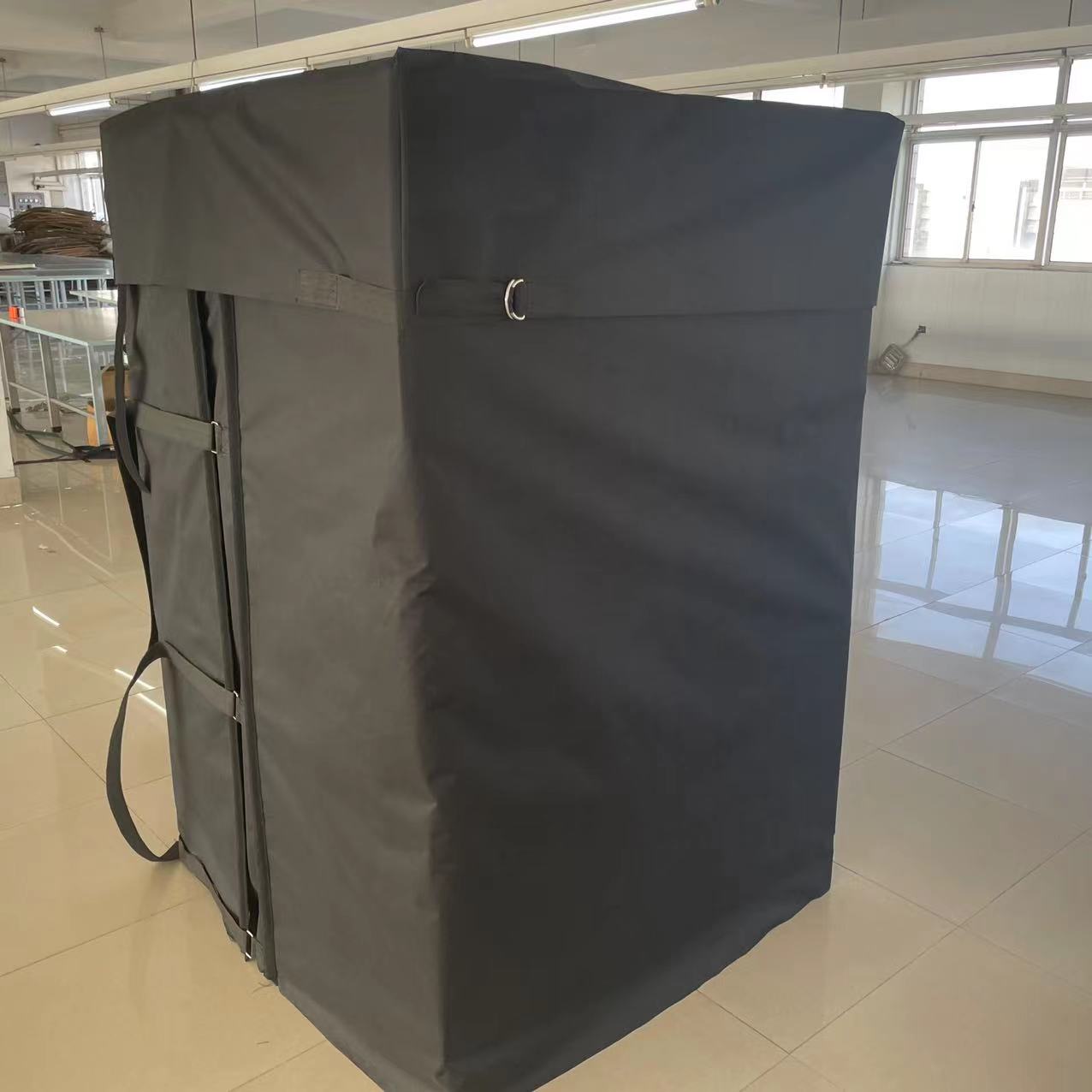
A protective pallet cover and a roll of stretch wrap may both be placed around freight, but they often solve different problems. One may be intended mainly to protect exposed surfaces from dust, splashes, or handling contact; the other is applied under tension to hold cartons together as a unit load. Comparing pallet covers vs stretch wrap without identifying those functions can lead buyers toward the wrong material. The right choice depends on whether the immediate problem is external exposure, load movement, or a combination of both.
For example, a durable fabric protective cover can be designed for repeated removal and equipment access, while 55-layer nano stretch film is intended for controlled pallet wrapping and load containment. These products should not be presented as interchangeable simply because both appear in a warehouse. This guide explains their practical differences, how to assess fit, and how to write a clear purchasing specification without repeating the usual argument about reusable versus disposable costs.
A buyer's first question
Are you trying to keep contamination off the load, hold cartons in position, or do both? Protective coverage and mechanical load containment should be assessed separately before selecting materials.
Define Coverage and Containment as Separate Tasks
Coverage refers to reducing unwanted contact with dust, moisture, sunlight, or abrasion under specified conditions. A cover may be loose-fitting, fitted, reusable, or made from a particular protective fabric or film. Its performance depends on material, seams, closure design, and exposure. Simply placing a cover over a pallet does not establish that the cartons are stable enough to travel safely. A load can be well covered and still shift when a forklift turns.
Containment refers to helping the stacked goods maintain their arrangement during handling and transportation. Stretch wrap applies layers of tensioned film around the load, often joining the cartons to the pallet base as part of a controlled wrapping recipe. Its effectiveness depends on the film, application, pallet pattern, and expected motion.
Protective Covers: Fit, Access and Environment
Protective covers are useful when goods need to remain accessible during storage or when the packaging must be installed and removed repeatedly. An equipment cover might include tailored fabric panels, zippers, securing straps, and identification pockets. A pallet cover can also be sized to minimize exposure at the top and sides, depending on its construction. These features are valuable for certain warehouse or machinery applications but do not by themselves create the holding force of a properly applied stretch wrap.
The protective cover category includes options for different types of goods and environments. Buyers should define whether they need dust protection inside a warehouse, splash resistance during short outdoor transfers, or more robust coverage for exposed equipment. Each use case changes the design. A fabric cover may be easy to remove for inspection, whereas a heat-shrink enclosure may be more suitable when a closer fit is needed and repeated access is not expected.
Stretch Wrap: Load Retention and Movement
Stretch wrap is used primarily to unitize loads by holding cartons or packaged items against each other and, where appropriate, the pallet. A wrapping machine can apply a repeatable pattern to standard pallets, while irregular loads may require a different technique or additional edge protection. The success of this method should be judged by measured containment and transport behavior, not by the appearance of a tightly wound film surface.
A pallet stretch wrapping solution can be appropriate for shipments where the load shape, wrapping equipment, and material grade have been qualified together. The film can reduce the need for separate loose packaging around each carton, but it may not prevent direct rain contact if the top remains open. Where external exposure is a major concern, additional protection may be needed. That does not make the original stretch wrap unnecessary; the two layers can have different jobs.
Question
Protective pallet cover
Stretch wrap
Primary role
Surface or environmental protection
Load containment through applied tension
Usual fit
Loose or custom fitted, depending on type
Conforms to load when wrapped correctly
Access after packing
May be removable or opened
Usually requires cutting or unwinding
Top protection
Depends on cover construction
May require additional top coverage
Load stability
Not assured by coverage alone
Must be validated through a wrap recipe
Reuse
Depends on chosen product
Conventional film is normally single use
When Both Materials May Be Appropriate
A pallet of machinery components may be stretch wrapped for stability and then covered against dust while waiting for installation. The two layers should be specified with different acceptance criteria. The film needs to preserve the load configuration, while the cover must remain secure and allow any planned inspection. Adding extra wrapping material without a defined purpose can increase handling time and waste without improving protection.
Likewise, equipment that is already securely fixed to a transport skid may need a protective cover but little or no stretch-film containment. A high, mixed-carton export pallet may need robust load containment even if the goods are protected from dust by their own cartons. The decision should follow the cargo's physical needs and shipment route. Buyers should not assume a single material is inherently superior for every form of pallet packaging.
Do not confuse pallet covers with reusable pallet wraps
A reusable textile pallet wrap is designed to help secure appropriate loads using its fastening arrangement. A protective cover may primarily shield surfaces. Material name alone does not establish the same function or performance.
Measure Fit before Comparing Prices
For protective covers, supply the entire loaded dimensions, overhang, access points, and fastening requirements. For stretch wrap, record pallet geometry, wrapping method, film width, tension settings, and the load's stability requirements. A quote for one product cannot be fairly compared to a quote for the other unless both are expected to perform the same clearly defined task. Materials that solve different problems may need separate budgets.
Consider the effect of stacking quality. A cover cut to the nominal pallet footprint may be too small when cartons overhang; a stretch film grade may appear weak if boxes are poorly stacked. Correct the underlying load geometry before increasing material thickness or coverage. This helps prevent procurement from paying for more material to compensate for problems that arise earlier in the process.
Assess Handling and Unpacking Requirements
In manufacturing and distribution, the receiving process can influence the best packaging choice. Repeated inspections may favor a cover that can be opened and resealed, while a sealed one-way shipment can be compatible with stretch film. Examine how operators remove the material, where discarded packaging goes, and whether tools are needed. Packaging that protects the load but creates unsafe or inconvenient opening procedures may not be suitable for the workflow.
The location of labels, barcodes, and shipment documents should also be considered. A film wrap may cover carton markings, while a tailored cover can potentially include a document pocket if that product configuration supports it. For sensitive goods, avoid placing closures or restraints directly over fragile parts. These apparently minor details often determine whether a packaging method is practical at scale.
Make the choice in four decisions
01
Identify the risk — Dust, moisture, movement or combined exposure
02
Assess the load — Weight, shape, edges and current securing method
03
Specify the material — Define cover access or wrapping tension requirements
04
Validate — Test the finished package during actual handling
What to Request from an Industrial Packaging Supplier
A useful inquiry should state the main protection objective, loaded dimensions, handling route, storage conditions, and estimated order volume. Ask suppliers to explain which function their proposed product is intended to serve and what trial would demonstrate success. Avoid vague instructions to supply “waterproof stretch wrap” if the true need is a removable rain cover. A custom protective packaging manufacturer can discuss application-specific options when the requirement is expressed clearly.
For projects involving several load types, a B2B packaging supplier may recommend different products rather than one common material for every pallet. That can simplify selection and reduce overspecification. When requesting a pallet cover or stretch wrap quotation, provide representative pallet photographs, exposure conditions, and details about any existing containment system so the supplier can propose the appropriate material.
Selection questions for buyers
✓ Is the main problem exposure or load movement?
✓ Does the load already have adequate restraint?
✓ Is the packaging opened repeatedly?
✓ Is top coverage required?
✓ What equipment and handling method are available?
✓ How will the finished package be tested?
Conclusion
Pallet covers and stretch wrap should be compared by the functions they perform. Protective covers can provide accessible surface coverage, while stretch film helps hold appropriate loads together through a controlled application process. Defining the risk, checking the full loaded dimensions, and validating the handling method allows procurement teams to specify the right material without confusing coverage with containment.
Frequently Asked Questions
Can a pallet cover and stretch film serve the same purpose?
Sometimes they can support the same shipment, but their primary functions may differ. A cover shields surfaces; stretched film helps contain a suitably built load.
When is a reusable cover less practical than stretch film?
A reusable cover can be difficult to recover from one-way shipments or unpredictable customer networks. Stretch film may be simpler when no return loop exists.
Can a protective cover be used over a wrapped pallet?
Yes, where the two materials address separate risks and do not interfere with handling. Check the combined package for access, ventilation and load stability.