
Views: 0 Author: Site Editor Publish Time: 2026-05-13 Origin: Site


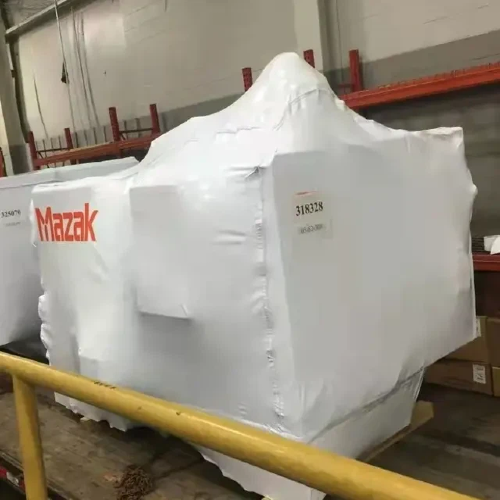
In a busy warehouse, a single unstable pallet can cause product damage, worker injury, and shipping delays. While stretch film is the everyday choice for many operations, there is a stronger, more secure alternative for valuable loads or challenging conditions. Heat shrink wrap for securing pallets creates a tight, weather-resistant seal that outperforms standard stretch film in key areas. This guide explains how heat shrink wrap for warehouse applications works, when to use it, and how it compares to other pallet securing methods.
Heat shrink wrap for securing pallets is a plastic film that is placed loosely over a pallet load and then heated with a heat gun or passed through a shrink tunnel. As heat is applied, the film contracts tightly around the products, conforming to their shape and creating a unified, rigid bundle. Unlike stretch film which relies on tension and cling, shrink wrap uses heat activation to achieve its holding strength.
This method is particularly valuable for heat shrink wrap for warehouse operations that handle high-value goods, irregularly shaped items, or loads destined for outdoor storage or long-distance shipping. The resulting seal is waterproof, dustproof, and resistant to tearing.
Many warehouse professionals are familiar with stretch film, but heat shrink wrap for securing pallets offers distinct advantages for specific applications.
Feature | Stretch Film (Standard Pallet Wrap) | Heat Shrink Wrap |
|---|---|---|
Application method | Stretched under tension | Applied loosely, then heated |
Equipment needed | Dispenser or manual application | Heat gun or shrink tunnel |
Load rigidity | Moderate | High (creates hard shell) |
Weather protection | Limited | Excellent (waterproof seal) |
Dust protection | Partial | Complete enclosure |
Best for | Standard boxed loads | Irregular shapes, outdoor storage, high-value goods |
Removal | Cut off and discard | Cut off; some types reusable |
For expensive electronics, machinery parts, or sensitive instruments, the superior protection of heat shrink wrap for securing pallets justifies the additional application time. The rigid seal prevents any movement between items, reducing vibration damage during transit.
Products that do not stack neatly—such as automotive parts, industrial components, or bagged goods—are difficult to secure with stretch film. Heat shrink wrap for warehouse use conforms to any shape, holding irregular items firmly in place.
When pallet loads must be stored outside, weather protection becomes critical. Stretch film has gaps and does not create a waterproof barrier. Heat shrink wrap for securing pallets provides a complete seal that keeps rain, snow, and moisture away from products.
For inventory that will sit for months before shipment, standard stretch film can relax and lose tension over time. Heat shrink wrap for warehouse storage maintains its tight fit indefinitely, ensuring loads remain secure throughout the storage period.
Ocean freight exposes pallets to humidity, salt spray, and rough handling. Many exporters specify heat shrink wrap for securing pallets for its superior moisture barrier and tear resistance during long voyages.
A pallet shrink hood is a pre-formed bag or tube that is placed over the entire pallet load. Heat is applied from the bottom upward, causing the hood to shrink tightly around the products. Pallet shrink hoods are available in five-layer airtight configurations specifically designed for logistics applications. This format is ideal for high-volume operations where speed and consistency matter.
For lower volumes or variable load sizes, shrink film rolls offer flexibility. The film is cut to length, draped over the pallet, and sealed at the bottom before heating. Standard heat shrink wrap for warehouse use includes rolls in various widths and thicknesses to match different pallet dimensions.
For loads with sharp edges or heavy weight, reinforced heat shrink wrap for securing pallets incorporates scrim reinforcement between film layers. This provides omni-directional tear resistance, meaning the wrap will not rip open easily even if punctured.
For warehouses storing flammable materials or operating in high-risk environments, flame retardant heat shrink wrap for securing pallets meets safety standards including DIN4102-1 B1 and NFPA 701, self-extinguishing within seconds of ignition.
For metal products, VCI shrink wrap releases corrosion-inhibiting vapors that protect against rust during storage and transport.
Step 1: Prepare the Load
Ensure the pallet is stable and products are stacked neatly. Place corner protectors on any sharp edges that could puncture the film during shrinking.
Step 2: Select the Right Wrap
Choose the appropriate type and size of heat shrink wrap for securing pallets based on your load dimensions, weight, and storage conditions.
Step 3: Apply the Wrap
Drape the shrink hood or film over the pallet. For hoods, pull down so the bottom covers the pallet edges. For rolls, ensure adequate overlap and seal the bottom seam with shrink wrap tape.
Step 4: Apply Heat
Using a heat gun or passing through a shrink tunnel, apply heat evenly from the bottom moving upward. Keep the heat source moving to avoid overheating any single area. The film will tighten visibly as it shrinks.
Step 5: Inspect the Seal
Check for any loose areas, gaps, or thin spots. Apply additional heat if needed to achieve a tight, uniform fit.
Step 6: Label and Move
Apply shipping labels directly over the shrink wrap. The smooth surface accepts labels readily. The wrapped pallet is now ready for storage or shipping.
Superior Load Stability – The rigid seal created by heat shrink wrap for securing pallets prevents individual items from shifting during handling and transport. This is especially valuable for tall or unstable loads that might topple with stretch film alone.
Weather Protection – Heat shrink wrap for warehouse outdoor storage provides a complete waterproof barrier. Rain, snow, and humidity cannot penetrate the sealed film, keeping products dry and preventing mold or corrosion.
Dust and Pest Protection – The tight seal also keeps dust, dirt, and insects away from products. For food products, electronics, or sensitive materials, this level of protection is essential.
Tamper Evidence – Any attempt to open a shrink-wrapped pallet leaves visible damage. For high-value shipments, this tamper-evident feature provides security.
Improved Handling – Wrapped pallets move more smoothly through automated systems. The rigid, unified load does not flex or shift during conveyor transport or automated storage and retrieval.
Reduced Product Damage – Companies that switch from stretch film to heat shrink wrap for securing pallets typically report significant reductions in damage claims. The initial cost of shrink wrap is offset by savings from fewer damaged products.
Application Time – Applying heat shrink wrap for securing pallets takes longer than stretch film because of the heating step. For high-volume operations, shrink tunnels can speed the process significantly.
Equipment Investment – Heat guns are relatively inexpensive, but shrink tunnels represent a larger capital investment. Evaluate your volume to determine the right equipment level.
Energy Costs – Heating the film requires energy. Factor this into your cost comparison with stretch film.
Ventilation – Shrinking film releases fumes that should be properly ventilated. Ensure your workspace has adequate airflow.
Training – Operators need training to apply heat evenly without burning the film or damaging products. The learning curve is short but not zero.
Load Type | Recommended Product | Key Feature |
|---|---|---|
Standard pallet, indoor storage | Standard shrink hood | Cost-effective, good stability |
Irregular shapes | Shrink film roll | Flexibility to fit any shape |
Outdoor storage | UV-stabilized shrink wrap | 6-12 month weather resistance |
Sharp-edged products | Reinforced shrink wrap | Scrim layer prevents tear propagation |
High-risk fire zone | Flame Retardant Shrink Wrap | DIN4102-1 B1, NFPA 701 certified |
Metal products | VCI shrink wrap | Rust prevention during storage |
High-volume daily use | Pallet shrink hood with tunnel | Fastest application speed |
ECOPACK, established in 2000, is a leading manufacturer of heat shrink wrap for securing pallets with over 180,000 square meters of production facilities and annual capacity of 45,000 tons. The company offers a full range of pallet load protection products including pallet shrink hoods, reinforced shrink wrap, Flame Retardant Shrink Wrap certified to DIN4102-1 B1 and NFPA 701, and VCI shrink film. Custom sizes and low minimum order quantities make ECOPACK accessible to warehouses of all sizes.
Q1: Can I use a regular heat gun for heat shrink wrap on pallets?
Yes, a standard industrial heat gun works well for pallet-sized loads, though high-volume operations may benefit from a shrink tunnel.
Q2: Is heat shrink wrap more expensive than stretch film?
Typically yes per pallet, but the reduced product damage and better protection often justify the higher material cost.
Q3: Can heat shrink wrap be recycled after use?
Yes, many types of heat shrink wrap for securing pallets are recyclable through industrial plastic recycling programs.
Heat shrink wrap for securing pallets offers superior load stability, weather protection, and tamper evidence compared to standard stretch film. For warehouses handling high-value goods, irregular loads, or outdoor storage, heat shrink wrap for warehouse applications delivers measurable benefits in reduced damage and improved security. ECOPACK, established in 2000, manufactures pallet shrink hoods, reinforced wrap, and Flame Retardant Shrink Wrap certified to international standards. Contact ECOPACK today to discuss your pallet securing needs and request samples for testing.


