
Views: 0 Author: Site Editor Publish Time: 2026-04-28 Origin: Site


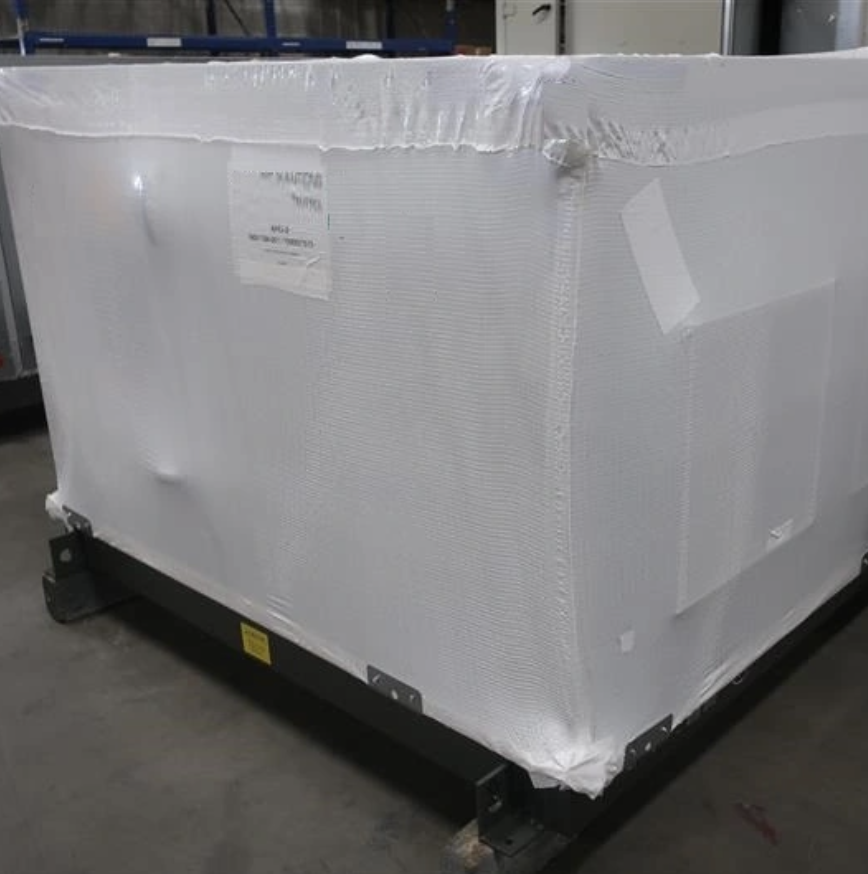
Transitioning from casual DIY applications to industrial-scale deployment demands a massive shift in mindset. Improper selection or application of heat shrink materials leads to severe consequences. You risk compromised seals, unexpected electrical failures, and damaged transit goods. Failed packaging exposes sensitive components to moisture, triggering aggressive corrosion.
Procurement and engineering teams often face severe choice paralysis. You must navigate complex material specs like Polyolefin versus PVC. You also face tight sizing tolerances and highly specialized packaging needs. Selecting the wrong variant ruins entire product batches and halts production lines.
This article provides a definitive, evidence-based evaluation framework. We will help you avoid costly application failures. You can confidently select the exact materials required for high-stakes environments. You will learn precise sizing mathematics, advanced chemistry matching protocols, and scalable installation standards.
Sizing Mathematics: Always design around the "75% shrink potential" rule rather than maximum limit specs.
Material Chemistry Matters: Standard materials fail in extreme environments; evaluate advanced options like VCI or biodegradable composites based on transit duration and environmental exposure.
Process Control: Standardize installation protocols to eliminate "chill marks" and structural weakening caused by uneven heating.
Supplier Verification: Partnering with a certified manufacturer ensures predictable batch quality and adherence to strict ASTM/UL standards.
Decision-stage focus: Evaluating solution categories and aligning material features with operational outcomes.
Standard Polyolefin offers excellent general chemical and thermal resistance. It reliably handles temperatures up to 135°C. However, heavy-duty industrial shipping often requires highly specialized Heat Shrink Wrap to survive harsh logistics networks. Do not assume one plastic fits every application.
For ferrous metal shipments or maritime transit, moisture presents a critical threat. You must specify VCI Shrink Wrap (Volatile Corrosion Inhibitor). This advanced film actively neutralizes airborne moisture. It releases protective molecules inside the package to prevent rust on exposed metal surfaces.
For companies operating under strict ESG mandates, sustainability is paramount. You should evaluate Biodegradable Shrink Wrap alternatives. When testing these eco-friendly options, ensure they strictly meet the necessary tensile strength requirements for your specific load weight. They must protect the cargo without snapping under tension.
Risk: Using a single-wall wrap in high-vibration or wet environments leads to inevitable moisture ingress. Marine, automotive, and aerospace applications quickly defeat standard thin-wall plastics.
Evaluation criteria: If strain relief and absolute waterproofing are mandatory, you must require dual-wall materials. Dual-wall variants contain an inner layer of heat-activated adhesive. As the outer wall shrinks, the inner adhesive melts and fills microscopic gaps. The visual success metric during QA testing is a slight "adhesive squeeze-out" at the ends. Seeing this proves you achieved a true hermetic seal.
Material Type | Primary Use Case | Key Advantage | Avoid When |
|---|---|---|---|
Standard Polyolefin | General electrical insulation | High heat tolerance (135°C) | Submersion or heavy vibration |
Dual-Wall (Adhesive-Lined) | Automotive & Marine connections | Waterproof hermetic seal | Frequent maintenance is required |
VCI (Volatile Corrosion Inhibitor) | Ferrous metal maritime shipping | Active rust prevention | Wrapping non-metal consumer goods |
Biodegradable Composites | Eco-conscious retail & logistics | Meets strict ESG mandates | Heavy loads exceeding tensile limits |
Decision-stage focus: Technical specification logic and transparent engineering assumptions.
Expertise/Framework: Never rely on a material shrinking to its absolute maximum limit. Pushing a polymer to its extreme edge compromises its structural integrity.
Consider a material with a 2:1 shrink ratio. If it drops from 2 inches to 1 inch, its maximum shrink potential is exactly 1 inch. You should utilize only 75% of that potential. In this case, plan for it to shrink by 0.75 inches. This ensures the material securely grips the component while retaining optimal wall thickness and elastic memory.
Always audit the manufacturer’s "Expanded ID" against the "Recovered ID". Expanded ID is the supplied minimum inside diameter. Recovered ID is the fully shrunk maximum inside diameter. You must ensure your component falls securely in the exact middle of that range.
Implementation Reality: Heat shrink does not just shrink radially across its diameter. It also shrinks longitudinally, meaning lengthwise. Expect roughly a 10% to 20% length reduction depending on the specific polymer.
Risk mitigation: Failing to pre-cut with adequate lengthwise overlap causes severe operational failures. You risk leaving exposed electrical terminals. Sharp edges might puncture the receding wrap. You will ultimately suffer from failed environmental seals. Always add a generous length allowance before applying heat.
Measure correctly: Measure the thickest part of the underlying component to determine the required Expanded ID.
Calculate the 75% threshold: Do the math to ensure you leave 25% of the shrink potential unused.
Add length margin: Cut the tubing at least 20% longer than the physical area you need to cover.
Check for sharp edges: File down rough solder joints before sliding the tubing over them.
Decision-stage focus: Implementation considerations, risk mitigation, and operational scalability.
Scalability: For large-scale or precision manufacturing, you must ban the use of open flames. Torches and lighters cause localized melting. They leave dangerous soot and carbon tracking on the surface.
Instead, mandate commercial heat guns equipped with deflector nozzles. For high-volume production, utilize temperature-controlled shrink tunnels. Operators must start heating directly from the middle of the tubing. They must slowly work their way outward. This vital technique expels trapped air bubbles. It prevents uneven wall thickness, a defect the industry calls "chill marks."
Implementation Reality: Heat shrink materials require a strict stabilization period. They do not finish their chemical process the second the heat stops.
Rule: Mandate a minimum 5-minute natural room-temperature cooling period. You must observe this before physically handling or stressing the sealed component. Forced cooling methods destroy the polymer chain. Premature handling shatters the molecular cross-linking. This results in invisible micro-fissures compromising the seal.
Standardized 4-Step Installation Protocol
Positioning: Slide the pre-cut material over the component, ensuring equal overlap on both ends.
Center Heating: Apply controlled heat (typically between 200°F and 1000°F) to the exact center of the wrap.
Radial Expansion: Rotate the component 360 degrees while slowly moving the heat source outward to the edges.
Curing: Remove all heat and let the assembly sit untouched for exactly 5 minutes in a temperate environment.
Decision-stage focus: Shortlisting logic, supply chain security, and ROI protection.
Shortlisting Logic: Trustworthiness is proven through verifiable compliance. You should deeply audit your industrial packaging materials manufacturer before signing any bulk contracts.
Require strict documentation for industry-standard certifications. Look for UL224-2010 for flammability ratings. Check for SAE AS23053 for aerospace-grade insulation. Verify ASTM D 2671 testing protocols. Ensure the vendor provides clear, transparent data sheets. You must evaluate tensile strength, dielectric strength, and operating temperature ranges prior to bulk ordering.
Adoption Risk: Buying in bulk vastly improves profit margins. However, heat shrink has a highly sensitive thermal memory. This vulnerability is especially prominent in PVC and adhesive-lined variants.
Storing massive inventory in non-climate-controlled warehouses invites disaster. Hot shipping containers or unventilated attics will cause premature shrinkage. Ambient summer heat easily activates the inner adhesive layer. This irreversible process renders the entire batch utterly useless. Always store these materials in a cool, dry, and climate-controlled facility. Implement strict First-In-First-Out (FIFO) inventory rotation.
Summary: Transitioning from evaluating basic plastics to implementing a secure, scalable packaging process requires discipline. You need strict attention to material chemistry, dimensional math, and thermal protocols. Standard plastics fail in extreme environments.
Process Control: Rigorous heating methods eliminate micro-fissures and chill marks. Correct sizing math guarantees optimal elastic memory. Proper climate-controlled storage protects your bulk inventory investments.
Next-Step Action: Before finalizing a procurement contract, always request physical sample batches. Ask for both Expanded and Recovered ID materials. Run intensive QA stress tests on your specific components. Use thermal cycling and vibration testing to validate the vendor's data sheets in the real world.
A: Expanded ID is the minimum inner diameter as supplied by the manufacturer before any heat touches it. Recovered ID is the absolute maximum diameter the tubing or wrap will shrink down to after unrestricted heating. You must ensure your component size falls securely between these two measurements for a safe, reliable fit.
A: No. Open flames provide uncontrolled heat that easily exceeds safe polymer thresholds. Torches often cause scorching, brittle joints, and dangerous carbon tracking. Controlled thermal tools, like industrial heat guns operating between 200°F and 1000°F, are strictly required to ensure uniform shrinkage and structural integrity.
A: Splitting typically results from three common errors. Selecting a size too small forces the material past its maximum stretch limit. Cutting the material with jagged or uneven edges creates tiny stress concentration points that tear under tension. Finally, localized overheating degrades the polymer chain, causing it to snap.


