How to protect temperature-sensitive pallet freight during short transfers, uncertain dock delays, and repeated handling—without confusing passive insulation with refrigeration.
Cross-docking reduces storage time by moving incoming freight toward its next vehicle as quickly as possible. Yet that speed creates a different challenge for chilled and frozen shipments: pallets may leave a temperature-controlled trailer before the outbound vehicle is ready. At a busy hub, a missed loading slot, paperwork check, or congested staging lane can turn a short transfer into an extended exposure.
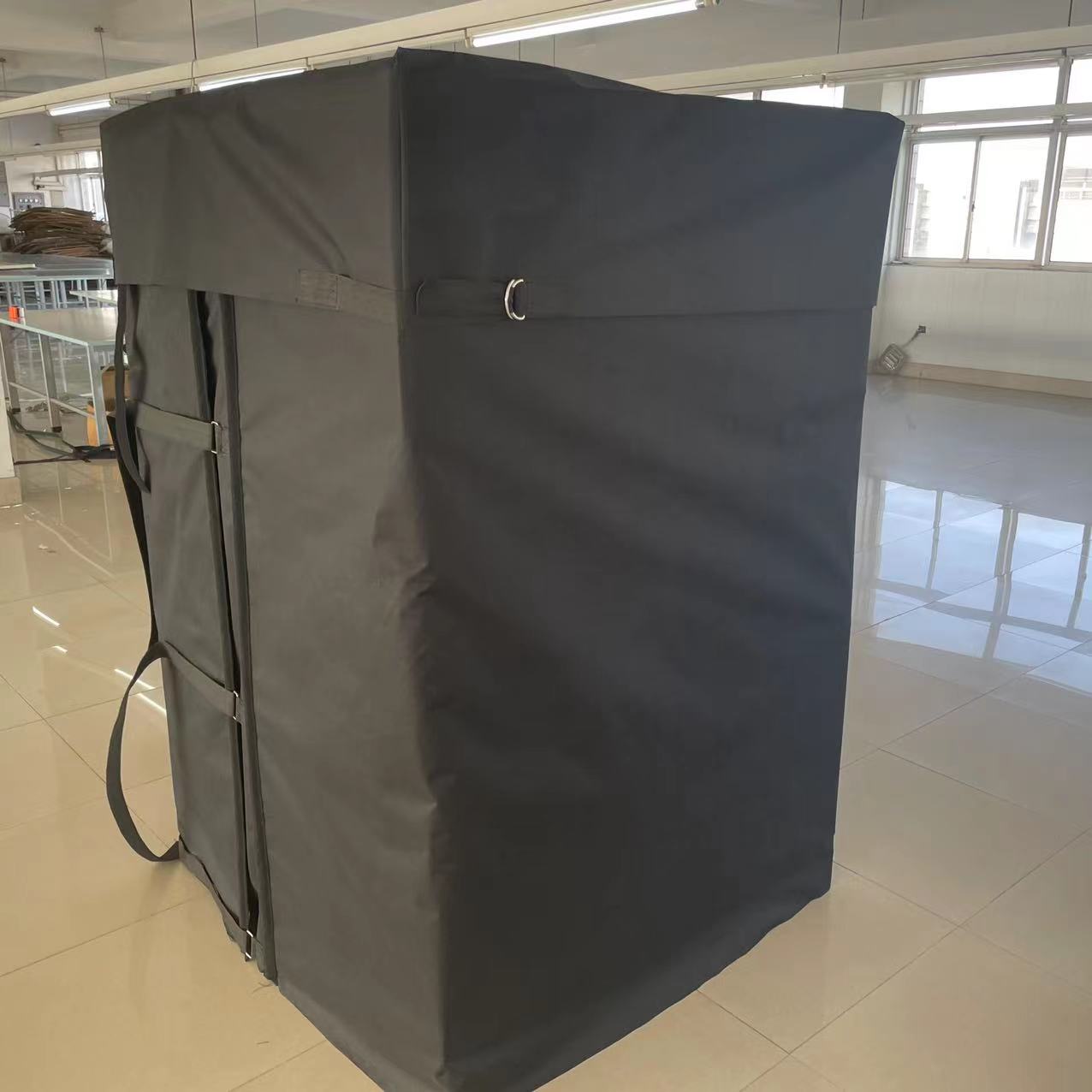
Thermal pallet covers for cross docking provide an additional layer of passive insulation during these handoffs. They can help slow temperature exchange while a load is inspected, staged, or moved, but they cannot cool a warm pallet or replace a refrigerated trailer. ECOPACK offers an insulated thermal pallet cover designed for repeated logistics handling, with a quilted construction and practical fastening details.
At a Glance A cover works best as a temporary thermal buffer within an existing cold-chain procedure. Buyers should evaluate loaded-pallet dimensions, actual dock dwell time, handling access, fastening security, and how cover performance will be tested under their own operating conditions. |
Why Cross-Dock Transfers Create Temperature Exposure
Unlike long-term warehouse storage, a cross-dock operation has several short handoffs instead of one stable holding environment. A pallet can pass through a refrigerated trailer, an open loading bay, an ambient staging lane, and another trailer in quick succession. Each change affects the conditions around the packaging, especially when dock doors stay open or the outdoor temperature differs sharply from the required cargo temperature.
Scheduled and actual dwell times can differ because staff still need to verify labels, separate destinations, and coordinate outbound loading. Cross dock temperature protection should account for those predictable interruptions rather than assume every shipment moves without delay.
| Operational point Record where a pallet leaves temperature-controlled space, when it enters the next controlled environment, and which delays occur in between. A cover may reduce short-term exposure, but shorter handling time remains the first line of protection. |
How a Thermal Pallet Cover Protects a Load
A pallet thermal blanket acts as a barrier that slows heat transfer between cargo and surrounding air. It is a passive product: it does not contain a compressor, actively regulate temperature, or compensate for a load already outside its specified limits. That distinction should guide the way a facility describes the cover in procedures, quotation requests, and customer commitments.
ECOPACK describes a three-layer quilted construction in its current product range. Its outer polyester fabric is designed to resist moisture and abrasion, the middle insulation filling helps reduce heat exchange, and the inner reflective lining addresses radiant heat transfer. The product also includes a side zipper, a transparent label pocket, and bottom webbing straps, supporting identification and access during warehouse handling.
01 · Outer layer Water-resistant polyester fabric for handling exposure |
02 · Middle layer Insulating filling that slows heat transfer |
03 · Inner layer Reflective lining facing the covered load |
Product construction summary based on ECOPACK's insulated thermal pallet cover listing.
Gaps, an unsecured base, and frequent unnecessary opening can undermine the intended thermal buffer. Buyers comparing protective covers for palletized cargo should distinguish insulated textile covers from ordinary dust covers or thin-film packaging, because their protection functions are not interchangeable.
Where Covers Fit in a Cross-Dock Workflow
The most useful cover procedure follows the actual movement of the load. Staff need a clear point at which the cover is applied, a designated place for temporary staging, and an agreed decision about whether it remains on the pallet for outbound transport. Otherwise, covers may be removed unnecessarily or left behind.
Three handling stages
01 / INBOUND | Inspect & protect Complete the required receipt checks, confirm shipment identity, and fit a correctly sized cover at the designated point. |
02 / STAGING | Limit dock exposure Keep the cover secured, maintain clear lane assignments, and escalate pallets delayed beyond the planned transfer window. |
03 / OUTBOUND | Verify before loading Check trailer readiness and confirm whether the cover must be removed to meet transport and airflow requirements. |
Inbound checks should come before covering
Workers should follow the shipper's receiving instructions before concealing labels, inspection points, or temperature-monitoring equipment. The clear document pocket can make identification easier, but it does not replace required receipt checks. If cargo must be inspected during a transfer, the side zipper can improve access without removing the whole cover.
Staging time should be visible to the team
Facilities should track staging exceptions and coordinate cover use with dispatch decisions. ECOPACK's logistics and warehousing packaging applications offer a broader context for organizing load protection around real handling conditions rather than material selection alone.
| Important: Passive insulation is not refrigeration Thermal pallet covers should be used alongside suitable cold-chain vehicles, handling procedures, and monitoring. Never assign a fixed safe waiting time to all covered pallets without evidence for the product, cargo, and actual dock conditions. |
How to Choose Covers That Fit the Pallet and the Process
Cover selection should begin with the fully loaded pallet, not the nominal pallet footprint. Record overall width, length, height, and any overhanging cartons or top-mounted components. A tight cover can strain its zipper and seams; an oversized cover can drag, shift during forklift movement, or take longer to apply at peak handling periods.
The access and fastening arrangement should suit everyday operations. For example, a hub that checks shipping labels repeatedly may benefit from an external document pocket, while a facility moving pallets through several lanes needs reliable base straps. When load shapes vary, standardize a few cover sizes rather than force one design onto every pallet.
Selection factor | What to check | Why it matters at a cross-dock |
Loaded dimensions | Full width, length, height, and overhang | Controls coverage and application speed |
Access design | Zipper position and document pocket | Reduces unnecessary cover removal |
Securing method | Bottom straps and attachment arrangement | Helps keep the cover in position while moving |
Insulation design | Layer construction and supplied test data | Supports evidence-based performance review |
Reuse and cleaning | Fabric care, inspection, return-flow plan | Affects cost per use and daily availability |
Cold chain pallet covers are also reusable operating assets. Zippers, quilting, straps, and fabric should tolerate the expected handling cycles, while cleaning and drying procedures need to fit the facility's hygiene rules. A cover returned damp or with damaged fasteners should be checked before it re-enters service.
Insulation performance depends on the initial cargo temperature, load mass, cover fit, ambient conditions, and exposure period. A supplier's general description cannot establish the safe dwell time for every shipment type.
For a meaningful trial, logistics managers can compare representative pallets under matched conditions, using suitable temperature loggers and the shipper's accepted measurement method. The trial should capture application time, unexpected cover openings, actual time on the dock, and any temperature deviations.
High-risk or regulated loads may require validated packaging systems and specific temperature records. In those cases, the cover should be treated as one component of the agreed transportation process. Changes in route, staging area, cargo type, or season may also require a new evaluation.
What Makes a Cover Program Practical to Purchase?
Unit price is only one part of the buying decision. A reusable cover may move through many cycles, so replacement frequency, handling effort, loss rates, and cleaning work all influence cost per use. Buyers should also estimate the number of covers needed during peak simultaneous staging, including returns and a reserve for inspection or repair.
Working with an industrial protective packaging manufacturer may help procurement teams discuss repeatable dimensions, cover construction, and batch consistency. ECOPACK's custom packaging development capabilities include OEM support for different applications. However, the final design should still be confirmed through samples, fit checks, and clear written specifications.
For cross-docking, standardization can reduce operational friction. A few well-chosen cover sizes are easier to store and handle than many one-off configurations. A pilot across different shifts is useful because application time and handling practices can vary more than expected.
What to Send When Requesting a Thermal Cover Quotation
A useful RFQ describes the shipment and the transfer environment, not just the material name. Suppliers need to understand how the cover will be fitted, how often it will be opened, and whether the covered pallet remains at the hub or travels onward. Giving these details at the start reduces the risk of receiving a quotation for the wrong size or access configuration.
RFQ checklist for cross-dock buyers Loaded pallet dimensions and shape Chilled or frozen cargo category Typical and delayed dock dwell time Ambient exposure and staging conditions Required zipper, pocket, and strap layout Expected reuse cycles and order quantity Cleaning and handling requirements Sample fit and trial approval process |
Where several pallet formats are involved, provide a short list of the most common load profiles and indicate which exceptions need a separate design. For customized orders, it is reasonable to request drawings or sample dimensions before production approval. Buyers can submit these requirements through ECOPACK's custom pallet cover inquiry channel.
Conclusion
Thermal pallet covers can provide a practical buffer against short periods of ambient exposure at cross-dock hubs. The strongest programs do not rely on insulation alone: they combine the right cover fit with quick handling, clear staging rules, suitable transport conditions, and measured performance. For procurement teams, a successful purchase is one that fits the real pallet, integrates into the transfer workflow, and remains dependable over repeated use.