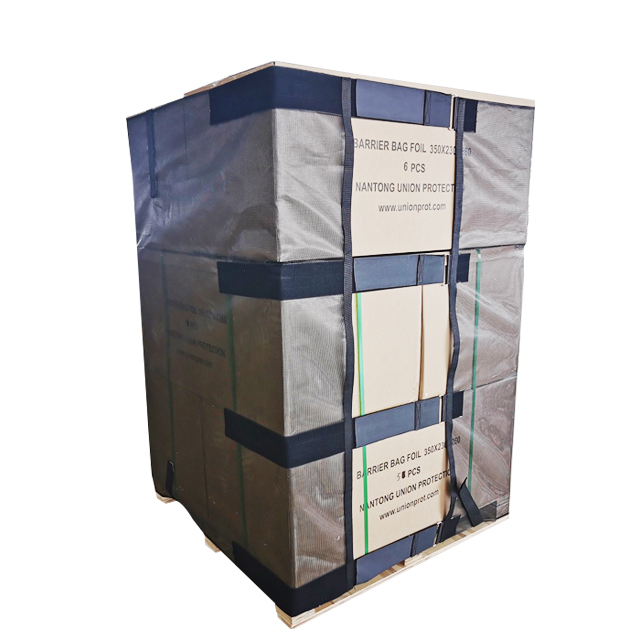
A warehouse that sends the same pallets to customers every week has a different packaging challenge from a company shipping unpredictable export loads. In repeated distribution loops, a reusable wrap can become part of the operation itself: it must fit the cartons, stay secured during movement, and return for the next shipment. Adding a customer logo or identification panel makes sense only if the wrap continues to perform those basic tasks. That is why planning a custom reusable pallet wrap with logo begins with fit and handling, not artwork.
For closed-loop movements and suitable internal distribution, a reusable pallet wrap can combine PVC mesh, durable Oxford fabric, and adjustable fastening features. Branding can then be developed around the physical design. This guide explains how buyers can specify dimensions, access details, identifiers, and samples before moving to repeat production, while keeping reusable fabric wraps clearly separate from printed disposable film products.
Customization priority
First approve the load fit and fastening method. Only then finalize logo position, color, identification pockets, and other branding details that warehouse staff will use every day.
Decide Where the Wrap Will Be Used
The first question is whether the packaging stays within a controlled loop. Reusable wraps are well suited to repeat journeys between warehouses, production lines, distribution centers, and known receiving locations when empty covers can be recovered. One-way shipments to many unrelated customers create different return costs and loss risks. Packaging teams should map the route, the expected number of uses, and the person responsible for collecting the wrap before preparing a branded specification.
The load profile matters as well. A stable pallet of regular cartons needs a different fastening arrangement from tall bins or mixed-size cases. Document forklift handling, whether the pallets travel on conveyors, and where operators need access to labels. These facts determine the useful custom pallet wrap sizes and whether one design can serve several pallet families.
Measure Loaded Pallets, Not Empty Bases
A nominal pallet size does not represent the complete load. Cartons may overhang, stack heights may vary, and protective corner boards can add to the outer dimensions. Buyers should measure fully built pallets under normal conditions and capture the widest and tallest expected configurations. If the design has adjustable straps, define the required adjustment range using real measurements instead of assuming the straps can compensate for any difference in load size.
Pay attention to the position of the wrap's upper and lower edges. The cover needs sufficient overlap to control the stacked goods without interfering with forklift openings or dragging near the floor. When a warehouse uses both short and tall loads, consider separate sizes rather than forcing one large wrap to serve every pallet.
Design input
What buyers should record
Why it changes the cover
Pallet footprint
Maximum loaded length and width
Determines panel dimensions
Load height
Normal and maximum stacked height
Defines cover height and upper overlap
Carton overhang
Largest real overhang at corners
Prevents tight spots and premature wear
Load variety
Number of distinct pallet profiles
Indicates whether multiple sizes are needed
Return route
Who collects and stores the cover
Influences identification and reuse planning
Access points
Labels, inspection points and handles
Helps place pockets and openings
Specify Fastening Before Decorative Details
The fastening system controls how the wrap performs in a busy warehouse. ECOPACK's reusable design uses straps and fastening features to hold a fabric-and-mesh covering around palletized goods. During customization, discuss strap length, height, attachment position, and whether operators wear gloves. A closure that is secure but awkward to handle can increase loading time and may not be used consistently across shifts.
Adjustable pallet wrap straps also need a defined working range. Test them on the heaviest and lightest relevant pallet profiles and check whether the load remains stable without deforming the cartons. Fastening points should not obstruct essential pallet labels or create snagging points on adjacent equipment.
Plan Logos and Identification Around Real Handling
Branded reusable pallet wraps are often intended to improve identification, support return management, or provide a consistent appearance at the receiving site. Select a logo position that remains visible when the wrap is secured and that is not repeatedly folded under a strap. If the wrap is mesh-heavy, discuss whether the print or identification patch belongs on a solid fabric section.
Packaging teams should decide whether each cover needs a company logo, location code, asset number, barcode pocket, or shipment document sleeve. These serve different purposes. A logo identifies ownership, while a unique code supports circulation tracking and loss analysis.
A distinction that matters
Branding on a reusable textile wrap is a different process from printing a logo directly onto disposable stretch hood film. These should be specified and priced as separate packaging products, not treated as interchangeable versions of one material.
Reusable Wraps and Printed Stretch Hoods Are Different Products
A custom reusable wrap is removed and recovered after a distribution movement. A printed stretch hood is applied by a compatible hooding process and normally leaves the system with the outbound shipment. The two products can both carry branding, but their operating economics, materials, and handling requirements differ. Buyers considering logos on pallet film can review custom-logo stretch hood film as a separate option for automated packaging lines.
The choice should follow the shipping model. If most pallets travel one way and the receiver has no return process, printed film may be operationally simpler. If loads circulate between known facilities, a textile wrap can support repeated use and ownership identification. Neither approach should be selected solely because a logo looks attractive in a marketing photograph.
Build a Prototype That Operators Can Evaluate
A meaningful sample trial should include actual pallets, not only a fit check on a display model. Ask staff to secure the wrap several times, inspect the strap adjustment, and evaluate how easily the cover can be removed and folded. Run the sample through the expected internal route and check contact points for rubbing, damaged seams, or obscured labels.
If the wrap will be washed or wiped between uses, test the proposed marking method and fabric appearance after the agreed cleaning process. Keep a record of sample dimensions, strap positions, pocket layout, logo artwork, and color references. The approved prototype should become the production reference, including any changes made after the trial.
A sensible customization sequence
01
Measure — Collect dimensions from finished loads and define pallet families
02
Engineer — Select panel construction, fastening and access requirements
03
Brand — Confirm logo position, identification and color references
04
Trial — Test fit, handling, cleaning and return procedures
05
Approve — Freeze drawings and the production specification
Consider the Return Loop in the Purchase Price
A reusable wrap can have a higher unit cost than a disposable roll yet still be attractive in a controlled loop. The relevant comparison is the total number of successful uses, adjusted for returns, cleaning, repairs, and losses. Branding can make covers easier to identify, but it does not solve poor recovery procedures. Give the receiving location a clear instruction for folding, storing, and returning empty wraps.
Where the same wrap design will be ordered repeatedly, documentation matters. A clear specification helps an OEM industrial packaging manufacturer reproduce dimensions and branding details without unnecessary sampling each time. Reviewing the broader reusable pallet packaging range can also help buyers distinguish this fabric-based solution from other pallet films sold for one-way wrapping.
What Belongs in a Custom Pallet Wrap RFQ?
Provide loaded-pallet dimensions, carton types, estimated circulation volume, and the expected number of returns. Include the desired fabric and mesh configuration, strap layout, logo file, identification pocket details, and any cleaning constraints. If several sites will use the wraps, identify the different pallet profiles and the process used to recover empty covers. These details give a supplier enough information to discuss practical options instead of quoting an arbitrary size.
A custom pallet wrap quotation should also confirm sample approval, color consistency, accepted dimensional tolerances, and packaging for delivery. Ask how the production specification will be identified for repeat orders. At higher volumes, a custom packaging supplier that can work from drawings and application requirements is more useful than one that offers only a generic printed logo service.
Before approving artwork and production
✓ Complete loaded-pallet measurements are approved
✓ Straps work across the intended size range
✓ Logo remains visible when the wrap is fastened
✓ Document pockets and ownership labels are positioned correctly
✓ Cleaning and return procedures are agreed
✓ The final sample is retained as the bulk-order reference
Conclusion
Good branded pallet wrapping begins with an operational fit. A reusable design needs to secure the real load, support quick handling, and return reliably before its logo or color becomes valuable. When measurements, fastening, identification, and sample testing are treated as one purchasing project, the finished wrap can serve both warehouse operations and brand consistency.
Frequently Asked Questions
Can a logo be added without changing the wrap's performance?
Branding should be designed around the fastening points, fold lines and repeated handling areas. Check a printed sample to ensure identification remains visible without weakening the wrap.
Should custom wrap dimensions follow the pallet or its contents?
Measure the complete loaded pallet, including overhang and the tallest cartons. The fastening position and the operator's fitting method also affect the final dimensions.
When is a reusable branded wrap a practical choice?
It is most practical for regular routes where covers can be collected, inspected and returned. Uncontrolled one-way shipments may favor another packaging format.