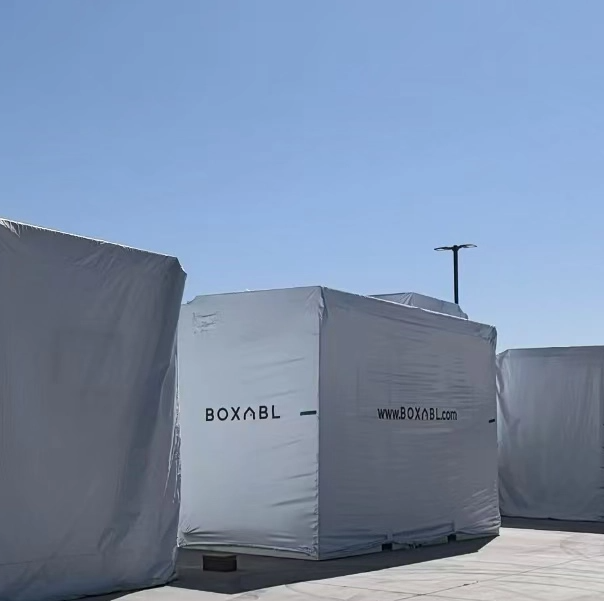
Electrical cabinets are often shipped with components that appear rugged from the outside but require careful protection in transit. Painted sheet-metal doors can be scratched, handles and display windows can project beyond the frame, and cable entry areas may need access for inspection. A general-purpose cover may hide the equipment without fitting the parts that matter. For custom electrical cabinet shipping covers, an accurate request for quotation is therefore as important as the material selected.
Custom-fit film enclosures and other protective covers can be used for different types of equipment, but their functions are not identical. Custom-fit shrink covers are relevant where a heat-shrink film enclosure is appropriate, while other fabric or reinforced options may suit removable protection. This guide focuses on the information buyers should provide for electrical cabinets and control panels, avoiding unsupported claims that a cover alone will prevent condensation or certify the electrical assembly for export.
A useful cabinet-cover RFQ
Supply a dimensioned drawing, the shipping base, protrusions, handling points, expected exposure, access openings and preferred enclosure method. Specify whether the buyer needs temporary wrapping or a reusable cover.
Start with the Cabinet as Shipped
A cabinet drawing issued by engineering may not show the product in its final shipping configuration. Handles, lifting eyes, protective frames, door hardware, cable glands, and temporary transport fittings may be installed later. Procurement should request a drawing or measurement sheet for the completed unit on its actual skid or pallet. That prevents a cover from being manufactured for a cabinet shape that never reaches the shipping department.
Record full length, width, and height, including all projections. Note whether the cabinet will be upright or tilted during transport, and identify the surfaces that may touch braces or restraints. A suitable protective envelope requires clearance around delicate fittings, not just the main steel box. Electrical enclosure protective covers should be planned with the packaging and logistics teams so that the cover does not hide necessary lift points or labels.
Identify Sensitive Interfaces and Openings
Cabinet doors, display windows, ventilation grilles, gland plates, connection panels, and inspection openings each have different protection needs. Some features should remain sealed from dust during transit, while others may need temporary access for customs or incoming quality inspection. The RFQ should show which openings must be accessible without destroying the cover. If a shipment includes an external service connection or cable bundle, mark its route and protection requirements.
A cover that is excessively tight can transfer tension onto protruding handles and hinges. Loose film can rub against painted surfaces or become trapped in handling hardware. Consider protective spacers, local padding, or secondary covers for vulnerable parts rather than relying on the outer film alone. This is particularly important for electrical control cabinet transport covers, where the external surface may hide precision components and electronic assemblies inside.
Drawing detail
Information to provide
Packaging implication
Finished cabinet dimensions
Length, width, height and tolerances
Defines the envelope
Door and handle positions
Front, rear and side access
Determines clearance and openings
Cable interfaces
Gland plates and external connections
Identifies local protection needs
Shipping skid
Base and anchor arrangement
Affects lower edge and restraint paths
Lifting points
Location and lifting sequence
Prevents interference with handling
Exposure
Warehouse, container and site staging
Guides material and seam selection
Choose between Film and Fabric Protection
A custom-fit heat-shrink film is intended to be sized and applied around equipment under a controlled heat-shrink procedure. It can form a close-fitting protective outer layer, but the film must be compatible with the cabinet's external components and the permitted installation method. Heat-sensitive parts should be assessed before any thermal process is used. A film enclosure is not the same as an electrically rated cabinet housing or a functional ingress-protection seal.
Fabric covers may be preferable where technicians need repeated access or where the covering is intended to be removed and returned. A protective equipment cover can be developed with zippers or straps where the product type supports those features. The buyer should choose based on removal frequency, transit exposure, and fitting time. Do not combine fabric-closure terminology with heat-shrink film unless the proposed system genuinely uses both components.
Specify Edge, Corner and Surface Protection
Electrical cabinets often have folded metal edges and rigid corners that can concentrate pressure on a cover. Before enclosing the unit, identify areas where film or fabric may abrade against finished sheet metal. Corner guards or protective spacers can reduce this risk when compatible with the shipping arrangement. Preventing abrasion is a different task from preventing moisture entry, so each protection layer should have a clear purpose.
For high-finish control panels, consider whether the outer cover will contact labels, screens, or powder-coated surfaces during vibration. Internal cushioning and a stable transport base may be needed even when the external cover fits correctly. A machinery export cover solution should be assessed together with restraints and handling access. Otherwise the cover may look complete while allowing damage at a small but expensive component.
Avoid unsupported condensation claims
A protective shipping cover can reduce direct dust and water exposure under suitable conditions, but it does not actively remove humidity inside the enclosure. Moisture-control methods for electronics require separate design and validation.
Describe the Shipping Route and Storage Period
A cabinet shipped directly from a dry factory to a nearby installation site has different needs from one traveling by sea and waiting in an open construction yard. Note whether the equipment will travel in a container, on a flatbed, or through several warehouse transfers. State the expected storage period and the relevant environmental concerns without assuming that every shipment requires the same film grade. This allows the supplier to identify what the outer cover is expected to achieve.
Transit conditions should include the possibility of repeated loading and unloading. If customs or receiving teams will open the package, the cover may need a defined inspection method. Where evidence of tampering or moisture exposure matters, specify the recordkeeping or monitoring approach separately. An RFQ should describe the actual process, rather than simply requesting the thickest available film for every electrical cabinet.
Create a Sample and Inspection Plan
A single pilot cabinet can reveal problems before a larger product family is packed. Fit the proposed cover over the completed unit and verify clearance at handles, lifting eyes, panels, and transport supports. Observe whether the covering can be applied safely and consistently by the intended operators. Review any heat-application procedure with the equipment manufacturer if sensitive finishes or fittings are present.
After application, inspect seams, lower edges, contact points, and required labeling areas. A record of the approved sample should include drawings, photographs, material description, and any corrections made. If several cabinet variants share similar dimensions, confirm each one against the approved design rather than assuming the first sample covers every model. This is especially valuable for repeat OEM exports with frequent revisions to electrical equipment.
Preparing a cabinet cover specification
01
Define — Record the final cabinet and skid dimensions
02
Mark — Identify doors, screens, glands, handles and lifting points
03
Select — Choose removable fabric or suitable shrink-film enclosure
04
Trial — Fit a sample and inspect contact points
05
Release — Approve drawings, material and packing instructions
What Procurement Should Include in the RFQ
An effective equipment cover quotation checklist should request the exact equipment drawing, production quantity, destination or route, expected handling conditions, and cover type. Include a clear statement of whether temporary access is required after packaging. If customized markings or document pockets are needed, show their positions on the drawing. Indicate whether samples must be produced before the bulk order.
✓ Finished cabinet, skid and protrusion dimensions
✓ Sensitive panels and necessary access points
✓ Cover material and application method
✓ Route, storage duration and environmental conditions
✓ Restraint and lifting clearances
✓ Sample approval, quantity and marking instructions
Conclusion
An effective electrical cabinet shipping cover starts with accurate engineering information and a clear understanding of handling requirements. The buyer must identify interfaces, vulnerable surfaces, enclosure type, and transit exposure before deciding on the final material. A focused RFQ and realistic fit trial help avoid cover designs that fit the outer rectangle but fail to protect the equipment during export.
Frequently Asked Questions
Can a cabinet cover be ordered from cabinet height and width alone?
Usually not. Include handles, lifting points, cable outlets, skid dimensions and transport framing. These features may require extra clearance or customized openings.
Do shipping covers replace internal moisture or corrosion protection?
No. External covers mainly address surface exposure and handling contact. Sensitive electrical components may require separate packaging, moisture control and transport precautions.
What should be included with a custom cover drawing?
Mark overall shipped dimensions, vulnerable surfaces, fastening locations, access points and lifting restrictions. Photos of the actual shipment can help clarify unusual details.