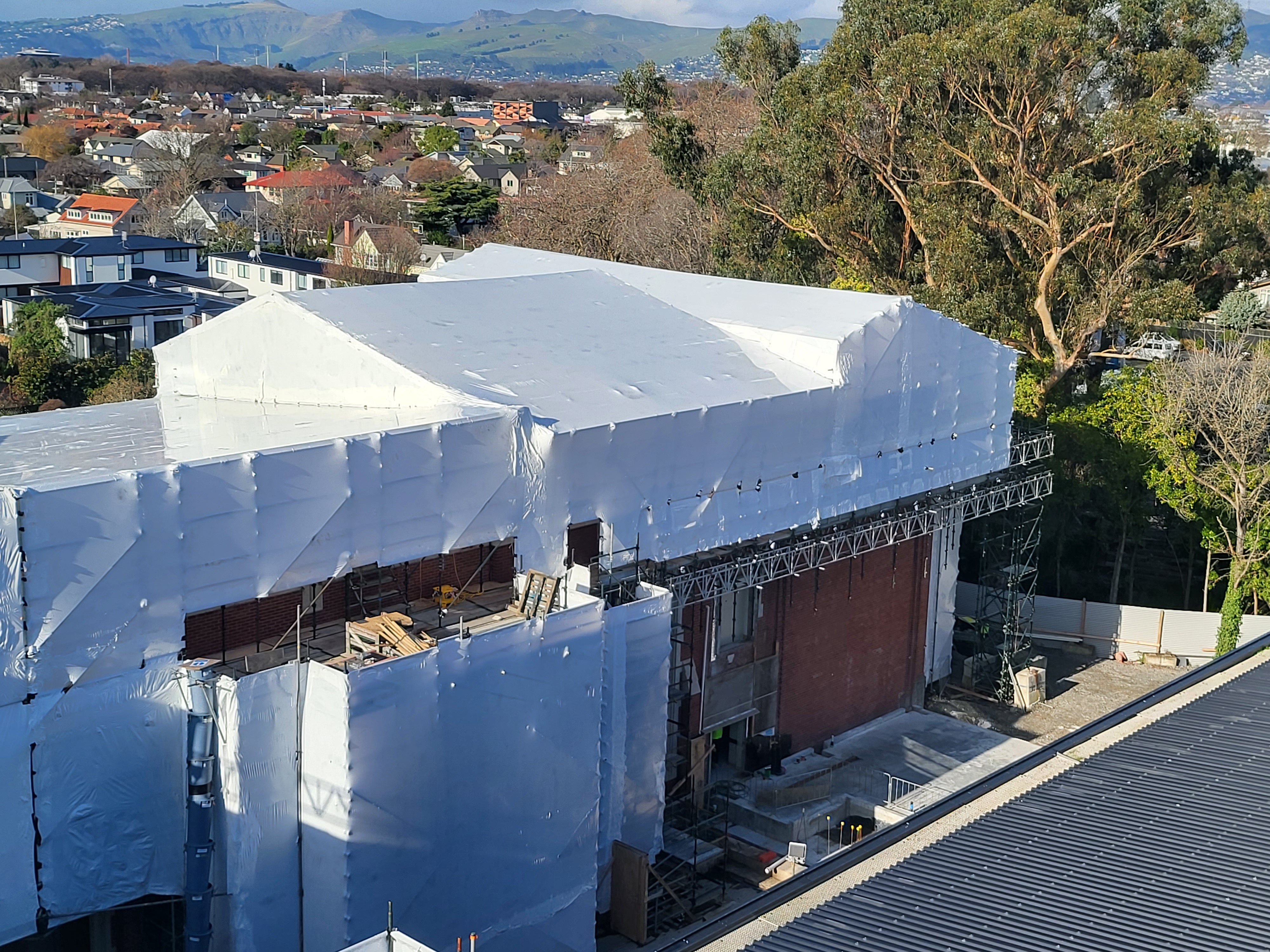
Scaffolding shrink wrap can create a temporary enclosure around a building façade or construction work area, helping separate the site from surrounding dust, wind-driven rain, and general exposure. But enclosing scaffolding also changes the forces acting on the structure and can affect access, ventilation, fire precautions, and working conditions. A responsible scaffolding shrink wrap installation begins with engineering and site planning, not simply unrolling film and applying heat. The wrapping material and the scaffold must be considered together.
For suitable projects, construction scaffolding heat shrink wrap provides a product direction for external containment, while reinforced or specialized films may be selected according to the site's requirements. The following process is intended as a planning guide for contractors and packaging buyers, not a substitute for competent scaffold design, local regulations, equipment instructions, or the training needed for working at height and using heat tools.
Safety before installation
Confirm scaffold capacity, wind-load implications, fire requirements, weather limits, escape routes and fixing design before workers begin wrapping. Film selection follows the approved enclosure plan.
Review the Scaffold and Containment Requirements
The first task is to define why the enclosure is needed. Dust containment, weather screening, façade protection, and temporary workspace separation can require different coverage and access arrangements. Determine which faces will be covered, whether the roof or top is included, and how the space will be ventilated. A continuous enclosure can have different implications from partial sheeting, particularly in strong winds or when work processes generate fumes or dust.
The competent scaffold designer or responsible engineer should review the proposed sheeting and its effect on wind loads, anchorage, ties, and structural behavior. A scaffold designed for an open configuration should not be assumed suitable for full encapsulation. The resulting plan should define where film can be supported, how it will be fixed, and what weather conditions require work to stop. This engineering review is an essential prerequisite, not a final inspection detail.
Select Film for the Approved Project Conditions
Film choice should reflect exposure, expected project duration, and the risk of tearing at attachment points. Reinforced construction can help where the wrap needs greater resistance to local damage, while other film grades may suit less demanding temporary uses. Buyers should review the specific material rather than treating all shrink wraps as equivalent. The non-woven reinforced shrink wrap option represents a different construction from standard film and should be evaluated for actual suitability.
If the site requires fire-retardant materials, obtain the relevant performance documentation for the exact specified film. Do not assume that every construction shrink wrap has the same fire classification, or that a fire-retardant test result removes the need for fire precautions during heating. The flame-retardant shrink wrap category is a starting point for discussing appropriate material options, with final selection governed by project requirements and applicable regulations.
Make a Layout Plan before Cutting Film
A layout drawing should show scaffold elevations, panel sizes, roll direction, seam positions, and the location of access doors. Include penetrations for services, ladders, emergency access, and any other openings permitted by the site plan. Where large panels are used, determine how they will be handled safely and supported before fixing.
Allowance is needed for overlaps, returns, and local detailing. Cutting film to the exact visible face dimensions can leave insufficient material for secure joints. At the same time, excessive loose film can be difficult to control during installation. Work with the selected roll width and the fixing system to plan the most practical panel sequence.
Planning item
Required decision
Why it matters
Scaffold approval
Load, ties and enclosure review
Helps address added wind effects
Film grade
Strength, exposure and fire requirements
Matches material to site conditions
Panel layout
Roll width, joint direction and overlap
Controls seams and installation handling
Fixings
Approved attachment locations
Prevents uncontrolled stress on film and scaffold
Access
Doors and emergency routes
Maintains safe movement and egress
Inspection
Acceptance and maintenance schedule
Identifies loose or damaged sections
Prepare the Work Area and Fixing Points
Before any film is installed, check that the scaffold is in its approved condition and that sharp edges or protrusions have been addressed. Remove or protect objects that could puncture the film during positioning. Verify that the intended fixing points are present and accessible. If the structure has changed since the design was approved, stop and obtain the required review rather than adjusting the fixing arrangement informally on site.
Prepare tools, compatible fixings, and any access components before work begins. The supervisor should brief workers on the planned sequence, weather conditions, heat-tool precautions, and arrangements for securing partially installed sheets. Loose film in a windy environment can create a hazard even before it has been heated.
Position, Fix and Join the Sheeting
Installers generally position film in planned panels, secure it at designated points, and join overlapping sections according to the approved method. The sequence should keep panels under control as work progresses and avoid leaving large unsupported sections. Fasteners must be compatible with both the film and the approved scaffold detail.
Scaffolding wrap heat sealing requires the correct equipment, trained operators, and attention to fire risk. The film manufacturer's application guidance and the site's hot-work procedures should govern heating and seam formation. Do not invent one heating temperature or tool speed for every material and weather condition. Excessive heat can damage the wrap, while inadequate bonding may leave openings that grow during exposure.
Heat application and working at height require controls
This article does not replace site-specific method statements, scaffold engineering, fire precautions or tool training. Work should be planned and performed by competent personnel under the applicable safety rules.
Design Access Doors and Service Openings
A completed enclosure often needs people and materials to move through it. Access doors or temporary openings should be planned before applying film, with locations agreed by the site supervisor. Cutting an unplanned doorway after the wrap is tensioned can reduce continuity and create vulnerable edges. Access components need suitable support and clear operating instructions so they remain usable during the project.
The shrink wrap accessory range includes products used for patching or access arrangements, but the choice depends on the approved system. Where work generates dust or requires controlled ventilation, the opening plan should also account for site-specific environmental controls. A sealed-looking enclosure does not necessarily provide appropriate air quality. Access, ventilation, and containment objectives must be coordinated rather than treated as separate late-stage issues.
Inspect the Completed Scaffold Wrap
After installation, inspect the enclosure from accessible safe positions. Look at fixings, seams, corners, door edges, and areas where film meets scaffold members. Check for loose panels, burn damage, gaps, and contact with sharp objects. Confirm that required labels, escape routes, and inspections remain accessible. The acceptance process should match the project's method statement and should be recorded for future reference.
Inspections should continue during use, especially after storms, scaffold alterations, or damage from work activities. Repairs may involve compatible film and patches, but significant damage should prompt review before work continues in the affected area. Changes to scaffold ties or access arrangements can also affect the enclosure design. The construction scaffold containment solution depends on ongoing site management, not only the initial installation quality.
Typical project sequence
01
Review — Confirm scaffold engineering and environmental objectives
02
Specify — Select approved film, fixing and access components
03
Prepare — Check edges, working conditions and safe access
04
Install — Position, fix and join panels by the approved method
05
Inspect — Accept the enclosure and maintain a review schedule
Procurement Information for a Scaffold Wrap Project
Buyers should send drawings or measured elevations, expected exposure period, site location, required fire classification where applicable, and the installer’s proposed fixing method. Include access openings, roll-width preferences, and the planned quantity. Material samples and any relevant test documents should be requested before the final order is released. A well-defined specification is especially important where the contractor is pricing installation separately from material supply.
An industrial construction wrap manufacturer can help with suitable film options when these details are provided. For purchasing, the heavy-duty shrink wrap supplier conversation should focus on construction, sizing and documentation, while the scaffolding wrap material inquiry should establish order quantities and delivery timing. The installer remains responsible for the project method, scaffold safety and compliance with local requirements.
Scaffold wrap completion review
✓ Scaffold and wind loading are approved for sheeting
✓ Film and fire requirements match the specification
✓ Fixings and seams show no obvious damage
✓ Access and emergency routes remain functional
✓ Inspection and repair responsibility is assigned
✓ Changes to the scaffold trigger a new review
Conclusion
A scaffolding shrink wrap installation is successful when the engineering plan, film material, fixing system and site procedures work together. Clear layout drawings and progressive inspection help avoid weak seams and uncontrolled openings. Above all, safe access, wind loading and fire precautions must be addressed before installation begins and maintained throughout the enclosure's use.
Frequently Asked Questions
Can scaffolding shrink wrap be fitted before engineering review?
No. The enclosure can change wind loading and access conditions. The scaffold design and site plan should be assessed before installing and tensioning the sheeting.
When should flame-retardant shrink wrap be specified?
Follow the project's fire-safety requirements, site rules and applicable regulations. Select a product with suitable verified performance documentation rather than assuming all shrink film is equivalent.
What needs checking before heat sealing scaffold sheeting?
Confirm approved work procedures, trained personnel, suitable equipment and safe clearances. Examine fixing points, ventilation and nearby combustible materials before applying heat.