
Views: 0 Author: Site Editor Publish Time: 2026-07-13 Origin: Site


A scaffold enclosure may look like a simple weather barrier, but the wrong film can create problems with fire compliance, wind loading, tearing, and installation. Choosing flame retardant shrink wrap for scaffolding means balancing the required fire standard with the project’s duration, exposure, scaffold design, and working conditions. NFPA 701 addresses flame propagation testing for textiles and films, while adding sheeting also changes how wind acts on a scaffold.
The right choice starts with evidence, not a vague “FR” label. Readers will learn how to compare certification, thickness, UV life, roll dimensions, reinforced options, and installation accessories before approving an order.
Before comparing film thicknesses or roll sizes, identify who has authority to approve the enclosure material. Review the project specification, fire-safety plan, contractor requirements, facility policies, and permit conditions that apply to the scaffold. Two projects in the same city may still have different requirements because the building use, work process, insurer, and contract language can change the required fire performance.
Pay particular attention when the enclosure will surround welding, grinding, cutting, heating, or other spark-producing work. Occupied buildings, public-facing sites, interior renovations, facade restoration, dust containment, and hazardous-material projects also tend to receive closer scrutiny. A specification may call for flame-resistant membranes or certified temporary barriers without using the exact phrase “flame retardant shrink wrap for scaffolding.”
A general “FR” claim is not enough. Ask which test standard applies, which edition was used, and what classification the material achieved. NFPA 701 covers methods for testing flame propagation in textiles and films, while DIN 4102-1 addresses the fire behavior, requirements, and testing of building materials. The two systems are not interchangeable.
Follow the standard named in the project documents rather than choosing the certification that is easiest to obtain. ECOPACK Flame Retardant Shrink Wrap is available with DIN 4102-1 B1 and NFPA 701 fire-performance certification. However, the material must still be reviewed against the specific requirements of the project and local approving authority.
Request the current certificate or test report before placing a project-sized order. The document should identify the tested product, construction, thickness, formulation, test date, and testing organization. Confirm whether the client also requires printed identification, roll numbers, batch traceability, technical data sheets, or pre-installation submittals.
The evidence must match the film delivered to the job, not merely a similar product family. Keep approved documents with purchasing and site records so the team can respond quickly during an inspection. Flame-retardant material remains only one control measure: hot-work authorization, shielding of combustibles, fire watches, extinguishing equipment, ventilation, and emergency procedures may still be required.
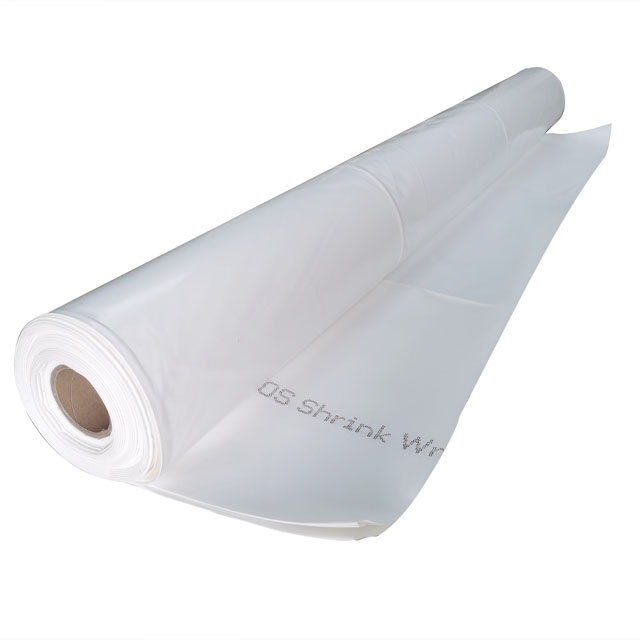
Thickness should follow the physical demands of the enclosure. Consider scaffold height, wind exposure, project duration, sharp fittings, worker movement, and whether the film covers walls or temporary roof areas. A sheltered facade project does not impose the same loads as an elevated enclosure left through a windy season.
Thicker film can improve resistance to punctures and rough handling, but it also increases roll weight and may be harder to position, weld, and shrink evenly. Nominal mil or micron values therefore tell only part of the story. Compare tensile strength, tear resistance, puncture resistance, shrink behavior, and seam performance against the likely damage mechanisms on site.
Standard scaffold-grade film often suits a prepared frame with protected edges and moderate mechanical exposure. Reinforced material is more relevant where high winds, long service periods, exposed couplers, or frequent material movement increase tearing risk. It should solve a defined problem rather than serve as an automatic upgrade.
The ECOPACK construction scaffolding & building containment range includes standard, heavy-duty, and reinforced film configurations for different mechanical demands. Heavy-duty options are available in several thicknesses, while width, reinforcement, UV protection, color, and flame-retardant performance can be adapted to project conditions. These variables should be selected only after the expected exposure and handling demands have been defined.
Outdoor life should be stated as a service period, not described only as “UV resistant.” Select a UV grade that covers the planned installation plus an allowance for delays or late dismantling. Standard and extended UV-protection options can support short-term construction work as well as enclosures expected to remain outdoors for longer periods.
Color and opacity also affect how the enclosure functions. White film can admit diffused daylight, clear film supports visibility, and opaque material can provide screening or a more uniform appearance. Branding and custom colors should remain secondary until compliance, strength, and outdoor life are confirmed.
Begin with measured scaffold surfaces rather than the nominal area of a roll. Record each elevation, return, corner, roof section, opening, and irregular projection, then identify where sheets will overlap or be welded. The calculation should include:
● Horizontal and vertical overlaps, welded seams, and top and bottom attachment
● Corners, access doors, ventilation points, and service penetrations
● Offcuts, trial pieces, repairs, and a realistic waste allowance
Nominal roll area is not the same as usable coverage because every seam and detail consumes material. Heat shrink wrap can be supplied in different widths, lengths, thicknesses, and film constructions, allowing the roll format to follow the scaffold layout instead of creating avoidable joints. Wider master rolls may suit large elevations, while narrower rolls can be easier to handle around complex scaffold geometry.
Wide rolls can cover large elevations faster and reduce the joints that must be welded, inspected, and repaired. However, a roll that looks efficient on paper may be too heavy or awkward for the platform, lifting method, crew size, or weather conditions. Check roll weight, core dimensions, access routes, hoisting arrangements, working-platform space, and the installation sequence before ordering.
The scaffold designer or responsible contractor must also know that sheeting is planned. Full or partial enclosure changes how wind acts on the scaffold and may affect ties, bracing, foundations, and allowable loading. Sheeting requirements should therefore be included in the scaffold design brief before installation begins.
A stronger or wider film cannot compensate for inadequate ties, unsuitable geometry, or a scaffold designed as an open structure. Confirm the enclosure plan before procurement, especially for full-height wrapping, temporary roofing, exposed elevations, or large uninterrupted faces. This review prevents the purchasing team from trying to solve a structural issue with a material specification.

A compliant film still has to behave predictably during installation. Confirm that it can be heat-welded at overlaps, shrinks evenly in expected conditions, and is compatible with the crew’s industrial heat equipment. Thicker or reinforced films may require different working speeds, heat input, seam preparation, or handling techniques.
A small trial area is useful for an unfamiliar formulation, irregular geometry, or custom thickness. It can reveal weak seams, uneven shrinkage, or handling problems before they affect an entire elevation. Installers also gain a practical basis for setting their work sequence.
Plan access and ventilation before installation. Locate doors, material-transfer points, inspection openings, airflow provisions, and emergency routes within the panel layout. Cutting a finished enclosure creates weak points and often leads to improvised repairs.
Shrink accessories are part of the enclosure system. The order may need compatible tape, scaffold clips, access doors, heat guns, hoses, regulators, and edge protection. Selecting them with the film reduces the risk of unsuitable on-site substitutions.
The ECOPACK shrink accessories range includes heat shrink tape, access and hatch doors, pipe clips, and heat-application tools. Each component should be checked for compatibility with the selected film, expected weather conditions, enclosure layout, and planned installation method.
Tape should suit the film surface and exposure period, while fasteners should avoid concentrated stress. Doors must support entry, inspection, and ventilation without repeated cutting and patching. Even high-strength film can fail against an unprotected coupler, tube end, bracket, or sharp building detail.
Installers should also be trained in heat application, seam formation, work at height, equipment inspection, and local hot-work controls. A flame-retardant rating does not remove the ignition source created by a propane heat gun or other heat-producing equipment. Installation risks must be assessed and controlled independently of the film’s fire classification.
Choosing flame retardant shrink wrap for scaffolding comes down to matching verified fire performance with the realities of the jobsite. Certification, film strength, UV life, roll dimensions, scaffold wind loading, and installation compatibility should all be checked before price becomes the deciding factor.
Suzhou Ecopack Co.,Ltd. supplies flame retardant shrink wrap, heat shrink wrap, Construction Scaffolding & Building Containment materials, and shrink accessories for different project conditions. A coordinated film-and-accessory selection can reduce avoidable waste, simplify installation, support enclosure durability, and give procurement teams clearer documentation for approval.
A: Not always. Requirements depend on the project specification, local fire rules, site safety plan, building occupancy, hot-work activities, and decisions made by the relevant approving authority.
A: Check the exact standard named in the project documents, such as NFPA 701 or DIN 4102-1 B1. Confirm that the certificate matches the supplied film.
A: No. Flame-retardant film is designed to limit flame propagation or self-extinguish under specific test conditions, but it can still melt, deform, smoke, or sustain heat damage.
A: Choose thickness according to wind exposure, scaffold height, project duration, abrasion risk, and handling conditions. Compare tear and puncture strength rather than relying on thickness alone.
A: Yes, provided the film has verified UV protection for the expected installation period. Allow extra service life for delays, severe weather, and postponed scaffold dismantling.
A: Yes. Solid sheeting increases the surface exposed to wind and can change structural loads. The scaffold design, ties, bracing, and enclosure plan should be reviewed before installation.


