
Views: 0 Author: Site Editor Publish Time: 2026-07-08 Origin: Site


Once a modular unit leaves the factory, its finished surfaces must withstand highway wind, road debris, rain, handling, and outdoor staging. A loose cover, weak seam, or puncture at a sharp projection can turn a routine delivery into repair work and installation delays. Reinforced shrink wrap for modular house packaging offers greater resistance where standard film may be too vulnerable, but material strength is only part of the decision. Readers will learn when reinforced protection is justified, how to choose the right cover format, and which installation and inspection practices reduce preventable damage.
Transport damage often begins with repeated movement rather than one major impact. Loose packaging can flap at highway speed, striking siding, roof edges, window frames, and finished panels until abrasion marks or tears develop. Once reinforced shrink wrap for modular house packaging is breached, wind pressure may enlarge the opening and drive rain, dust, or road grit toward vulnerable seams. Brackets, bolt heads, lifting points, unfinished framing, roof projections, and sharp corners create concentrated contact areas where the film can puncture from inside. Poor overlaps also allow water entry, while extended staging adds UV exposure, contamination, and condensation risk. The result may be wet finishes, replacement materials, delayed assembly, extra inspections, and unplanned site repairs.
Reinforced shrink wrap is most useful when a module is large, irregular, sharp-edged, exposed for a long period, or likely to experience demanding handling. Reinforcement distributes localized stress and slows the spread of cuts caused by abrasion, impact, or protruding details. Reinforced shrink wrap for modular house packaging is particularly valuable for long-distance road transport, repeated lifting, open job-site storage, and severe weather routes. However, reinforcement does not replace padding, transport restraints, secure anchoring, continuous seams, or careful installation. The decision should reflect both failure probability and financial impact. When one tear could cause finish damage, schedule disruption, or rework, the additional packaging investment is easier to justify.

Reinforced roll film suits one-off units, changing dimensions, and unusual roof profiles. Crews can cut and overlap reinforced shrink wrap for modular house packaging when final details differ from drawings. That flexibility requires more measuring, trimming, corner formation, and seam work. Installers also need sufficient space, suitable weather, and experience with complex shapes. Roll film is practical when adaptability matters more than speed.
Repeated designs often benefit from Custom-fit reinforced heat shrink covers for modular construction. A pre-formed cover reduces cutting, loose folds, waste, and variation between crews. When reinforced shrink wrap for modular house packaging matches the roofline, walls, and base, installers can focus on positioning, anchoring, sealing, and shrinking. Covers may be developed from dimensions, drawings, models, photographs, or samples. Accurate input remains essential because an omitted projection can compromise fit.
Modular shipping & storage covers should address the entire logistics journey, including factory staging, loading, road transport, handling, job-site waiting time, and outdoor exposure. Custom-fit shrink covers are preferable when precise geometry, repeatable installation, reduced trimming, and simple reordering are the main priorities. Before ordering reinforced shrink wrap for modular house packaging, buyers should define:
● Overall dimensions, roof profile, base details, projections, openings, lifting points, and sharp contact areas
● Transport method, route conditions, destination climate, storage location, and expected exposure period
● Required vents, access doors, reinforced attachment zones, identifying colors, labels, or printed project information
A complete specification supports the choice between roll film, a pre-formed cover, and protection designed around the full route. Material selection should reflect the module’s shape and how it will be moved, restrained, stored, and uncovered.
Project condition | Preferred format | Main reason |
One-off irregular module | Reinforced roll film | Greater on-site flexibility |
Repeated module design | Custom-fit reinforced cover | Faster and more consistent application |
Long transport plus outdoor staging | Shipping and storage cover | Protection planned around the full journey |
Limited installation labor | Pre-formed shrink cover | Less cutting and adjustment |
Thickness is only one part of the specification. Buyers should also review reinforcement structure, tensile performance, puncture resistance, shrink behavior, width, seam compatibility, and sharp-point performance. A smooth module stored briefly indoors may need lighter protection, while exposed brackets, highway travel, or open storage require stronger film, padding, secure anchors, and suitable UV resistance. Scrim, mesh, lamination, and resin construction affect how reinforced shrink wrap for modular house packaging responds after a puncture. Test the material on representative corners, seams, restraints, and roof transitions before a large production run.
Films with the same thickness may behave differently during shrinking and transport. Reinforced shrink wrap for modular house packaging should be assessed with compatible tape, patches, vents, anchors, padding, and seams. A mock-up can confirm even tightening without overloading windows, membranes, doors, or services. Testing also establishes overlaps, anchor spacing, heat sequence, and repair procedures. The strongest film is unsuitable when it is difficult to form or requires unavailable skills.
Functional add-ons should solve a defined risk. UV stabilization supports long sunlight exposure, VCI protection can protect metal, and flame-retardant film belongs only where required. Reinforced shrink wrap for modular house packaging may also include vents, zipper doors, attachment zones, colors, or printed details. Each addition should improve protection, inspection, traceability, or installation efficiency. Unnecessary features increase cost and complexity.
Installation and disposal planning are equally important. Reinforced shrink wrap for modular house packaging still requires accurate sizing, trained workers, inspected heating equipment, and an area free from fuels, solvents, vapors, and combustible debris. Gloves, eye protection, safe access, ventilation, and separation from other trades belong in the work plan. Removed film, straps, padding, vents, and patches also need a collection or disposal route. Protection is incomplete when it creates avoidable safety or waste problems.
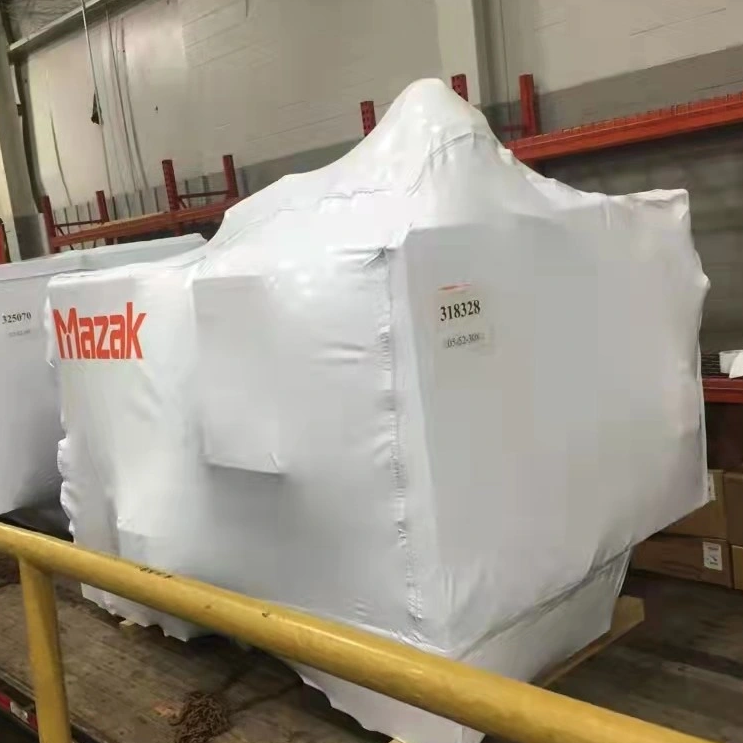
Preparation determines whether the film becomes a reliable enclosure or only a tight outer layer. Measure the roof, walls, base, projections, recesses, and overlaps before choosing full or partial coverage. Reinforced shrink wrap for modular house packaging performs best on a clean, dry unit because debris can abrade finishes and moisture can create condensation. Pad edges, corners, fasteners, brackets, lifting points, framing, and service projections. Plan seams, anchors, restraints, access, and ventilation before lifting the film. Calm, dry conditions improve control and reduce trapped water or contamination.
Position the film or cover with enough material for secure anchors and continuous seams. Fasten the perimeter firmly so reinforced shrink wrap for modular house packaging contracts around the unit instead of pulling from roof edges, base rails, or corners. Form consistent overlaps and seal roof changes, recesses, openings, and restraint points before full heating. Confirm that vents, access points, and attachment zones remain usable. Correct weak anchors and seams before the cover tightens.
Begin at the lower sections and work upward with smooth, continuous heat passes. Controlled movement allows reinforced shrink wrap for modular house packaging to tighten gradually while reducing overheating near seams, windows, membranes, and isolated areas. Do not hold the heat source on corners, patches, labels, or one section of film. Watch how the shrinking cover loads brackets, temporary doors, padding, and projections. The finished enclosure should resist flapping without bending components or concentrating excessive force around lifting points.
Installation workflow: Measure and inspect → Pad sharp points → Position the cover → Anchor the perimeter → Seal overlaps → Apply heat from the bottom upward → Add access or ventilation → Inspect and patch
Temperature changes can create condensation inside a sealed enclosure, especially with damp materials or prolonged storage. Add vents or another moisture-control method when reinforced shrink wrap for modular house packaging will remain through changing weather. Install access doors before final shrinking when workers need to inspect or enter the module. After shrinking, inspect seams, corners, roof transitions, anchors, openings, and restraint areas. Patch small punctures before cyclic wind pressure enlarges them. Recheck the cover after loading and restraint adjustments.
Heat application requires disciplined safety controls. Crews working with reinforced shrink wrap for modular house packaging should wear gloves and eye protection, inspect heating tools, maintain a clear work zone, and keep the heat source moving. Flammable adhesives, solvents, fuels, aerosols, combustible dust, and accumulated waste should be removed before work begins. Adequate ventilation is necessary where fumes, vapors, or enclosed spaces may create a hazard. Workers should follow equipment instructions and site fire-prevention procedures. Installation speed should never take priority over controlled heating and safe access.
Inspect before dispatch, after loading, upon arrival, after severe weather, and before assembly. Check reinforced shrink wrap for modular house packaging for punctures, separated seams, loose anchors, strap abrasion, water entry, condensation, and excessive tension. Clean, dry, and repair damage with compatible tape or patches before wind enlarges it. Photographs can identify recurring failure locations and distinguish transport damage from installation defects. Records should also cover vents, access doors, padding, and restraint interfaces.
Repeated damage is design feedback, not routine maintenance. When reinforced shrink wrap for modular house packaging fails at the same bracket, corner, seam, or anchor, revise padding, cover dimensions, reinforcement, overlaps, or restraint routing. Trace internal water to a puncture, seam, access point, unsealed base, or condensation source. This prevents teams from responding by simply ordering thicker film. Correcting geometry or installation is often more effective.
Remove dirt, ice, and standing water before opening the enclosure. Cut reinforced shrink wrap for modular house packaging along controlled lines away from cladding, membranes, windows, wiring, sealants, and fittings. Depth-limiting tools can reduce accidental damage. During removal, inspect finishes, openings, connections, lifting points, and roof edges. Separate film, straps, padding, vents, labels, and patches under the recovery or disposal plan.
Removal findings should shape the next packaging specification. If reinforced shrink wrap for modular house packaging arrives intact but condensation is present, revise drying, ventilation, or moisture control. Strap abrasion calls for better restraint interfaces, while a cutting near miss may justify marked opening zones. Record feedback from drivers, inspectors, and installers against the module design. Packaging becomes more consistent when transport and removal observations become production data.
The right packaging decision depends on the module’s geometry, exposed edges, transport route, storage period, and installation conditions—not film thickness alone. Reinforced shrink wrap for modular house projects works most effectively when accurate sizing, edge padding, secure anchoring, controlled shrinking, ventilation, and regular inspection are treated as one system. Suzhou Ecopack Co.,Ltd. supports this process with reinforced film and custom-fit shrink covers for modular components and demanding transport or storage conditions. A well-matched cover can reduce material waste, simplify installation, and help prevent moisture, abrasion, and puncture damage before site assembly begins.
A: It is heat-shrinkable film strengthened with an internal reinforcement structure to improve resistance to punctures, tearing, abrasion, wind movement, and demanding transport conditions.
A: Reinforced film is better suited to large modules, sharp projections, long-distance transport, repeated handling, severe weather exposure, or extended outdoor storage.
A: Consider module size, surface condition, exposed edges, transport distance, storage duration, reinforcement structure, puncture resistance, and shrink performance rather than thickness alone.
A: Properly installed film can create a weather-resistant enclosure, but protection depends on sealed overlaps, secure anchoring, intact surfaces, padded edges, and correctly formed access points.
A: Yes. Moisture may accumulate when damp materials are enclosed or temperatures change. Dry preparation, suitable ventilation, and regular inspections help control condensation.
A: Small punctures and separated seams can usually be repaired with compatible shrink-wrap tape or patches after the affected area has been cleaned and dried.


