
Views: 0 Author: Site Editor Publish Time: 2026-06-08 Origin: Site


You use heat shrink for many jobs, from keeping packages safe to protecting wires in electrical work. Heat shrink makes your work easier and safer because it forms a tight seal when you apply heat. ECOPACK gives you trusted solutions in this field. The market for heat shrink keeps growing. In 2024, heat shrink tubing held a 45% share because people rely on it for electrical insulation in cars and electronics. The heat shrink fabric market could reach $12 billion by 2026. You need to pick the right heat shrink and use it correctly to get the best results.
The heat shrink tubing segment grows at nearly 5% each year.
Heat shrink wraps see a 9% rise in demand, especially in food and beverage packaging.
You can trust heat shrink for strong, reliable protection in many industries.
Heat shrink wrap gives strong protection for packaging and electrical insulation. This makes it very important for many industries. - Pick the right size and type of heat shrink tubing. This helps it fit tightly and makes it last longer and stay safe. - Always clean surfaces before you use heat shrink. This helps it stick well and seal better. - Use a heat gun to shrink the tubing evenly. Do not get it too hot or you might hurt the tubing. - Follow safety rules like wearing protective gear. Work in a place with good air flow to stay safe.
Heat shrink is used in many jobs because it is simple and strong. The tubing starts as a loose plastic sleeve or film. You put it over the thing you want to cover. Then, you use a heat gun, like one that uses propane, to heat it up.
You heat the tubing to about 400-600°F.
The heat makes the polymer chains inside move and relax. They try to go back to their tangled shape.
The tubing shrinks in every direction at the same time. This is called biaxial shrink. It squeezes tightly around your item and makes a strong seal.
This makes heat shrink wrap and tubing helpful for many things. It gives a tight layer that blocks dust, water, and other dangers. It also helps your packaging or wires last longer.
Heat shrink is used for many things. In packaging, it is often wrapped over boxes, cartons, and cans. It keeps products clean and stops people from opening them. It is also used to cover foods like cheese, meats, and vegetables. In factories, workers use it to cover big machines, wrap scaffolding, and protect boats.
For electrical insulation, heat shrink tubing covers wires and connections. It keeps them safe from harm and water. You can also use it to hold wires together or fix them.
Tip: Heat shrink is a cheap way to bundle things and add labels or logos.
Here is a table that shows how different industries use heat shrink for their needs:
Industry | Specific Requirements |
|---|---|
Food and Beverage Packaging | Keeps food fresh, helps it last longer, and stops germs. |
Electronics and Appliances | Protects items when they are shipped or stored. |
Pharmaceuticals and Medical | Gives safe, sealed, and tamper-proof packaging. |
Retail Packaging | Makes products look better and stops theft or tampering. |
Industrial and Equipment | Keeps big tools and machines safe from dust, water, and damage when moved. |
You can see heat shrink is used in many ways. It helps keep things safe, clean, and strong in every industry.
Picking the right heat shrink tubing keeps your things safe. ECOPACK has many choices, so you can find what you need. You should know how to pick the best tubing for packaging and electrical insulation.
There are different types of heat shrink tubing for packaging. Each type fits in a special way and gives different protection. ECOPACK helps you match the tubing to your job. Here is a table that shows the main types:
Type of Heat Shrink Tubing | Description |
|---|---|
Large Diameter Heat Shrink Tube | White color, UV protection, flame retardant for packaging |
Shrink Hood Films | Used for pallet wrapping and protection in packaging applications |
You can ask ECOPACK for custom options too. If you want a special fit, logo, or picture, you can order custom packaging. Here are the choices:
Customization Option | Minimum Order Requirement |
|---|---|
Customized packaging | 10,000 kilograms |
Customized logo | 10,000 kilograms |
Graphic customization | 10,000 kilograms |
A good fit keeps your products clean and safe. A tight fit stops dust and water from getting inside. Always check the size before you buy.
When you use heat shrink tubing for wires, it must fit tightly. The right fit stops shorts and keeps the tubing in place. Here is a table to help you pick:
Criteria | Description |
|---|---|
Sizing Requirements | Measure the biggest diameter for the sleeve and the smallest diameter for full coverage after shrinking. |
Electrical Property Requirements | Make sure the tubing follows safety rules like UL/CSA or ASTM. |
Operating Environment | Think about rubbing, bending, and if there are oils or chemicals. |
You can choose from different materials. Polyolefin is good for high heat and is flexible. PVC is tough and comes in bright colors for easy wire ID. Fluoropolymer works well with chemicals and heat.
Tip: Always measure your wires and pick a size that fits snugly. A tight fit gives better protection and helps your wires last longer.
If you want to pick the right heat shrink tubing, look at the size, material, and what you need to do. The right fit makes your work safer and more dependable.
You want your packaging to last and look neat. Start by getting your items ready for heat shrink tubing. This step helps you get a secure fit and strong bond. Follow these steps for the best results:
Wash your hands and clean the items. Remove dirt, dust, and oils. Clean surfaces help the heat shrink tape stick better and make the application process smoother.
Slide the heat shrink tubing over the item. Move slowly to avoid scuffing or tearing the material. Make sure the tubing covers the area you want to protect.
Check the fit. The tubing should not be too tight or too loose. A good fit means the tubing will shrink evenly and give you durable repairs.
Set up your workspace. Keep your tools, like a heat gun, nearby. Make sure you have enough space to move around the item.
You can use these steps for both big and small items. If you want to try diy heat shrink tubing, always start with a clean surface. This helps you avoid problems later.
Tip: Never skip cleaning. Dirt or oil can stop the heat shrink tape from sealing well.
Now you are ready to apply heat shrink tubing. ECOPACK makes this easy with user-friendly products. You can use these steps for diy projects or for large shipments. Here is how you do it:
Place your items on a strong pallet. Stack boxes or goods evenly. Do not let anything hang over the edge. Use corner boards if you have fragile edges.
Pick the right heat shrink wrap or heat shrink tape. Drape it over the load. Make sure it covers all sides and reaches below the top deck of the pallet.
Use a heat gun to start shrinking. Begin at the base of the load. Move the heat gun slowly around the bottom, then up the corners, and finally the flat sides. Keep the heat gun moving to avoid overheating one spot.
Rotate the heat gun as you work. This helps the heat shrink tape shrink evenly. Uneven heating can cause weak spots or leaks.
Let the load cool for one to two minutes. Do not move it right away. After cooling, do a "Tug Test" to check if the wrap is anchored well.
Inspect your work. Look for gaps or loose spots. If you find any, use the heat gun again for quick repairs.
To prevent air bubbles or "bird-caging," start heating from the center of the tube and move toward the ends. This pushes the air out as the material contracts.
You can use heat shrink tape for diy projects, quick repairs, or large shipments. Always use a heat gun for the best results. If you use the wrong tool, you may not get a secure fit.
Here are some common mistakes to avoid when you apply heat shrink tubing:
Picking the wrong size. If the tubing is too small, it will not fit. If it is too big, it will not shrink tight enough.
Overheating the tubing. Too much heat can melt or change the color of the tubing.
Not moving the heat gun. If you do not rotate the heat gun, you get uneven wall thickness.
Storing tubing in a hot or damp place. This can make the tubing stick together or lose its shape.
Using the wrong tool. For large tubes, always use a heat gun for even heating.
You can save time and money with heat shrink wrap. Look at this table to see how it compares to traditional methods:
Factor | Heat Shrink Wrap (Transhield) | Traditional Shrink Wrap |
|---|---|---|
Installation Time | Reduced by up to 50% | Longer installation |
Material Costs | Higher upfront cost | Lower upfront cost |
Labor Costs | Significantly lower | Higher due to complexity |
Accessories Required | Fewer (pre-installed) | More (tape, etc.) |
Overall Efficiency | Improved throughput | Potential bottlenecks |
You get better durability and save on labor costs. Heat shrink tape also helps with protecting against moisture, making it a smart choice for many industries.
If you want to try diy heat shrink tubing, always follow these steps. You get a secure fit, strong bond, and durable repairs every time. Use a heat gun for the best results. Heat shrink makes packaging easy, safe, and efficient.
Heat shrink tubing is a safe way to protect wires. It helps keep electrical parts safe and working well. ECOPACK has heat shrink wrap and heat shrink tape that last a long time. You can use heat shrink for wires in homes, factories, and cars. It keeps wires safe from water, dust, and getting damaged. It also stops shorts and helps repairs last longer.
You must get wires ready before using heat shrink tubing. Clean wires help the tubing stick and shrink right. Here are some steps to follow:
Wipe wires with alcohol wipes. This removes dirt and oil.
Cut wires to the right size. Make sure the ends are smooth.
Get your tools ready. You need heat shrink tubing, scissors, and a heat source.
Measure the tubing. Check the size so it fits snug.
Cut the tubing to the right length. Use scissors for a neat edge.
Slide the tubing over the wires before heating. Make sure it covers the spot you want to protect.
Tip: Always clean wires before using heat shrink tape. Dirt or oil can stop the tubing from shrinking right.
You can use these steps for one wire or a bunch. Clean, smooth wires help you get a tight seal and strong insulation.
You want to use heat shrink tape and tubing to cover wires. This makes the insulation strong. ECOPACK’s products last a long time and work well. Follow these steps for good insulation:
Pick the right size. The tubing should be smaller than the wires.
Cut the tube to the length you need. Make sure it covers the connection.
Put the tube over the wires. Do not pull or stretch it.
Heat the tubing. Use a heat gun or hot-air gun. Move the heat around the tubing so it shrinks evenly. Do not heat one spot too much.
Let the tubing cool down. It will shrink and make a tight seal.
You can use heat shrink tape to fix wires, bundle them, or cover bare spots. It keeps water and dust away, even outside or in wet places. Heat shrink gives you strong protection.
Note: Do not push tubing over sharp edges. Sharp wires can poke holes in the tubing and make it weaker.
Here is a table that shows why heat shrink is good for electrical insulation:
Benefit | Description |
|---|---|
Durability | Protects wires and connections for a long time |
Insulation | Lowers the chance of shorts or failures |
Waterproofing | Keeps wires safe in wet or damp places |
You should follow safety rules when using heat shrink tape. Too much heat can burn you or make bad fumes. Use heat guns at 200-300°C for even shrinking. Make sure you have fresh air in the room. Do not touch hot tubing with your skin.
Heat shrink wrap and tape help keep wires and electrical parts safe. You get strong protection and good insulation. ECOPACK’s materials help you feel safe and keep your electrical systems working.
Tip: Always check the heat shrink temperature rules. The right heat gives a tight seal and stops damage.
You can use heat shrink for many jobs. You can bundle wires, cover splices, and protect electrical parts. You get a good fit and strong insulation every time.
You must always protect yourself when working with heat shrink. Wear eye goggles or safety glasses to shield your eyes. Use a face mask with a filter to avoid breathing in fumes. Put on thermal gloves to keep your hands safe from burns. Rubber shoes and gloves add extra protection. You should also wear protective eyewear and a mask.
Work in a space with good air ventilation. Open windows or use a fan to keep fresh air moving. When you use a heat gun, hold it at the right distance and angle. This helps you avoid uneven shrinking and keeps you safe. Be patient during the heating process. Watch for bubbles or distortions. These signs can show you if something is wrong.
Tip: Always follow best practices for using heat shrink tubing to keep your workspace safe and your results strong.
You may face some problems when using heat shrink. Here is a table that shows common issues, their impact, and how you can fix them:
Common Issue | Impact on Durability | Solution |
|---|---|---|
Wrinkles or Loose Wraps | Air trapped or uneven heating | Make small holes for air to escape and heat evenly |
Overheating | Melting or cracks | Keep heat gun at a distance and move it around |
Tears | Wrong size or stretching | Choose the right size and stronger materials |
If your heat shrink does not shrink evenly, try these steps:
Gradually increase the heat sealing temperature until you get a secure seal.
Check the pressure spring on your heat sealing tool and adjust it for a tight fit.
Clean the film surface and the heat sealing blade before you start.
For thicker films, increase the heat sealing time.
You should always measure your tubing before use. Using the wrong size can cause leaks or loose spots. Too much heat can melt or change the color of the tubing. Move the heat gun in circles for even shrinking. This helps you get the best results and improves the durability of your work.
Note: Follow these tips to avoid common mistakes and keep your heat shrink projects safe and effective.
You can use heat shrink wrap to keep products and wires safe. First, measure your items so you get the right size tube. Next, clean the surfaces before you start wrapping. Use a heat gun to shrink the wrap evenly. Let air out so the wrap does not puff up. Pick good materials to make sure everything stays safe.
You can check the temperature ranges for each material in this table:
Material | Temperature Range (°C) |
|---|---|
Polyolefin | 90 – 125 |
PVC | 80 – 105 |
PTFE | 327 – 340 |
FEP | 200 – 230 |
PVDF | 150 – 175 |
Silicone | 150 – 200 |
Viton | 175 – 200 |
Elastomeric | 120 – 175 |
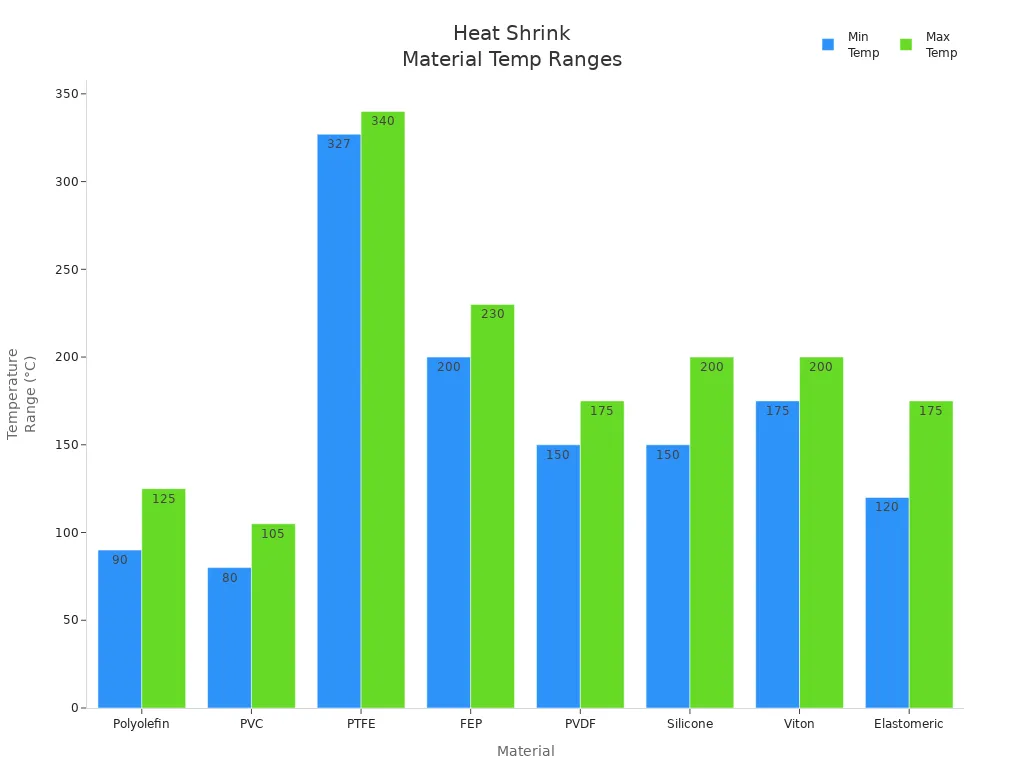
You can ask ECOPACK for help if you need it. When you follow these steps, your work will be safe and strong.
You should measure the widest part of your item. Pick tubing with a diameter about 20–30% larger. This ensures a snug fit after shrinking. Always check the shrink ratio on the package.
A hair dryer does not get hot enough for most heat shrink wraps. You should use a heat gun for best results. This tool gives you even heat and a tight seal.
Yes, ECOPACK offers food-safe options. You can use these wraps to keep food fresh and protected. Always check the product label for food safety certification.
Move the heat gun slowly and evenly around the tubing. Do not stay in one spot. If you see bubbles, let air escape before reheating. This helps you get a smooth finish.