
Views: 0 Author: Site Editor Publish Time: 2026-07-01 Origin: Site


A modular unit may leave the factory fully finished, yet its most vulnerable stage often begins during transport or outdoor storage. Rain, road debris, wind, UV exposure, and repeated handling can damage cladding, windows, roof sections, and interior materials before the building reaches its final site.
Heat shrink wrap for modular buildings creates a close-fitting temporary barrier around the unit, but reliable protection depends on more than simply choosing a thick film. The right coverage, material type, surface preparation, installation method, and inspection plan all affect performance. Understanding those choices helps reduce avoidable damage, trapped moisture, and costly rework.
The right specification begins with the journey rather than a film catalog. Highway transport exposes the enclosure to moving air, road spray, debris, vibration, and load handling. Short-term staging is more likely to involve rain, dust, sunlight, and crane or forklift activity. Extended outdoor storage adds UV exposure, repeated temperature changes, condensation, and damage that may remain unnoticed for days.
Assess what has already been installed. Finished façades and windows need protection from abrasion, while roof sections, corners, brackets, and metal fittings create potential stress or corrosion points. Interior boards, insulation, flooring, or cabinetry increase the consequences of trapped moisture. Therefore, heat shrink wrap for modular buildings should be specified according to route, climate, storage period, module geometry, and handling frequency—not thickness alone.
Full encapsulation is appropriate when a module will travel a long distance, change carriers, remain outdoors, or face weather from several directions. Heat shrink wrap for modular buildings surrounds the roof, walls, ends, and base area, making gaps easier to control.
Top-and-sides coverage may be sufficient when the base already has a protected transport interface and the route is short and predictable. Targeted wrapping can work for a single panel or vulnerable elevation. Partial coverage, however, should be a planned logistics decision rather than a shortcut. The more complete the enclosure, the more carefully dryness, ventilation, drainage, and access must be managed.

Standard heat shrink wrap is a practical baseline for rectangular modules when crews can measure, cut, overlap, and seal film on site. It offers flexibility when dimensions vary slightly or one roll must serve several units. Available film widths, roll sizes, and thicknesses can support different industrial applications and module dimensions.
Standard film works best for straightforward profiles, accessible installation areas, and moderate exposure. Width should reduce unnecessary seams without creating a sheet that the crew cannot safely control. Thickness should reflect puncture risk, journey severity, storage time, and handling conditions. In this setting, heat shrink wrap for modular buildings performs best when the material follows the module rather than forcing every unit into one generic specification.
Repeated designs often justify custom-fit shrink covers. A pre-sized cover can follow roof profiles, recesses, corners, and projections more closely than film cut from a roll. Less excess material means fewer large folds and less trimming around complex geometry.
Modular shipping & storage covers are useful when dimensions, route, climate, storage duration, identification, and protective functions must be considered together. Suitable inputs include overall measurements, photographs, drawings, a 3D model, and notes showing protrusions or areas requiring reinforcement or ventilation. Custom configurations may include thicknesses from 150 to 450 microns, UV protection, VCI treatment, or flame-retardant properties.
For repeated production, custom-fit heat shrink wrap for modular buildings can also improve consistency because each crew starts with the same cover geometry rather than recreating cuts and seams for every unit.
Reinforced shrink wrap is better suited to sharp edges, exposed brackets, heavy modules, rough handling, or long-distance movement. Reinforcement may use stronger layers or liners that distribute stress and resist local tearing. Padding is still required because no film should be expected to sit directly against an unprotected sharp corner.
For complex units with demanding exposure, custom-fit reinforced heat shrink covers for modular construction combine contour-specific sizing with greater resistance to puncture and handling damage. UV-resistant material suits prolonged sunlight; VCI treatment may help protect metal components; flame-retardant options should be selected when project rules require them. Reinforced custom covers may be configured in different thicknesses and with additional protective functions to suit the module and its transport conditions.
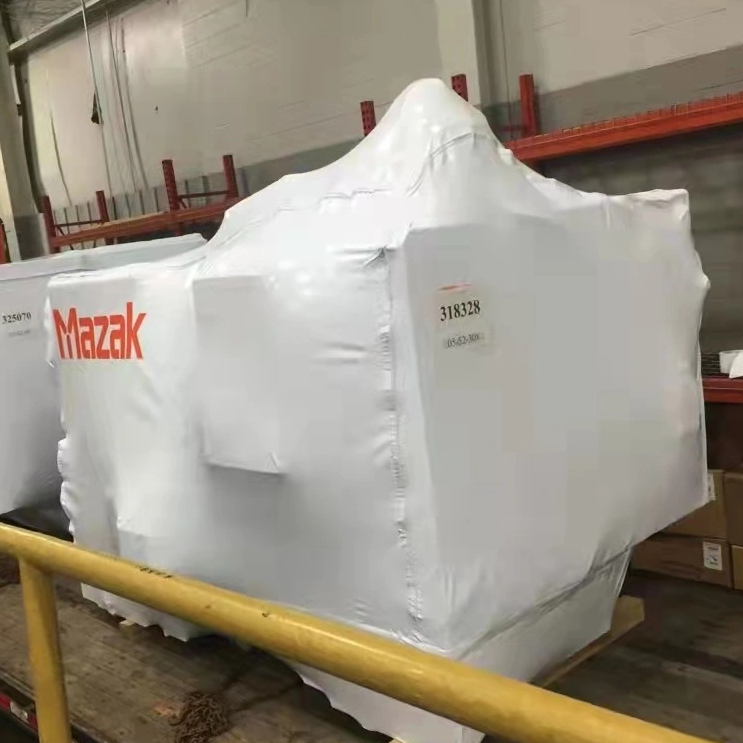
Preparation determines whether heat shrink wrap for modular buildings becomes a protective skin or seals in a problem. Start only when the module and its surfaces are dry. Film can stop new rain from reaching the unit, but it cannot remove moisture already held in insulation, timber, interior finishes, or recessed joints.
Remove grit, loose fasteners, swarf, and debris that could scratch the finish or puncture the film. Secure doors, windows, trim, roof elements, cables, and moving components. Pad corners, brackets, bolt heads, projections, and tie-down contact points. A part that looks harmless while stationary may rub through heat shrink wrap for modular buildings after hours of road vibration, so correct contact points before wrapping.
Measure length, width, height, roof profile, recesses, and projections, then allow for the overlap needed at seams and terminations. Mark perimeter anchors, reinforced zones, access openings, vents, and areas where extra material must accommodate shrinkage. For a custom cover, confirm orientation and key dimensions before lifting it over the unit.
Choose a calm, dry installation period whenever possible. Prepare the heat tool, sealing and repair tape, cutting tools, fastening materials, access equipment, and personal protective equipment before opening the cover. The crew should agree on the shrinking sequence, particularly when workers are positioned on different sides of a large module. Eye and face protection must match the hazards present, while heat equipment should be used according to its instructions and site controls.
Planning also reduces improvised cuts. Every unplanned opening or last-minute anchor adds a potential weak point to heat shrink wrap for modular buildings.
Heat shrink wrap for modular buildings needs secure geometry before heat is introduced:
1. Position the film or custom cover with enough material at the ends, corners, base, and planned seams.
2. Anchor the perimeter so the material cannot pull free as it contracts.
3. Overlap and seal separate sections to create continuous coverage.
4. Leave sufficient material around recesses and corners for controlled shrinkage.
5. Locate planned access openings and vents before the final heat pass.
Secure anchoring gives heat shrink wrap for modular buildings something to tension against. If the perimeter is weak, heat may pull material away from the edge or distort a seam. Redistribute unsupported folds before shrinking because they can become pockets, catch wind, or concentrate stress. Open laps and loosely taped joints are not finished seams.
Custom covers reduce cutting but still require correct attachment. Confirm that the cover sits evenly, reinforced areas align with contact points, and no section is trapped beneath the module or stretched sharply over a projection. Suitable overlap, secure attachment, continuous coverage, even heat, and a complete inspection are essential before transport or storage.
Begin at a stable anchored area and follow a consistent pattern. Keep the heat source moving; holding it too close or too long can thin, distort, or burn the film. Tighten broad surfaces progressively, then return to corners, seams, recesses, and roof-to-wall transitions.
The finished heat shrink wrap for modular buildings should look smooth and close-fitting rather than aggressively stretched. Large wrinkles, billowing panels, soft pockets, and open edges indicate unfinished work. Excessive tension is also a defect because it can pull against projections or overload anchors.
Heat-tool work requires suitable PPE, stable access equipment, a clear operating area, and separation from combustible materials. Strong wind can make a large sheet difficult to control and alter how heat reaches the film. A trained crew should correct positioning problems instead of trying to shrink them out with additional heat.
Do not release the module for loading immediately after the last heat pass. Walk the perimeter and inspect roof-to-wall transitions, corners, projections, overlaps, seams, anchors, tie-down zones, vents, and access points. Look closely for small heat holes and punctures from tools, fasteners, or hidden edges.
Use this pre-dispatch check:
● Broad surfaces are tight without severe overstretching.
● Seams are closed and edge terminations remain secure.
● Corners, protrusions, and tie-down zones are padded or reinforced.
● Vents are open as designed, while access points are sealed.
● Every visible hole or tear is repaired on a clean, dry surface.
● No loose section can flap freely during transport.
Patches should extend beyond the damaged area and adhere without wrinkles. If damage appears at a projection or anchor, correct the cause before applying repair tape. Otherwise, the same point may fail again.
The release standard for heat shrink wrap for modular buildings is simple: no open seams, no exposed surfaces within the chosen coverage plan, no uncontrolled loose film, and no unpatched damage. Photographs taken after inspection can help the receiving team distinguish transit damage from pre-existing conditions.
A tight cover blocks outside weather but does not automatically control the air and moisture already inside. Condensation risk rises when temperatures change sharply, storage lasts for weeks or months, absorbent interior materials are installed, or metal components are enclosed. Under those conditions, vents, desiccants, or VCI protection may form part of the packaging plan.
Vent positions must support air movement without creating a direct route for rain, dust, or road spray. Moisture-control materials should match the enclosed volume and expected duration. Heat shrink wrap for modular buildings remains temporary logistics protection; it does not replace roofing, flashing, façades, or the completed permanent envelope.
Calendar checks are useful, but event-based inspections are more reliable. Examine heat shrink wrap for modular buildings before dispatch, after loading and unloading, after relocation in a staging yard, and after strong wind or heavy rain. Check it again before installation crews begin cutting or removal.
Look for punctures, loose anchors, worn tie-down areas, open seams, pooled water, and signs of condensation. Repair damage promptly and identify why it happened before the module moves again. Planned access doors are preferable to repeatedly cutting new holes into heat shrink wrap for modular buildings.
At the end of the protection period, remove the material carefully so knives and loose film do not damage the finished unit. Separate reusable accessories where applicable, and handle used polyethylene according to local project and recycling procedures. Proper maintenance allows heat shrink wrap for modular buildings to protect the module through its final handoff rather than merely survive the first day.
Protecting a modular building effectively comes down to matching the cover to the real risks of transport and storage. Full encapsulation, suitable film strength, careful surface preparation, controlled shrinking, and timely inspections all help prevent moisture intrusion, abrasion, punctures, and avoidable rework.
Suzhou Ecopack Co.,Ltd. offers heat shrink wrap for modular buildings in standard, custom-fit, and reinforced formats, allowing project teams to choose protection around module shape, handling conditions, and storage duration. The result is a tighter, more consistent enclosure that supports safer delivery and more efficient installation.
A: It contracts around the module to create a tight temporary barrier against rain, wind, dust, road debris, UV exposure, and surface contamination during transport or storage.
A: Thickness depends on the module’s size, edge condition, journey length, handling frequency, weather exposure, and storage duration. Demanding projects may require thicker or reinforced material.
A: Yes. Moisture already present inside the enclosure can condense when temperatures change. Wrap dry modules and consider suitable ventilation or moisture-control materials for extended storage.
A: Full encapsulation suits long-distance transport and outdoor storage. Partial coverage may be adequate for shorter, controlled journeys when the base and other exposed areas already have protection.
A: Service life varies with film specification, UV exposure, climate, installation quality, and physical damage. Inspect the enclosure regularly and replace or repair compromised sections promptly.
A: Shrink wrap forms a tighter enclosure with less loose material that can flap in transit. Tarpaulins may be reusable but often require more securing and adjustment.


