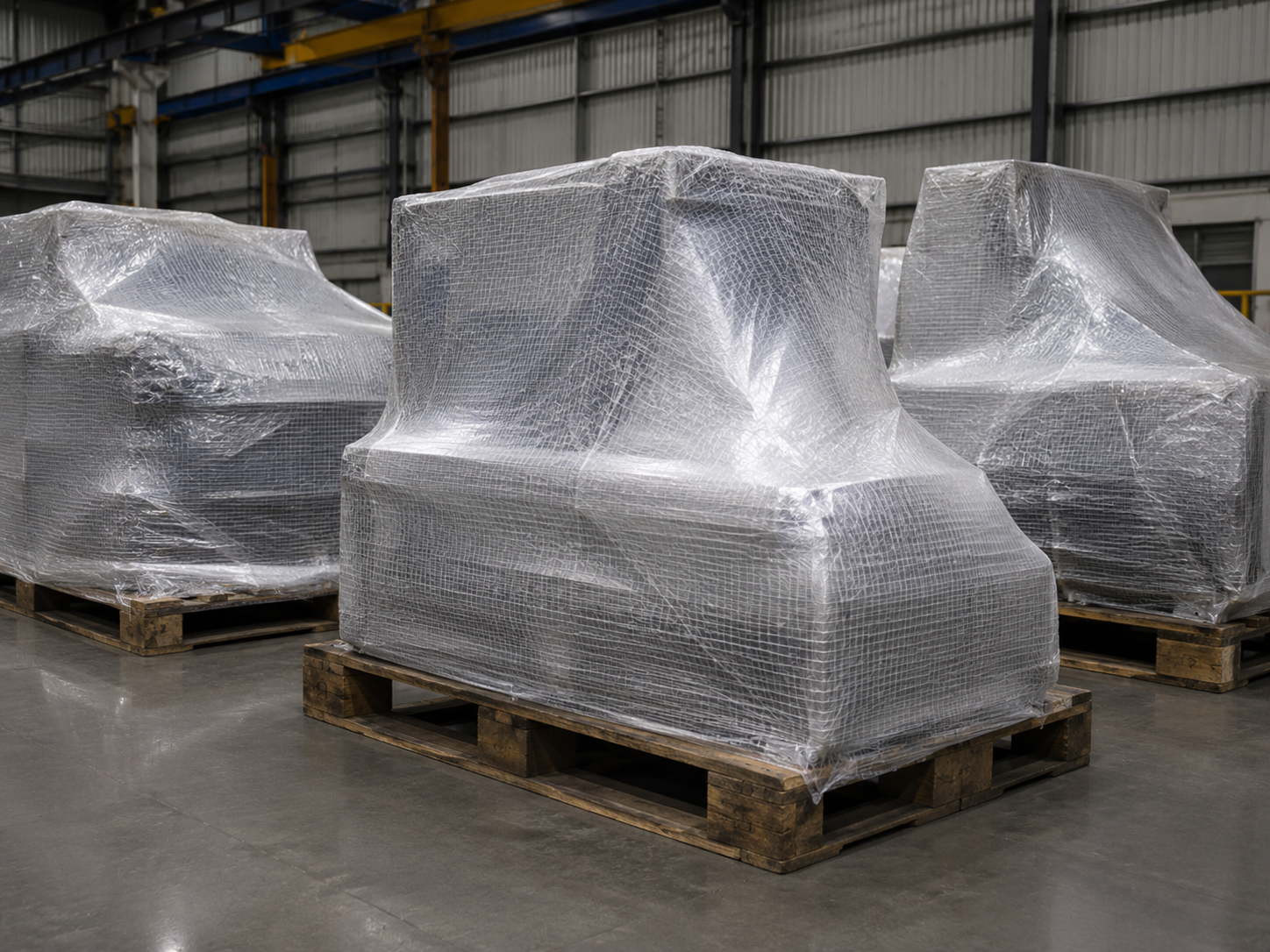
Steel coils are compact, heavy export cargo with a deceptively complicated surface to protect. The outer diameter presents a large metal face, the bore creates an internal exposure path, and both side faces contain edges where packaging can tear or lift. A container journey may also involve humidity, temperature changes, and condensation. Selecting VCI shrink film for steel coil export therefore requires more than choosing a nominal film thickness and applying heat around the outside of the load.
A well-planned packaging system combines clean, suitably prepared metal, compatible corrosion-inhibiting material, physical edge protection, and careful sealing. The VCI shrink film for metal transport provides one material option in that system, but the protective result depends on the whole package. This article focuses specifically on coil geometry and export handling, rather than repeating general advice about metal parts or machinery wrapping.
Core principle
Protect the outer circumference, both coil faces and the bore as one package. A gap at an edge or unprotected opening can undermine an otherwise carefully applied VCI enclosure.
Why Steel Coils Are Different from Ordinary Metal Cargo
A machine packed inside a crate presents visible surfaces that can often be enclosed with a relatively straightforward cover. A steel coil is different: its shape creates a central opening, curved outer walls, and sharp transitions between the broad faces and the rim. Moisture can reach exposed metal along these transitions even when the outer surface looks fully wrapped. Handling equipment may also press against the packaging in concentrated areas rather than distribute force evenly.
The consequences of corrosion vary by product and customer specification. A small stain on a surface intended for further processing may be treated differently from oxidation on finished or coated sheet. Before designing steel coil corrosion protection, buyers should confirm the steel grade, surface condition, processing oil or coating, expected shipping duration, and the consignee's inspection criteria. Those details determine which barrier and corrosion-control methods belong together.
Understand What VCI Film Can and Cannot Protect
Vapor corrosion inhibitors release protective compounds into an enclosed space under suitable conditions, helping reduce corrosion on compatible metal surfaces. The film must be selected for the relevant metal types and used in an enclosure that allows the inhibitor to act as intended. VCI is not a substitute for removing existing corrosion, avoiding standing water, or preventing direct physical damage. If the coil arrives wet or contaminated, a film cannot correct those starting conditions.
For sea freight metal packaging, describe both the chemical and physical requirements. The VCI component addresses a corrosion pathway, while the shrink-film barrier and sealing design help limit direct exposure to dust and moisture. Other layers may be needed to prevent impact and abrasion. Buyers can compare industrial VCI shrink wrap options while confirming metal compatibility, handling temperatures, and any requirements for downstream processing before approving the formulation.
Plan Protection Around the Coil Bore and End Faces
The bore deserves special attention because it can create an unexpected route for humid air and water. Whether the coil is transported eye-to-sky or eye-to-side changes how the packaging can be accessed, fixed, and supported. A continuous enclosure should account for the bore and exposed end faces without blocking required lifting or restraint points. Do not simply bridge a single sheet over the outer circumference and assume the opening has been protected.
End-face packaging must also tolerate the pressure of nearby dunnage and contact with coil edges. Protect the rim with compatible edge guards or cushioning where the shipping design calls for them. Tensioned shrink film pulled tightly across a sharp edge may look secure at first yet fail during handling. The protective sequence should therefore be planned around real support surfaces and handling methods, not just the most visible metal area.
Coil area
Main concern
Packaging decision
Outer circumference
Abrasion, weather contact and tears
Continuous film coverage and suitable outer protection
Side faces
Humidity entering at seams
Complete face enclosure and controlled joining
Inner bore
Hidden exposure path
Planned bore coverage that respects lifting access
Rim and sharp edges
Film puncture under tension
Edge protection and reduced contact stress
Pallet or skid interface
Trapped water and handling pressure
Dry, compatible support and drainage assessment
Seal the Package without Trapping Water
In export packaging, there is a difference between creating a protective barrier and trapping moisture inside it. The coil, supports, and surrounding packing materials should be suitable for enclosure before the final film is sealed. If wet timber, condensation, or washing residues are present, the packaging operation may preserve the very conditions that cause corrosion. Coordinate packing time with surface inspection and drying procedures instead of treating shrink application as the first step.
Seams, overlaps, and transitions between different materials should be inspected while the package is still accessible. Use only the joining methods and heat application procedures approved for the chosen film. Excessive or uneven heat can damage material or create weak areas near edges. For steel coil export moisture control, verify the enclosed package under the same orientation in which it will be loaded and restrained.
Moisture barrier is not the same as humidity control
A sealed exterior can limit direct water contact, but thermal cycling and residual internal moisture still require attention. Assess desiccants, barrier layers and packaging procedures as a complete system where the shipment specification calls for them.
Coordinate Corrosion Protection with Cargo Restraint
A protected coil must also be restrained safely. Skids, saddles, wedges, strapping and container securing methods are selected for the weight and orientation of the load. Shrink film should not be assumed to provide the structural restraint required for a heavy coil. Likewise, a strap or support that presses directly onto film can damage the barrier if contact areas are not protected.
Work with the cargo-securing team before finalizing the packaging drawing. Identify contact points and lifting paths, then decide which protective layers need to remain accessible after wrapping. The finished package should permit required inspection without forcing operators to cut through its corrosion-control layers unnecessarily. This is an important difference between a protective film specification and a complete steel coil shipping plan.
Establish an Export Inspection Routine
A repeatable inspection is particularly important when many coils are packed in one production shift. Check that metal surfaces meet the required condition, edge protection is positioned correctly, the intended barrier is continuous, and seams have not opened during cooling. Include the bore and underside in the check where the transport orientation makes them relevant. Photographs taken before container loading can help document the package's starting condition.
Record the film lot or specification, packing date, coil identity, and any relevant condition monitoring requirements. If the buyer needs proof of metal compatibility or corrosion performance, ask for the appropriate technical documentation and testing information rather than relying on a broad claim that the film is “anti-rust.” Materials from an industrial packaging supplier should be matched to the route, cargo condition, and acceptance requirements for the shipment.
Export inspection sequence
01
Prepare — Check coil condition, contact surfaces and compatible supports
02
Protect — Install bore, face and rim protection before enclosure
03
Enclose — Apply approved VCI material and secure the seams
04
Restrain — Confirm that supports and straps do not compromise the barrier
05
Release — Document package condition before dispatch
Buying VCI Shrink Film for Repeat Coil Shipments
Procurement teams need enough information to compare proposed films fairly. Supply steel type, surface finish, coil diameter range, bore diameter, face width, packaging orientation, and expected transit conditions. Include the number of coils per shipment, relevant environmental exposure, and whether the packaging must withstand temporary outdoor staging. These details help define a realistic film and accessory requirement.
ECOPACK's industrial protective packaging manufacturing capability can support discussions about material selection and customized packaging dimensions, but qualification must still reflect the actual coil and route. When requesting a VCI film packaging quotation, specify the proposed layers, closure method, required documents, and sample trial conditions. A technically complete RFQ makes it easier to prevent product substitutions that change the corrosion-control system without notice.
Steel coil VCI packaging RFQ
✓ Steel grade and surface condition
✓ Coil outside, inside and face dimensions
✓ Transport orientation and lifting method
✓ Expected sea freight and staging exposure
✓ Rim and bore protection arrangement
✓ Film compatibility and inspection requirements
Conclusion
Rust prevention for steel coils works best when corrosion chemistry, enclosure design, and safe cargo handling are planned together. Pay particular attention to the bore, end faces, edge protection, and moisture condition before sealing. A documented package design is more reliable for repeated export shipments than selecting VCI film solely by thickness or a generic description of metal protection.
Frequently Asked Questions
Does VCI shrink film protect a coil if the bore remains open?
Unprotected openings can limit the enclosure's effectiveness. Coil ends, the bore and vulnerable edges need a compatible protective arrangement and a suitable sealing plan.
Can VCI packaging replace moisture control during ocean freight?
No. VCI protection must be paired with clean, dry packing conditions and an appropriate moisture-management plan. Condensation and wet metal surfaces can undermine a shipment.
What information helps specify VCI film for steel coils?
Share coil dimensions, metal condition, packing method, expected storage period and shipping environment. Also identify any oils, coatings or contact materials requiring compatibility checks.