
Views: 0 Author: Site Editor Publish Time: 2026-07-20 Origin: Site


Heavy industrial equipment rarely faces just one threat. During storage or transport, sharp edges, wind, moisture, dust, UV exposure, and repeated handling can all test the protective film in different ways. Choosing heavy duty heat shrink wrap by thickness alone may therefore leave important risks uncovered.
A better decision starts with the equipment’s shape, surface condition, route, exposure time, and installation method. The sections that follow show how to compare standard and reinforced films, select suitable thickness and cover formats, identify necessary protective features, and test the final specification before placing a bulk order.
Start with length, width, and height, then inspect the features hidden by those basic measurements. Burrs, brackets, bolt heads, flanges, valves, lifting points, control panels, and projecting pipes can stretch or puncture heavy duty heat shrink wrap from inside. Open frames create unsupported spans, while sensitive finishes may need a soft barrier against rubbing.
Mark every edge that requires padding before installation. Additional thickness cannot compensate for poor preparation because one concentrated contact point may still cut through film held under tension. Complex machinery may require joined panels or a pre-shaped cover instead of forcing one sheet around every projection.
Specify the film for the complete logistics route, not only the warehouse where wrapping occurs. A machine may move from indoor storage to an exposed loading area, travel on an open truck, wait at a port, enter a container, and remain outdoors before commissioning. Each stage introduces a different mix of weather, contamination, wind, and handling.
Short indoor moves usually create less stress than highway transport or long outdoor storage. Ocean and multimodal routes add repeated handling and larger humidity changes, while project staging may expose one cover to sunlight and wind for months. Industrial equipment & machinery covers can be configured around equipment structure, handling method, route, and protection priorities rather than dimensions alone.
Condition | Main Risk | Specification to Investigate |
Sharp projections | Internal puncture | Edge padding and reinforcement |
Open-trailer transport | Wind-driven tearing | Tear resistance and secure seams |
Long outdoor storage | UV degradation | UV-stabilized film |
Humid or salt-air route | Corrosion and condensation | Moisture control and optional VCI |
Sensitive painted surfaces | Scuffing | Protective inner layer or padding |
Choose heavy duty heat shrink wrap for the harshest credible stage of the journey. Designing only for the easiest stage can leave the asset underprotected when conditions change.
Standard polyethylene film is often sufficient when machinery has smooth or well-padded surfaces, handling is controlled, wind exposure is limited, and protection is relatively short-term. The main objective in these jobs is usually to block dust, rain, and handling contamination rather than withstand severe mechanical stress. Standard heat shrink wrap can be easier to position and form around small details while avoiding the cost and added handling of reinforcement that the application does not need.
Standard industrial film is available for machinery, oversized cargo, vehicles, boats, and modular units. Width, length, thickness, color, and cover format can be adjusted to suit different equipment dimensions and packaging conditions. Available thickness ranges should be treated as selection options rather than universal recommendations.
Reinforced shrink wrap becomes valuable when a small puncture could develop into a much larger failure. Typical cases include irregular machinery, fabricated metal, repeated lifting, open-road transport, and prolonged outdoor exposure. Reinforcement should improve puncture resistance and limit tear propagation after local damage.
Thickness and reinforcement are separate variables. A thick single-layer film may still split from a damaged point, whereas a strengthening layer can distribute stress across a broader area. Reinforcement level, width, thickness, roll format, and shrink-bag dimensions should be matched to the equipment and logistics conditions.
Strong quality reinforced heat shrink wrap illustrates this layered approach. A polyethylene exterior combined with non-woven polyester reinforcement can provide an outer weather barrier and a softer inner surface for machinery exposed to both tearing and contact abrasion. Buyers must still select dimensions and thickness according to the application rather than relying on the reinforced label alone.
Selection Question | Standard Film | Reinforced Film |
Equipment profile | Smooth or well-padded | Sharp-edged or irregular |
Handling | Controlled | Repeated or demanding |
Transport | Indoor or short-distance | Open-road, export, or multimodal |
Main objective | Weather and dust barrier | Puncture resistance and tear containment |
Reinforcement should answer a defined mechanical risk. Where preparation, handling, and exposure are controlled, well-specified standard film may remain the more efficient choice.
Equipment weight alone is a poor basis for film selection because the wrap does not support the machine. Edge profile, unsupported spans, wind pressure, handling intensity, transport distance, exposure period, and the consequences of failure are more useful factors. Two assets of equal weight may need different heavy duty heat shrink wrap when one has smooth enclosed panels and the other has exposed steel projections.
Review measurable properties where reliable technical data are available. Tear and puncture resistance show how film responds to local damage, while tensile strength and elongation describe its behavior under pulling stress. Shrink ratio, seal strength, cold flexibility, and expected UV service life also matter.
Greater thickness can provide an additional performance margin, but it can also raise material use, heat demand, installation time, and difficulty around detailed contours. General gauge charts should therefore be treated as starting points rather than final specifications. Thickness must match the machinery’s edge profile, handling, exposure, and application method.
Measurements must extend beyond the basic rectangular footprint. Material allowance is needed for bottom closure, panel overlaps, heat-sealed seams, projections, irregular contours, and shrinkage. Photos and technical drawings often reveal details that a simple length-by-width-by-height request misses.
Plan seams away from sharp edges, lifting points, and areas exposed to concentrated wind stress. Too little film creates narrow overlaps that may pull apart during heating or transport, while excessive material creates folds that are difficult to shrink evenly. Mark padding, seam routes, vents, access points, and no-heat zones before cutting.
Wide roll film suits one-off work, changing equipment sizes, and field application by experienced crews. Pre-sized sheets or bags fit regular shapes, while a custom cover can improve consistency for repeated models or complex machinery. Compare labor, seam count, waste, and repeatability rather than looking only at unit price.
Industrial equipment & machinery covers can be shaped around machinery dimensions and contours, reducing the large loose sections often associated with general-purpose coverings. Custom-fit formats can also support repeat orders for the same model and reduce on-site trimming. Accurate drawings, shrink allowance, and clearly marked openings remain essential even when the cover is pre-shaped.
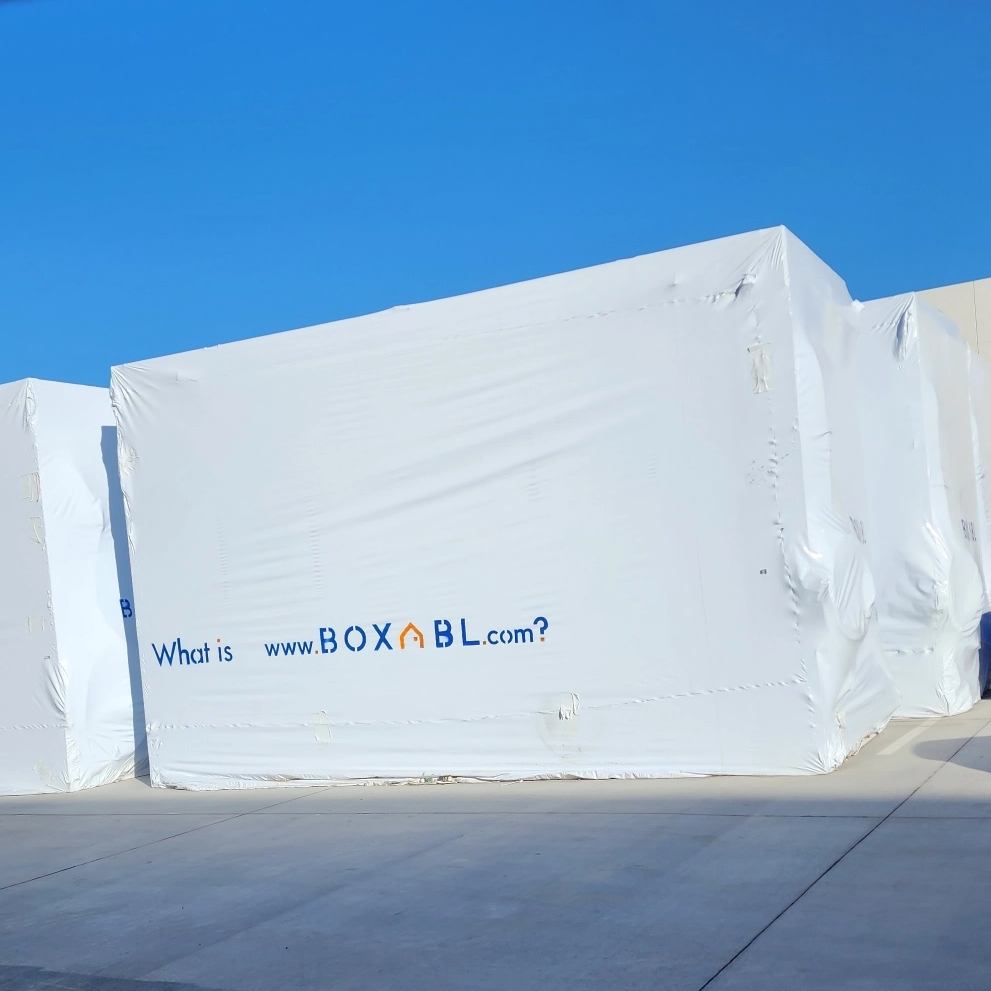
Outdoor exposure changes what heavy duty heat shrink wrap must do. UV stabilization matters when equipment remains in sunlight during yard storage, open transport, or project staging, while waterproof and dust-resistant configurations address rain, snow, road spray, construction debris, and warehouse contamination. A short transfer and a season-long outdoor hold do not create the same performance demands.
Construction machinery covers are commonly used in this combined-risk environment because construction equipment may face sunlight, precipitation, dust, wind, road contamination, and humid shipping conditions. A properly installed shrink cover can reduce open gaps and wind movement compared with a loose covering.
A waterproof enclosure reduces direct water entry, but it does not guarantee a dry environment inside. Residual moisture, humidity changes, salt air, and temperature cycling can still threaten bare or inadequately protected metal. Buyers should determine whether the main concern is external water, internal condensation, corrosion, or a combination of all three.
VCI protection may be appropriate when metal machinery faces a meaningful corrosion risk, particularly during humid or salt-air transportation. Ventilation, desiccants, or other internal controls may also be required. The final moisture-control strategy should match the material, route, storage duration, and temperature conditions surrounding the asset.
Flame-retardant film should be selected when a site rule, contract, risk assessment, or nearby hot-work activity requires documented fire performance. Zipper doors, inspection windows, and resealable openings are useful when maintenance or inspection must continue during storage; otherwise, every added opening becomes another sealing detail. Opaque or printed film may support privacy, identification, warnings, or branding, but color is not a structural performance feature.
Standard, reinforced, VCI, flame-retardant, enhanced-UV, moisture-resistant, and dust-resistant configurations may be selected individually or combined where technically appropriate. Heavy duty heat shrink wrap remains a temporary environmental enclosure, not a substitute for load restraint, edge protection, corrosion treatment, or rigid impact packaging. Those protective functions should be specified separately whenever the equipment or route requires them.
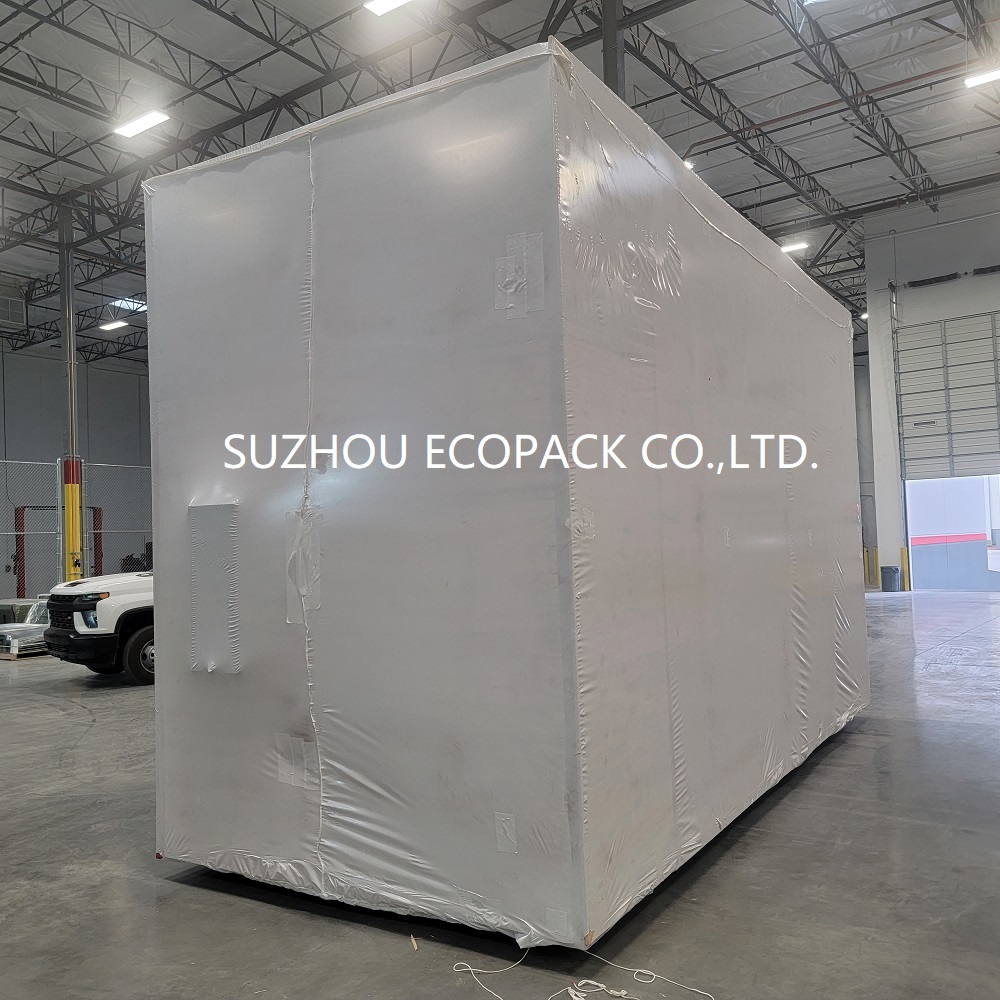
A representative sample can reveal problems that a technical data sheet misses. Test the proposed heavy duty heat shrink wrap with the actual heat tool, a realistic seam, the sharpest padded edge, a sensitive finished surface, and any planned vent or access detail. A trial on the real machine provides the clearest view of fit and operator control.
Inspect the cover for punctures, stress whitening, spreading tears, weak seams, uneven shrinkage, sagging, surface scuffing, and gaps around projections. The film should tighten without requiring installers to overheat nearby components. Operators must also reproduce the result consistently; a technically capable material is still a poor production choice when the available crew and tools cannot apply it reliably.
Ask the supplier to confirm construction, reinforcement type, thickness tolerance, dimensions, shrink ratio, application range, tear and puncture performance, UV expectations, and any VCI or flame-retardant properties. Samples and batch consistency should also be discussed for repeat packaging programs. Custom dimensions and formats can be evaluated where standard rolls do not fit the equipment efficiently.
Calculate labor, cutting, seams, waste, heat consumption, repairs, rework, downtime, and possible equipment damage. A cheaper roll can produce a higher installed cost when it requires extra seams or frequent patching. The sound purchasing rule is to choose the least complex specification that passes a realistic application test with an appropriate safety margin.
Selecting heavy duty heat shrink wrap starts with matching film construction to the equipment, route, exposure time, and consequences of failure. Standard film may suit controlled storage, while reinforcement, UV stabilization, corrosion protection, or custom-fit covers become more relevant as risks increase. Testing a sample on the actual equipment helps confirm fit, sealing, and application efficiency.
Suzhou Ecopack Co.,Ltd. supplies industrial shrink films, reinforced materials, and custom-fit protective covers for different machinery dimensions and operating conditions. A well-matched specification can reduce material waste, simplify installation, and provide more consistent protection during storage and transport.
A: Choose thickness according to edge sharpness, handling intensity, transport distance, wind exposure, and storage duration. The thickest film is unnecessary when a lighter option passes application testing.
A: Yes. UV-stabilized, weather-resistant film can protect equipment from sunlight, rain, dust, and road spray. Outdoor service life depends on film grade, installation quality, and exposure conditions.
A: Reinforced film suits sharp-edged, irregular, high-value, or frequently handled machinery. Its internal reinforcement helps resist punctures and limits the spread of tears during transport or outdoor storage.
A: Shrink wrap blocks external moisture and contamination, but condensation may still develop inside. Metal machinery may also require VCI protection, desiccants, ventilation, or other corrosion-control measures.
A: Large industrial covers usually require a suitable heat tool to shrink the film and seal overlapping sections. Operators should follow safety procedures and avoid overheating sensitive equipment components.


