
Views: 0 Author: Site Editor Publish Time: 2026-04-03 Origin: Site


Have you ever accidentally nicked a wire while trying to strip its protective casing? Removing heat shrink wrap is a delicate task that requires more than just brute force. Because it bonds tightly to components, one wrong move can cause costly damage.
In this guide, you will learn the safest professional techniques to remove heat shrink wrap without harming your equipment. We will cover essential tools and methods to preserve the integrity of your wires.
● Use the longitudinal score method to safely remove heat shrink wrap without damaging underlying insulation.
● Always prioritize precision tools like hook blades or surgical scalpels to maintain depth control during cuts.
● Apply heat to soften dual-wall adhesive linings, making the material easier to peel without straining components.
● Avoid sawing motions when cutting; a clean, single stroke prevents accidental nicks to wires and sensitive surfaces.
● For large industrial applications, utilize guarded film slitters to protect product finishes while managing high tension.
This core section provides immediate, actionable solutions for professionals who need to strip material quickly without compromising safety.
The most reliable way to remove heat shrink wrap involves creating a shallow, controlled cut along its length. By scoring the material halfway through its thickness, you create a fail point. As you gently flex the tubing, the internal "hoop tension" causes the plastic to split open along the score line. It effectively "pops" off the substrate without the blade ever making contact with the wire.
In high-volume B2B environments, manual blades increase the risk of repetitive strain and product damage. Specialized tools like electric seam rippers or "safety slitters" utilize a guarded blade design. These tools feature a small shoe or guide that slides between the heat shrink wrap and the wire, lifting the wrap toward a shielded blade. This mechanical separation ensures that the cutting edge remains isolated from the delicate internal components.
Briefly reapplying a heat source can make the removal process significantly easier. By warming the heat shrinkable material to its transition temperature, it becomes pliable. Technicians can then use needle-nose pliers to grab an edge and pull it away. This is particularly effective for non-adhesive tubing where the friction between the wrap and the substrate is the primary force holding it in place.
For small-diameter heat shrink wrap on connectors or PCB headers, blades are often too clumsy. Flush-cut side snips allow you to "nibble" away at the exposed end of the wrap. By making small, radial snips around the circumference, you can eventually create a longitudinal split. This method offers the highest level of tactile feedback, allowing the user to feel if they are getting too close to the conductor.
In specific industrial applications where mechanical cutting poses an explosion risk or where the substrate is hyper-sensitive, chemical solvents may be used. Certain esters can break down the polymer bonds of the heat shrink wrap. However, this is a slow process and requires a controlled environment with proper ventilation and PPE to manage chemical exposure.
For prototypes or temporary testing setups, savvy engineers install a "rip-cord" or a pull tab. By laying a high-strength polyester thread or a thin strip of Kapton tape under the heat shrink wrap before heating, they create a built-in removal mechanism. When the project is finished, simply pulling the cord slices through the wrap from the inside out.
The ultimate challenge in any removal project is depth control. Professionals often use "thumb-stopping" techniques, where the thumb of the non-dominant hand acts as a mechanical limit for the blade depth. It is also helpful to work under magnification when dealing with micro-electronics to ensure the tool never touches the primary insulation.
Table: Comparison of Removal Techniques
Method | Best For | Risk Level | Speed |
Longitudinal Score | General Wiring | Medium | Fast |
Heat & Peel | Delicate Substrates | Low | Medium |
Precision Snips | Connectors | Low | Slow |
Guarded Slitters | Large Cables | Very Low | Fast |
Different types of heat shrink wrap require specific cutting implements based on their thickness, material composition, and whether they have an adhesive lining.
A standard utility knife is often too bulky for technical work. Its blade is thick, which can cause it to "wedge" and jump unexpectedly. For thin-walled heat shrink wrap, a surgical-grade scalpel or a #11 Hobby Blade is superior. These thinner blades require less force to penetrate the plastic, giving the technician much better control over the final depth of the cut.
Hook blades are the "gold standard" for cable jackets and heavy-duty heat shrink wrap. The hook shape allows you to hook the edge of the wrap and pull the blade upward and away from the wire. This geometry makes it physically impossible for the sharp edge to dive into the copper core, provided the hook is seated correctly under the wrap.
If you must remove heat shrink wrap near live electrical components, metal blades are a hazard. Ceramic blades are an excellent alternative; they stay sharp longer than steel and do not conduct electricity. Additionally, rigid plastic "spudgers" or bone tools can be used to pry and peel softened wrap without risking a short circuit.
Adhesive-lined heat shrink wrap (dual-wall) is designed for environmental sealing. It features an inner layer of melt-glue that bonds to the wire, making it much harder to remove than standard tubing.
Unlike standard wrap, you cannot simply cut and peel dual-wall tubing while it is cold. The adhesive acts like a weld. You must apply heat until the wrap is hot to the touch, which liquefies the internal glue. Once the glue is in a liquid state, the heat shrink wrap can be slid off or peeled back with pliers.
After successful removal, a sticky residue usually remains on the substrate. This can interfere with new connections or the application of fresh heat shrink wrap. Using Isopropyl Alcohol (IPA) or specialized citrus-based adhesive removers is the best way to clean the surface. Ensure the cleaner is compatible with the wire insulation to avoid drying it out or causing embrittlement.
Timing is critical. If the adhesive cools, it will re-bond the wrap to the wire, often more transitionally than before. Technicians should use a "continuous heat" technique, keeping the heat gun at a distance to maintain the glue's liquid state while they work the material off. If the wrap becomes stuck, do not force it; simply re-heat and try again.
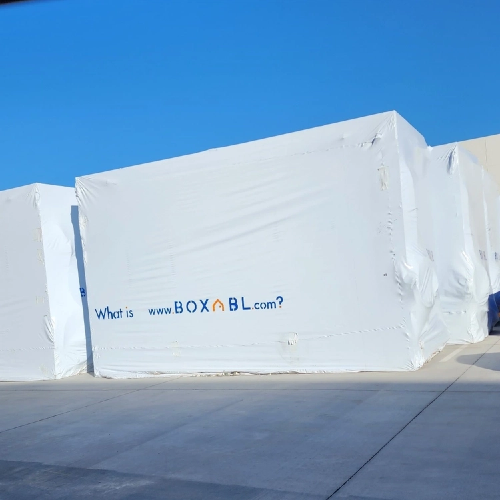
When dealing with palletized freight or winterized boats, the volume of heat shrink wrap is massive. These applications use thick-gauge polyethylene film that requires different logic.
Using a standard knife on a boat or a large machine is dangerous for the paint job. Professionals use "bag cutters" or film slitters. these tools feature a wide plastic head that prevents the blade from touching the product. They allow you to "zip" through yards of heat shrink wrap in seconds.
Large-scale wraps are under immense tension. If you cut into a tightly wrapped pallet, the film can snap back, potentially causing the tool to fly or the load to shift. Technicians should first "vent" the wrap by making small X-shaped relief cuts in non-tensioned areas before making the final long vertical slices.
Industrial heat shrink wrap is usually made of LDPE (Low-Density Polyethylene). Because it is a clean, single-stream plastic, it is highly recyclable. Many B2B operations use a heat-compactor to reduce the volume of the removed wrap, turning mountain-sized piles of plastic into manageable bricks that can be sold back to recyclers.
Avoid these frequent errors to ensure your removal process is efficient and safe.
It is tempting to "blast" the heat shrink wrap with high heat to make it soft. However, excessive heat can quickly reach the "glass transition temperature" of the underlying wire insulation. If the insulation melts or deforms, the integrity of the entire cable is compromised, potentially leading to electrical failure later.
A "sawing" motion is a sign of a dull blade or poor technique. It is unpredictable and prone to slipping. A sharp blade should require only a single, steady pulling motion. If you find yourself sawing, replace the blade immediately. A clean cut is a safe cut.
Small, 22-28 AWG wires are incredibly fragile. When removing heat shrink wrap from these gauges, you should never attempt a full cut. Instead, use the "score and snap" method. Lightly mark the wrap with a blade, then bend the wire at the mark. The wrap will split, and you can pull it off like a sleeve.
In some cases, the effort to remove heat shrink wrap outweighs the benefits.
If you are removing the wrap just because of a small scuff, consider an "over-wrap" instead. If the structural integrity of the original heat shrink wrap is still intact, sliding a new piece of tubing over the old one is often a more reliable solution than trying to strip the original and risking damage to the core.
If multiple layers of heat shrink wrap have been applied over time, the removal process becomes exponentially more difficult. The layers often fuse together. In these scenarios, it is almost always safer to cut back to a section of "clean" wire and start fresh rather than trying to peel back layers like an onion.
Removing heat shrink wrap effectively requires patience and the right tools. By following the "score, don't sever" rule, you protect delicate internal components. Specialized techniques ensure your workflow remains efficient and safe. For high-quality solutions, szecopack provides premium materials that simplify both application and removal. Their products offer superior durability while remaining easy for technicians to manage. Mastering these professional methods turns a difficult task into a routine success.
A: Use the longitudinal score method to cut halfway through the heat shrink wrap without touching wires.
A: No, you cannot reuse heat shrink wrap because it undergoes permanent plastic deformation during the initial heating.
A: The internal glue bonds the heat shrink wrap to the substrate, requiring extra heat to soften.
A: Use a precision scalpel to lightly score the heat shrink wrap and peel it away with pliers.


